We can't find the internet
Attempting to reconnect
Something went wrong!
Hang in there while we get back on track
Security is now a basic assumption
A new case for the "vulnpocalypse" thesis arrived this period. Sarah Guo reports that eMudhra's intermediate CA private keys were tiny numbers like 4 and 56. Anyone could recover them in seconds and mint a trusted certificate for any site. Browsers have already blocked the bad certificates, but many servers, containers and devices still trust them. She traces the problem to a single bad key-generation script from 2025, which is now forcing a "Heartbleed-scale cleanup" . Asked what share of token use will go to security in 2027, Guo relayed @dok2001's answer: ">50%" .
Leadership moves point the same way:
- Aleksander Madry is back at OpenAI after what he now calls a sabbatical. He joins @merettm because, in his words, getting safety and security right "has to become a central priority" .
- Dario Amodei defended Anthropic's "race to the top" strategy. He said Anthropic had Mythos-class models in February but held general availability until June, when stronger cyber safeguards were ready, and probably gave up "a significant chunk of a several-month model lead." He also said competitors sell against Anthropic by pointing to its strict bio classifiers .
- Clem Delangue said the Netflix documentary on the OpenAI agent attack on Hugging Face left out the lack of agent containment and the fact that closed-model safeguards blocked Hugging Face's defense. Hugging Face defended itself with an open model . This continues the guardrail-refusal story from earlier briefs.
Market sizing angle: Vanta CEO Christina Cacioppo says AI attackers mostly chain many low-severity weaknesses rather than find zero-days. That pushes defenders toward fixing at machine speed . She sees a constant pentest-and-patch product for customers who won't pay $150K for Wiz but "very well could pay 40 or 50" . Separately, Vanta is absorbing token costs rather than marking them up. About 25% of its customers use the agent flow, and it is aiming for 75% .
Where capital went
- Arda (Bob McGrew) launched publicly with a $160M Series A at a $1.5B valuation. It has spent a year building with Anduril as its design partner. Today it helps manufacturers run manual assembly lines; next it plans reconfigurable automated lines aimed at products now made by large workforces in Asia .
- Daytona raised a $60M Series B at $1B for its "Agent Cloud," led by FirstMark. Angels include Patrick Collison, Tobi Lütke and Aravind Srinivas. The team has 35 people .
- Eka Robotics: a16z led the Series A. Eka builds a Vision-Force-Action model co-designed with its own robotic hands. The founders are Pulkit Agrawal (MIT CSAIL) and Tuomas Haarnoja (formerly Google DeepMind) .
- OpenAI acquired Orchestra Bio, a drug-development coordination platform, to build on its Rosalind life-sciences models .
- Salesforce is buying Braze for about $5.66B EV, a 58% premium . Six weeks earlier, Braze's stock fell 25% after a beat-and-raise quarter with 26% growth. SaaStr's takeaway: companies growing in the 20s with little AI revenue may get their best price from a strategic acquirer, not a next-round lead .
- Workday is acquiring C1.ai, which governs access for both employees and AI agents under one lifecycle and audit trail .
Founder flows seem to agree with these rounds. One widely shared observation says smart young builders are moving from vertical agents into data/RL environments, physical AI, and wet-lab drug discovery . Nathan Benaich replied "that checks" (anecdotal).
Physical AI: design gets easy, atoms stay slow
a16z argues AI will soon become a superhuman hardware designer, but building, testing and iterating will remain bottlenecks . It names opportunities in simulation (Navier, Inviscid, Lanyon) and in suppliers and test software (Hadrian, Cofactr, Instrumental, Revel) . Pat Gelsinger gave a chip example: AI could produce a design in three months, but silicon processing takes nine . On robot data, Mecka's Josh Gao says the field is now at millions of hours, still "many orders of magnitude" short of autonomous driving . He expects pick-and-place and packaging tasks on assembly lines within one to two years .
Compute and cost
Sundar Pichai says Gemini 4 Argon processed nearly 25T tokens in its first 72 hours, about 3x Gemini 3.0, and is capacity-constrained . Google gives DeepMind first call on compute, and its cloud business is forgoing short-term revenue as a result . Customer requests for 2027 compute are "incredibly difficult" to fill . He grants that an overbuild could happen if any of roughly 2,000 components becomes a constraint . Internally, Google reports 30% more code changes and about one-third fewer rollbacks in Argon's first four weeks . SF Compute's compute market is still thin: 5% of its capacity is on the order book .
Prices keep falling. OpenAI's Karan Singhal says GPT-6 Luna beats the model that was OpenAI's best a month ago on its health benchmark, at 34x lower cost . Among the companies The Pragmatic Engineer surveyed, AI spend on API plans has roughly halved since June–July peaks, helped by moves to open models. Some subsidized subscriptions are ending, though, and those bills could rise 5–10x .
Open models and policy
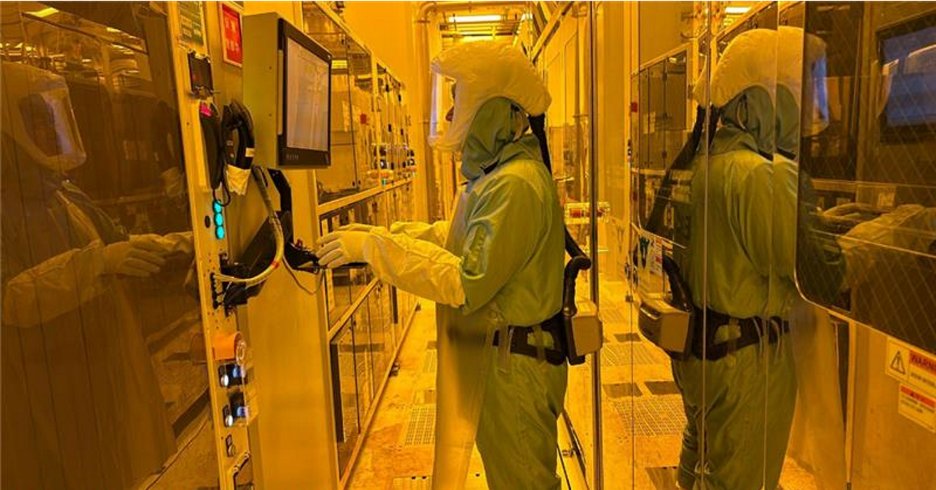
The DHS order bars DeepSeek, both the company and its models, from federal civilian procurement. It is unclear how the order applies to fine-tunes or to models trained on DeepSeek outputs . DeepSeek then open-sourced DeepInfer, its internal inference stack; one estimate puts DeepSeek's token gross margin as high as 90% . China's MOFCOM proposed, but has not enacted, pre-approval for sharing frontier AI abroad, with automatic approval for open-source .
Local and sovereign deployment also moved forward. Perplexity Computer now runs fully on a Mac, with both the model and the agent on-device . Mistral's Voxtral 3 adds speech recognition, text-to-speech and a voice-agent SDK, available through its API or on customer infrastructure .
Agent infrastructure
Ramp tested several off-the-shelf agent harnesses before building its own model-agnostic one, Laminar . LangChain packaged the pieces its internal agents kept needing into Managed Deep Agents: per-user identity, scoped memory, sandboxed code execution, and scheduled runs .
Briefly
- Waymo reports 0.01 serious-injury crashes per million miles versus 0.21 for human drivers, across 271M miles. Semafor reports Waymo plans to grow from about 4,000 to 20,000 cars by end-2027, funded by a $5B loan .
- Microsoft exited Nscale's £2bn Essex data center after its grid connection slipped to the 2030s. Nscale says it will still build .
- An NBER paper estimates California's billionaire tax would raise about $30B but have a mean net present value of –$39B once departures are counted .
- Reflecting on her startup experience, Elizabeth Yin says founder operations have become less tedious: she contrasts manually maintained cap tables and a 2011 convertible-note fundraising process involving lawyer costs and physical checks with cap-table software and e-signed SAFEs today. She argues that reduced admin gives founders more time to build.
- In a Mercury-partner post, Yin promotes Mercury Payroll, saying it handles tax registrations and payroll compliance and can prefill information from a Mercury account. Her example of the problem is multi-state hiring administration: setting up a Massachusetts employee required state registrations, forms, and workers’ compensation, and she says she had to repeat the process after he moved to South Carolina. Mercury’s disclaimer says employers remain responsible for legal and regulatory obligations, while some services are provided by affiliates and third parties.
- The founding team brings nontraditional robotics experience: Josh says he previously built back-of-house restaurant software and installed kiosks, while his cofounder built a stablecoin venture that was sold to Coinbase.
- Mecca positions itself as a creator, processor, and licensor of training data for robotics foundation models. Its collection model combines consumer apps and business partnerships with custom sensing hardware, logistics, and data processing and quality gates. The founder says differentiation comes from verified data quality, hardware, operations, and software—not primarily contributor payments.
- The founder describes robotics data as having reached millions of hours, but still many orders of magnitude behind autonomous-driving data; manipulation also involves more degrees of freedom than driving. He expects commercial capability to advance task by task rather than through a single all-or-nothing breakthrough. He sees a mix of human and egocentric data, teleoperation, and in-domain data, with tactile data and simulation still to be added.
- For new manipulation use cases, he expects constrained industrial tasks to lead, citing data-center maintenance, laundry folding, and packaging/pick-and-place; he forecasts packaging and pick-and-place tasks on assembly lines within one or two years. He cautions that homes require particular diligence on safety, while describing service, cleaning, and delivery robots as already deployed in hotels in China and Southeast Asia. Mecca sees itself eventually extending from data provision into domain-data collection, post-training, and enterprise deployment support.
- OpenAI says more than 300 million people use ChatGPT weekly for health and wellness; most are free-tier users and outside the U.S., and many use it between visits for care navigation and follow-up. OpenAI says it specializes general frontier models with healthcare data at each training stage, shapes evaluation and training with a global physician network, and does not use connected personal health information for model training or ad targeting.
- OpenAI said its newly released lowest-cost frontier API model outperformed its previous best on HealthBench Professional at 34 times lower cost, while noting that the models still need improvement.
- OpenAI described two-way ChatGPT–Epic integration; UCSF is an early adopter focused on uses such as chart review, and AdventHealth reportedly achieved roughly 80% reductions in some administrative workflow costs using AI. OpenAI’s health lead said AI has not yet had a macro effect on total healthcare spending, with savings dependent on integration, workflows, deployment, and scale; he characterized OpenAI’s role as enabling care partners rather than providing all care itself.
- OpenAI sees healthcare as ripe for agents and computer-use tools despite fragmented, legacy systems, and sees potential to mine underused EHR, claims, and longitudinal data for new insights. Its health AI lead forecast that AI-guided target or molecule generation and clinical-trial prioritization and validation could contribute to new and more personalized treatments over a 5–10-year horizon.
- Vanta’s integrations with 400 tools feed a security “trust graph” used for automation and agents; its agent can surface work such as offboarding accounts, then act with user permission. About 25% of customers are in this agent workflow; Vanta is absorbing token costs to increase usage and retention, because customers compare marked-up tokens directly with model prices. The CEO says output- or outcome-based pricing is attractive but hard to define, while token credits can look like obscured token charges.
- Vanta’s team uses security and compliance experts to write task-specific agent evaluations and currently prioritizes model quality over cost; the CEO says coding agents need older codebases modularized to work effectively. A new onboarding flow has users provide messy files and screenshots for an LLM to interpret and turn into setup, replacing a conventional wizard.
- The CEO argues AI attackers can chain individually low-severity weaknesses, increasing pressure for faster fixes; she sees continuous testing and remediation as an opportunity, including for customers below the large-enterprise segment served by established security vendors. Her early-stage market read highlights cyber and go-to-market technology, calls robotics underweighted as models improve, and says AI is increasing demand and budgets for government and enterprise modernization. She also sees the ecosystem around open-source model providers as less developed than confidence in those providers would suggest.
- The post argues that AI is making software faster and cheaper to build, potentially opening startup opportunities in narrow industry and workflow niches that were previously uneconomic. Its forecast is for many more specialized products, with understanding customer problems becoming more valuable than implementation skill; it also expects most products to fail and few to become billion-dollar companies.
- A commenter predicts that AI agents and workflows built into CRMs and app builders could shift B2B SaaS from license pricing toward usage-based credits; custom tools might cost a fraction of generic products, but could also create low-quality software and switching friction.
- Adoption caveats raised in the discussion include learning curves, the need to follow strict processes using real-project expertise, and the risk that internal custom apps will be poor—constraints on the idea that cheaper software automatically displaces packaged SaaS.
ValsAI released ClaimBench, a benchmark for testing whether decision models can determine if a financial document supports, contradicts, or does not address a claim. It evaluated 15 models on 1,960 claims paired with 10-K excerpts, and ValsAI reported Decider V1.2 as the leading decision model . Perplexity CEO Aravind Srinivas characterized Perplexity Decider as Pareto-optimal on the benchmark .
- The hosts describe Theranos as a medtech cautionary case: Edison was presented as able to run about 100 tests from a tiny blood sample, but they say it could perform only roughly 12–13; when it failed, samples were run on conventional analyzers and results presented as Theranos’s own.
- The podcast says the documentary depicts Holmes and a team trying to revive Theranos by pitching investors and recruiting to make the technology work better with AI while she was about to go to prison. The hosts’ interpretation was that Holmes was complicit but may have rationalized misconduct as necessary to achieve the mission; they contrasted that rationale with the higher stakes in healthcare.
- Chronosphere grew from M3, an open-source observability project built inside Uber, into an enterprise observability company acquired by Palo Alto Networks for $3.35 billion in 2026, seven years later.
- Uber built M3 because commercial tools could not handle its observability needs at scale; its 2018 engineering post described processing 20 million data points per second, and within months LinkedIn, Alibaba, Databricks, and Walmart had deployed it in production, spurring demand for commercial support and services.
- Greylock partner Jerry Chen viewed Uber’s observability needs as an early signal of broader cloud-native scaling demands. Greylock wrote Chronosphere’s first check, investing $10 million of its $11 million Series A after a five-month pursuit; the founders skipped a conventional seed round.
Garry Tan called California’s Billionaire Tax Act an “asset seizure tax” and argued it would harm the state. The NBER post he shared estimates the act would collect roughly $30 billion but have a mean net present value of negative $39 billion after accounting for lost income taxes from departures.
Anthropic CEO Dario Amodei frames the company’s “race to the top” strategy as requiring frontier status to demonstrate responsible development and influence the industry; he says the approach has involved commercial costs and tradeoffs, while acknowledging organizational mistakes.
Amodei says Anthropic held Mythos-class models from February until general availability in June to strengthen cyber safeguards, initially limiting access to partners for cyberdefense and sacrificing part of its model lead. He also says restrictive biological safeguards produce significant false positives, frustrating biomedical users and creating a competitive disadvantage against more permissive rivals.
Other examples he cites are Anthropic’s advocacy for SB53 and chip export controls, restrictions on AI-service sales to PRC-controlled companies—including through third countries—and an announced contribution of 5% of the company, potentially more over time, to a public benefit fund. He acknowledges communication failures and says the change to Anthropic’s Responsible Scaling Policy is its most substantive point of criticism; he defends the revised focus on transparency and external review while recognizing that changing plans invites scrutiny.
- a16z’s Christian Keil argues that AI may master digital hardware design before hardware engineering: design-for-manufacturing, physical testing, and iteration remain harder because real-world data is variable, sparse, costly, slow to collect, and sometimes qualitative. He expects demand for better engineering simulation, citing Navier, Inviscid, and Lanyon, and for more manufacturing and testing capacity, including Hadrian, Cofactr, and Revel.
- Periodic Labs has set up an autonomous lab for end-to-end physical experiments on superconductors, magnets, and semiconductor materials. Ekin Dogus Cubuk argues that LLMs need to learn scientific inquiry through iteration and real-physics experiments, not simulation alone.
Garry Tan called Happenstance the “greatest unlock” for startup founders trying to reach the right people . Happenstance describes itself as a LinkedIn/Claude/ChatGPT hybrid and says it helps Ruben find a warm path to people across a network of 800,000+ .
Aleksander Madry is returning to OpenAI after what became a sabbatical, saying AI progress has entered a different regime in which the safety and security of increasingly capable AI must become a central priority; he will join @merettm to help chart a path through these challenges. Sam Altman described the safety and security challenges of confronting superintelligence as immense and said Madry has an excellent skill set for the work.
Paul Graham highlighted an analysis by Benjamin Jaros and Joshua Rauh estimating that California’s proposed Billionaire Tax Act would collect roughly $30 billion but have a mean net present value of negative $39 billion after accounting for lost income taxes from departures; Graham characterized the proposal as losing the state money.
GStack is now Capy-aware and, according to Garry Tan, works well with Capy’s software-factory feature Captains.
Martin Casado amplified a post listing alleged security issues: iPhone 11–16 were “apparently” vulnerable to remote attacks, SSL certificates were said to be broken until browsers removed eMudhra CA, and a PHP >9 CVE was expected “tomorrow”; the post framed these as recent or upcoming issues, and Casado added that the list was not exhaustive.
- Former Intel CEO Pat Gelsinger says AI could produce a chip design in three months, but silicon processing still takes nine months; reaching scale in a year and a half could make assumptions about AI workloads stale, leaving manufacturing scale as a major bottleneck to AI-driven chip innovation.
- a16z’s Christian Keil argues that AI may advance hardware design faster than physical execution: design is digital and model-legible, while design for manufacturing, building, testing, and iteration require more real-world interaction. He identifies potential demand across simulation tools (Navier, Inviscid, Lanyon), manufacturing inputs (Senra Systems, Podium Automation, Hadrian, Cofactr), and telemetry, inspection, and testing software (Sift, Instrumental, Revel); he also cites Periodic Labs’ autonomous lab as an end-to-end physical-experiment data loop.
Scott Kupor highlighted the thesis that “free is good” and that open source and open weights matter to a thriving software ecosystem.
Wabi founder Eugenia Kuyda argues that today’s chatbots are an interface bottleneck: users mostly turn to ChatGPT, Gemini, and Claude for search, writing, or homework despite models’ expanding capabilities, so a simpler, more engaging interface is needed to help people discover broader use cases. She likens current chatbots to AI’s “MS-DOS era” and describes single-player, text-only AI as the terminal era of AI interfaces .
- a16z’s Christian Keil argues that AI is nearing superhuman hardware design, but that will not equal end-to-end hardware engineering: building, testing, iterating, and designing for manufacturability require more physical-world interaction, while collecting physical data can be sparse, costly, slow, or qualitative. He identifies customer feedback as a particularly hard-to-compress step, since even many cheaply manufactured design iterations cannot tell AI what users want without that feedback.
- Keil expects the opportunity to shift toward simulation tools that let engineers iterate faster and suppliers of manufacturing inputs and services. Examples he names include Senra Systems (wire harnesses), Podium Automation (control panels), Hadrian (machined parts), Cofactr (electronic components), Instrumental (inspection), Revel (testing), and Mariana Minerals (copper); he also expects broader demand for PCB tools such as Diode as more users design hardware. These are forecasts and examples, not announcements of new launches.
Superhuman Hardware Design Is The Easy Part

It took me eight months to build my first FPV drone. I procured the parts in January, received them in February, remembered I bought them in June, assembled and lit the drone on fire in July, re-assembled and crashed it into my neighbor’s roof in August, and then, and only then, at the behest of my wife, downloaded a FPV flight simulator.
A super-intelligent AI surely could have done better.
While far from superhuman today, the frontier models can now generate CAD, design custom PCBs, source COTS parts, and describe how those parts are to be assembled. And they’re only getting better. Hardware design benchmarks like CAD Arena (opens in new tab), EE Bench (opens in new tab), and my own LuxoBench (opens in new tab) show steady improvements; and more generally, you’d have to be crazy to bet against the Bitter Lesson and say hardware design will forever stay beyond the frontier.
Superhuman hardware engineers are coming soon, perhaps very soon. But what will they look like? Will superhuman hardware engineers surpass all humans in one fell swoop, or only in specific domains/disciplines? And what will hardware engineering look like before, during, and after the crossover?
My answer to each of these questions starts with one simple observation: that the interface between the digital and physical world is lossy. This makes it hard to “write” changes from the digital world of bits into the physical world of atoms, and hard to “read” measurements of the physical world back into a computer. This lossiness will shape when and how future superhuman hardware engineers will emerge — and means that even once the models can consistently one-shot electromechanical designs, they will still have a lot more work to do.
Write access: from digital designs to assembled atoms.
When OpenAI released GPT-6 Astra, the online world erupted with demonstrations of its 3D design prowess. Tom Krcha used Astra to model a steam train (opens in new tab), Thomas Ricouard made a walk-through of a photorealistic house (opens in new tab), Anshu Chimala made a 3D game (opens in new tab), and Sharif Shameem made the Palace of Fine Arts in San Francisco.
These demonstrations got hardware engineers wondering if the models could also generate engineering-grade CAD. Nim Cheema, co-founder of Dessn AI, asked Astra to create a DJ controller (opens in new tab). Roberto Nickson made the top models design, engineer, and 3D print bridges (opens in new tab). And I launched luxobench.com (opens in new tab), where I asked OpenAI’s Astra, Anthropic’s Fable 5.1, and SpaceXSI’s Grok 4.6 to help me build an interactive desktop lamp.
We quickly found that — unfortunately — the models by themselves are still not quite ready for primetime hardware engineering.
There are many levels to building real-world hardware, and clearing each one requires different, and often entirely independent, skills.
At the 101 level, you have to decompose the product down into components, identify available commercial-off-the-shelf (“COTS”) parts, ensure their mutually compatibility, design the mechanical and electrical interconnections between them, ensure the final design is buildable, and then actually procure parts from online stores.
Even this step is hard enough, and can set back not only backyard hobbyists like yours truly, but also the most sophisticated engineering teams in the world. In Walter Isaacson’s biography of Elon Musk, he relays a story of a time in 2006 when a Falcon 1 hot fire was delayed due to a capacitor (opens in new tab) — a tiny electrical component that was only in stock at a store roughly 6,000 miles away from their launch pad in the middle of the Pacific Ocean. Getting COTS parts where you need them, when you need them, is hard enough.

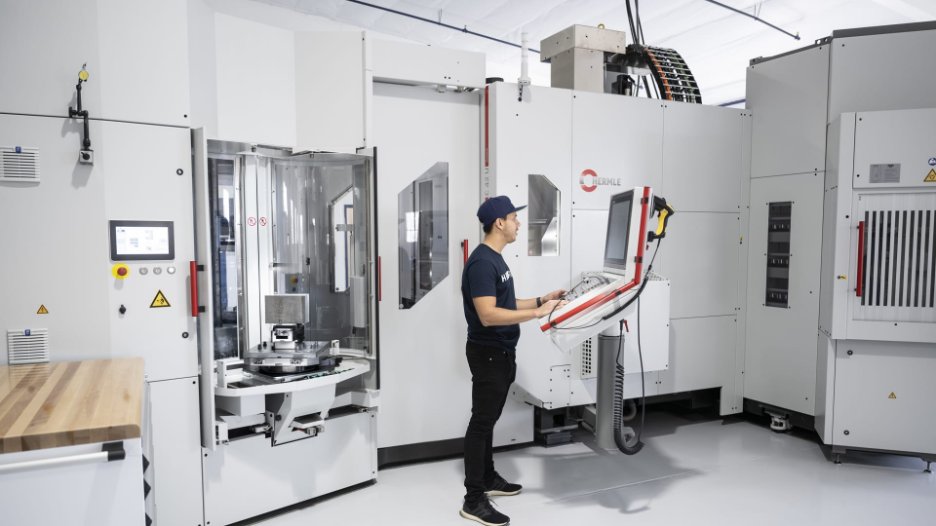
At the 201 level, however, things get even harder: you now have to make custom parts, which means navigating the complex translation step from digital design tools to physical machines. Take, for example, CNC machining. After a mechanical engineer designs a bracket, they can’t just hit “print” and have the part materialize before them. Instead, they work with a machinist, who translates their CAD file into CAM (“Computer-Aided Manufacturing”) software, which writes the instructions that will actually drive the CNC machine.

In practice, this is an artisanal process that requires a master machinist to choose the right stock, workholding, tools, and cutting strategy to guide the tools as they cut through the block of titanium. This causes variability in the manufacturing process, and variability leads to errors in translation.
At the 301 level, you take those simple parts and start to bring them together into a complex electromechanical assembly. As you add more parts together, you add complexity and “stack” tolerances up — meaning, every part might individually meet its drawing, but still fail to fit into the assembly due to compounded and correlated errors. Those other parts are also likely built by different people on other teams in the company, requiring requirements, schedule, and risks to be communicated across the organization to ensure that the parts can interface nicely together and are delivered when they are needed, but not before and not after.
At the 401 level, you realize that your design needs not only COTS parts and custom-designed parts, but also either inputs or particularly complex assemblies from other external vendors. The hardware world loves talking about vertical integration, but basically everyone relies on vendors — it almost never makes sense to build your own chip fab or copper mine. Even SpaceX, the champion of vertical integration, has 591 current employees with a “supply chain” or related titles, and is actively hiring 128 more. And once you have outside vendors involved in building custom parts, good luck!
And then, finally, at the 501 level, you have to do all of the above at massive scale. It is a fundamentally different task to build 1 of something and to build 1,000,000 of something: you need to worry far more about part and process variability, you need much more financing (much further in advance) for things like machines and inventory, you need to train the people (or program the machines) who will assemble, integrate, and test the product for you, and you quickly hit the limits of your vendors.
Each of these “writing” problems, from the 101 to 501 level, are all fundamentally solvable but need to be solved individually. As we’ll discuss below, superhuman AI might be great at pure design, meaning at defining the platonically ideal part for a particular job, but struggle with “design for manufacturing,” or finding a point design that meets the requirements while remaining easy to build/procure and inexpensive. The former is a relatively tractable task that can largely stay within a machine; the latter requires significantly more interaction with the real world, and should therefore prove more difficult for the models to master.
Read access: observing and measuring the real world
One of my friends buys 45 million chickens per week. But despite his efforts to buy the same spec from the same buyers and run everything through the same process with the same machines, his week-to-week variance in saleable food products after processing (i.e., chicken breasts you can buy at the supermarket) has historically been as high as 20%.
Improving that number over time has taken him a herculean effort: extensive measurement and analysis of every step of his supply chain, plenty of old-fashioned vendor cajoling, and a very sophisticated data operation behind both. In one memorable case, he found a malicious supplier deep in his supply chain that was injecting its chickens with water before shipping them. All of the intake measurements for weight would pass, but that water was, of course, not meat, so he was left with less usable product than he intended to buy.
Everyone who has built hardware at scale, or otherwise managed a supply chain, has their own version of this story. It is exceptionally hard to know precisely what is going on in the real, physical world.
First, the real world is non-uniform, and constantly changing.

Physical objects have defects, change their properties based on environmental variables (e.g., temperature), and are subject to wear and tear. Even extremely well-tuned processes and measurement tools stray over time. In practice, this means that physical systems like supply chains and manufacturing lines constantly break, and must be designed with variance in mind — and you can only know when something breaks or has strayed if you invest significantly in measuring the inputs and outputs of the system.
Second, real-world data is sparse. You can’t get all the data all the time. This is a fact I’m acutely aware of, having worked on a number of satellite programs: our thermal team would have loved to put thermistors more or less everywhere on the satellite, but the software, structures, and production teams unfortunately also got a say.

And then when something goes wrong, you often realize that diagnosing the issue would have been significantly easier if you had collected some obscure piece of data — a picture of an electronics board at an intermediate stage of assembly, an extra sensor at a new location, and so on.
Third, real-world data is often expensive to collect. High-performance domains (e.g., F1 racing) and high-reliability domains (e.g., human spaceflight) often need hardware measurements to be extremely precise, and precision comes with cost in dollars and in time because precise measurements need even more precise machines. For instance, the CMMs (coordinate measuring machines) that measure flatness, perpendicularity, dimensions, and so on for machined parts are not cheap (opens in new tab), and often painfully slow to procure and to operate.
Fourth, the real world has inherent latency. Physical processes take time — you can only thermally cycle an electronics board so quickly; mixing volatile chemical solutions or solid rocket propellent must be done with care; and mechanical fatigue testing takes time to play out. These processes can be accelerated, but only so far.

My favorite machine at Astranis, the Highly Accelerated Life Testing (“HALT”) Machine, was colloquially called the “shake and bake” — it combined vibration with rapid thermal cycling to stress parts as fast as possible. But a HALT campaign as a whole is hard to compress: no matter how fast you design new iterations of the board in between tests, you still have to run the whole test again once per cycle.
And, fifth, some information about the physical world is qualitative — and gathering such data is often the most incompressible step of real-world hardware design. Do your users like your product? How comfortable is the device to hold? How easy is it to build a component using your tool? Reckoning with qualitative, unquantifiable data is a part of any real-world build, and measuring that data to bring it back into a digital learning cycle is exceptionally difficult.
Data limitations like these are massive drivers in the spikiness of AI capability development today. The more quantifiable and machine-readable the results of a test, the faster the models can climb the hill. The reasons above have limited the frontier models to date — but how long those challenges can hold back the unstoppable force of the Bitter Lesson remains to be seen.
Hardware development in an AGI world
Hardware engineering is iterative: you design, build, test, and iterate, and each loop through this process takes time.
The design step is digital, and therefore very model-legible. Just as human hardware engineers use computer software to design the part or the assembly, superhuman AI can do the same — and given the growing power of computer use and the growing capability of AI in similar all-digital tasks, we should expect AI models to become superhuman hardware designers in the near future.
But designing hardware is only the very beginning of the hardware engineering process. Once you design the part, you still have to build, test, and iterate — and each subsequent step requires more physical-world interaction than the one before. Becoming a superhuman hardware engineering engineer therefore requires much more than superhuman hardware design, and the frontier will likely be split across many distinct lines of effort.
First, hardware design needs better simulation tools. Every engineer is rooting for Navier (opens in new tab), Inviscid (opens in new tab), and Lanyon (opens in new tab), because better simulation tools would allow hardware engineers to iterate at software speed. Engineers love that better sim tools may save them trips to testing facilities like cyclotrons, radiation sources, thermal-vacuum chambers, and wind tunnels, and executives love that they can save the capex needed to build such facilities in house.
It may prove difficult to convince hardware companies to bet on simulation alone, but as models get demonstrably better, engineers will start trusting the sims more and more, just as sims are getting faster and more efficient per unit of compute. Atoms are likely to stay in the iteration loop forever, but with better sims, atomic assembly can be confirmatory, not experimental.
Second, we expect demand to “shift left (opens in new tab),” i.e., move closer to raw materials. As the models distribute superhuman hardware design skills more broadly, the world will need more wire harnesses from Senra Systems (opens in new tab), control panels from Podium Automation (opens in new tab), machined parts from Hadrian (opens in new tab), and electronic components from Cofactr (opens in new tab). The world will also need more software licenses, like Sift for telemetry (opens in new tab), Instrumental for inspection (opens in new tab), and Revel for testing (opens in new tab) — and, for that matter, more copper from Mariana Minerals (opens in new tab).
Armed with superhuman intelligence and new tools, we also should expect to see more companies bring more of their bill of materials in house. Take, for instance, what Diode has done for PCBs (opens in new tab).

In its current form, Diode is a way for professional electrical engineers to develop custom printed circuit boards faster and more efficiently. But what happens when everyone has the same skills as a professional electrical engineer? We should expect to see much more demand from a much broader set of users — all of which will need to translate their designs into the real world, which means navigating supply chains, ensuring designs can be cheaply and accurately built, and more.
Third, the AI labs need to acquire “process knowledge.” You hear the legendary stories of a machinist who can tell how an operation is going just by listening to their CNC machine, or how PhDs at TSMC have spent decades perfecting everything in the semiconductor manufacturing process, all the way down to the polishing pads (opens in new tab).

But end-to-end data that could allow models to approximate that kind of “process knowledge” is hard to come by. In Eric Jang’s great piece, “Smooth Exponentials for Robotics (opens in new tab),” he estimates that robotics labs in 2026 are training their robots using, roughly — millions of hours of egocentric data, hundreds of thousands of hours of UMI gripper data, tens of thousands of hours of teleoperated robot data, and just hours of “high-quality, hardware-specific demonstrations for high-performance demos.” This funnel is unsurprising, and I expect it to persist even after the superhuman crossover.
The best answer to overcoming this data scarcity, of course, is to find creative ways to get it yourself — Periodic Labs is a great example. The company announced recently that they have set up an autonomous lab to run end-to-end physical experiments on things like superconductors, magnets, and semiconductor materials. This is the platonic ideal of AI-for-hardware data: design, work instructions, test execution, end-result measurement, and iteration all in one coherent loop.
But even the best test setup can only go so far. I suspect that the most incompressible step of the design process — meaning, the step that even a truly superhuman hardware engineer would struggle to expedite — is gathering feedback from the end users of hardware products. A superhuman hardware engineer could design one million new iterations of the Apple Watch and get them manufactured for cheap… but then how can it know what customers actually want?
Superhuman hardware engineers are coming fast.
I expect the frontier models to quickly solve hardware design, which will shift the frontier to the remaining steps of hardware engineering (DFM, testing, iteration) that require greater interaction with the real, physical world. Advancing that frontier will mean solving a whole new set of challenges: improving the interface between the digital and physical worlds; finding ways to more quickly discover customer preferences; and building data pipelines that can approximate the process knowledge currently only held by master technicians.
The crossover between human and AI hardware engineering may prove uneven, as laid out above. But once here, its impact should prove immense: humanity will be able to directly use digital AI tools to bring about real, physical, material abundance — or, at the very least, drones for hobbyists that don’t light on fire.
- a16z’s Christian Keil argues that AI may master digital hardware design before hardware engineering: design-for-manufacturing, physical testing, and iteration remain harder because real-world data is variable, sparse, costly, slow to collect, and sometimes qualitative. He expects demand for better engineering simulation, citing Navier, Inviscid, and Lanyon, and for more manufacturing and testing capacity, including Hadrian, Cofactr, and Revel.
- Periodic Labs has set up an autonomous lab for end-to-end physical experiments on superconductors, magnets, and semiconductor materials. Ekin Dogus Cubuk argues that LLMs need to learn scientific inquiry through iteration and real-physics experiments, not simulation alone.
- Former Intel CEO Pat Gelsinger says AI could produce a chip design in three months, but silicon processing still takes nine months; reaching scale in a year and a half could make assumptions about AI workloads stale, leaving manufacturing scale as a major bottleneck to AI-driven chip innovation.
- a16z’s Christian Keil argues that AI may advance hardware design faster than physical execution: design is digital and model-legible, while design for manufacturing, building, testing, and iteration require more real-world interaction. He identifies potential demand across simulation tools (Navier, Inviscid, Lanyon), manufacturing inputs (Senra Systems, Podium Automation, Hadrian, Cofactr), and telemetry, inspection, and testing software (Sift, Instrumental, Revel); he also cites Periodic Labs’ autonomous lab as an end-to-end physical-experiment data loop.
- a16z’s Christian Keil argues that AI is nearing superhuman hardware design, but that will not equal end-to-end hardware engineering: building, testing, iterating, and designing for manufacturability require more physical-world interaction, while collecting physical data can be sparse, costly, slow, or qualitative. He identifies customer feedback as a particularly hard-to-compress step, since even many cheaply manufactured design iterations cannot tell AI what users want without that feedback.
- Keil expects the opportunity to shift toward simulation tools that let engineers iterate faster and suppliers of manufacturing inputs and services. Examples he names include Senra Systems (wire harnesses), Podium Automation (control panels), Hadrian (machined parts), Cofactr (electronic components), Instrumental (inspection), Revel (testing), and Mariana Minerals (copper); he also expects broader demand for PCB tools such as Diode as more users design hardware. These are forecasts and examples, not announcements of new launches.
Frontier models can generate CAD, design custom PCBs, source off-the-shelf parts, and describe assembly, but the article says they are not yet ready for real-world hardware engineering. Its thesis is that AI may become superhuman at digital hardware design before it can reliably build, test, and iterate in the physical world: real-world data is variable, sparse, costly, slow to collect, and sometimes qualitative, leaving design-for-manufacturing and physical feedback as key bottlenecks. The article points to potential opportunities in simulation (Navier, Inviscid, Lanyon), production supply chains (Senra Systems, Podium Automation, Hadrian, Cofactr), inspection and testing software (Instrumental, Revel), and autonomous physical-experiment loops such as Periodic Labs.
- Frontier models can already generate CAD, design custom PCBs, source commercial off-the-shelf parts, and describe assembly; the article expects rapid progress in hardware design but cautions that turning an ideal design into manufacturable hardware remains harder, spanning sourcing, machining, assembly tolerances, vendors, and production scale.
- The piece highlights opportunities across the hardware stack: simulation tools (Navier, Inviscid, Lanyon), manufacturing and components (Senra Systems, Podium Automation, Hadrian, Cofactr), and telemetry, inspection, and testing software (Sift, Instrumental, Revel); it expects broader AI design capability to increase demand and support more in-house bill-of-materials production, citing Diode’s PCB workflow.
- Physical-world data and process knowledge remain bottlenecks: data can be sparse, costly, and slow to collect, while end-user preferences are difficult to measure. Periodic Labs’ autonomous lab is presented as an example of generating end-to-end experimental data, though customer feedback may remain hard to accelerate.