We can't find the internet
Attempting to reconnect
Something went wrong!
Hang in there while we get back on track


The clearest development this week is a correction to the “just add a tutor” model: giving students access to an AI tutor is not the same as creating a learning intervention. In a Digital Learning Week discussion, the moderator described an independent two-year randomized trial across 18 Tennessee middle schools involving 11- to 14-year-olds in daily remedial math. Both groups improved somewhat, but the students with Khanmigo did not improve measurably more after two years. Sal Khan said the reported second-year effect size was 0.08, or about 0.14 after adjusting for students who left the intervention when they stopped struggling; the researchers said that adjusted result was consistent with Khan Academy’s non-AI results.
Khan’s explanation is about use, not model quality alone. He said a small group of students used the tutor constructively, while most expected direct answers and became frustrated when its Socratic approach refused to provide them. Khanmigo’s newer approach appears after a wrong answer and offers credit if students review the problem and demonstrate understanding; Khan described early engagement pilots as promising but said another year is needed to determine whether the AI adds efficacy.
The practical shift is from optional access to structured engagement, teacher integration, and accountability. Khan said the strongest motivational forces are teachers and parents, not game mechanics. Wayne Holmes argued that ministries should demand evidence not only of test-score effects, but also of consequences for cognition, mental health, individuality, and classroom relationships.
From usage to evidence
A meta-analysis of Penda Learning across 13 independent school-based samples involving more than 33,000 students found significant science-achievement gains, but the strongest predictor was mastery rather than time on the platform. Schools with low, moderate, and high levels of mastered activities showed effect sizes of 0.56, 0.89, and 1.40; time-on-task alone was not positively associated with better performance. The implication is broader than one science intervention: districts should define success in terms of mastery, retention, application, and teacher use of learning data—not logins, minutes, or completed activities.
Procurement practice is not yet aligned with that standard. District interviews found that AI quality checks emphasize ethical-use frameworks, containment, hallucination checks, technical integration, and switching costs—mostly risk containment and operational fit rather than instructional efficacy. Only 40% of districts formally establish evaluation criteria before reviewing products, while 94% rely on peer recommendations and formal evidence intermediaries account for just 8% of market awareness.
The implementation gap is visible in classrooms: 62% of teachers report that AI guidance is nonexistent, vague, or unclear, and 83% say managing AI is their largest daily challenge. Although 56% say AI should be teacher-led or process-focused, more than half of students report using it to brainstorm and draft writing rather than engage deeply with learning. Districts are also warned to monitor products after adoption because models can change while sunk-cost bias makes reevaluation unlikely.
PISA puts the screen-and-AI debate in sharper context
The OECD’s PISA 2025 release reports the lowest average OECD performance yet recorded in reading and mathematics: across 760,000 students in 91 countries and economies, reading scores fell 28 points from 2015 to 2025—about one and a half years of learning—and mathematics fell 22 points. One in five 15-year-olds was classified as a low performer in science, mathematics, and reading, up from 16% in 2022.
The release does not offer a single technology explanation, but its comparisons are consequential. Students tended to perform less well when digital use became excessive or devices were used for leisure at school; more than one in four said classmates were distracted by devices in most or every science lesson. Students who said they did not use AI to draft writing outperformed those who said they did, while frequent users who were taught to assess AI-generated information tended to perform better than frequent users without that guidance. The wording points to an association—and to the importance of instruction about AI use—rather than a simple ban-or-adopt conclusion.
Schools are drawing an age-based boundary around AI
New York City has now put its yearlong moratorium on student-facing generative AI in preschool through eighth-grade classrooms into operation. The policy bans individual devices in preschool through second grade and recommends no more than 30 minutes of individual-device use in grades 3–5 and 45 minutes in middle school. Parents told Chalkbeat that school-set limits make screen negotiations at home easier, but the guidance does not address AI use for homework, and the screen limits are guidelines rather than strict caps.
Norway offers a more explicit developmental sequence. Its non-binding national guidance generally rejects generative AI in grades 1–7, permits cautious teacher-guided use in lower secondary, and emphasizes appropriate, critical, and responsible use in upper secondary. The rationale is that AI can displace the cognitive work through which younger learners develop language, memory, reasoning, and attention. The proposed governance model also calls for safeguards, data protection, professional capacity, early teacher and researcher participation, and decisions that can be revised as evidence and technology change.
The low-tech correction is also colliding with budgets and infrastructure. Memphis-Shelby County Schools’ White Station High School opened without the one-to-one laptops or tablets students had received in prior years; the district said it was evaluating whether the traditional model remained the most effective use of resources amid rising equipment and repair costs. The school mostly returned to paper, but shortages of printed materials and devices forced some students to bring personal devices for online tests—showing that reducing technology without a transition plan can create a different access problem.
Early childhood has a content-quality problem, too
EdSurge reports that the internet now contains hundreds of thousands of AI-generated videos aimed at preschoolers and kindergartners. Educators describe much of this “baby slop” as low-substance, while examples include inappropriate scenes, inaccurate visuals, and channels producing thousands of videos in a short period. Researchers and teachers warn that repeated exposure can contribute to cognitive overload and make it harder for young children to distinguish reality from fiction.
The response being recommended is active media literacy, not passive filtering: preview videos, inspect creators and channels, disable autoplay, ask children what they noticed, and compare an AI-generated image with photographs of the real thing. Parent follow-up questions can turn a video about numbers or community helpers into an opportunity to explain, demonstrate, and connect the content to the child’s world.
Higher education and workforce learning are negotiating judgment
At the University of Sydney, academic staff included AI consultation guarantees in enterprise negotiations, including a commitment that changes forcing staff to use AI would not be imposed unilaterally. An Adelaide University agreement reportedly includes information-sharing, training, consultation, and no mandatory AI requirements. At Macquarie University, a headline suggesting an AI chatbot was teaching online psychology classes prompted a clarification: students still use course materials, online modules, academic staff, and tutors, while the chatbot is an optional supplementary question-answering tool that does not replace teaching.
EDUCAUSE’s focus groups with 30 online-learning leaders show why that distinction matters. Institutions are experimenting quickly, sometimes through decentralized, bottom-up work, but evidence of impact and return on investment is lagging because baseline data were not collected before implementation. The recommendation is not to stop experimenting; it is to define the purpose, collect baseline measures, evaluate the intervention, and avoid scaling simply because a pilot has already consumed time and money.
A concrete workforce-learning model came from Gauntlet’s Cohort 6 showcase. Organizers described a 10-week, roughly 1,000-hour program built around hiring-partner projects followed by learner-chosen capstones; participants reported that domain-specific projects and peer immersion changed how they used AI and prepared them for interviews. Those are program and participant accounts, not independent outcome evidence, but they illustrate a move toward demonstrating capability through realistic work rather than course completion alone.
One capstone, Debate Coach AI, turns debate video, audio, or text into argument maps linked to evidence, identifies which arguments remain decisive, and produces a verdict with advice for the next round. Andrew Ng’s current AI-engineering skills map describes the corresponding human capability: shaping specifications, driving rapid build-and-feedback loops, making product decisions, communicating across functions, and taking end-to-end ownership of the result.
What This Means
-
For AI-tutor buyers: Treat a tutor as a learning intervention, not an account provision. Define the target skill, expected student effort, baseline, mastery measure, and unaided transfer check; require teacher integration and post-adoption monitoring. The Penda findings, Khanmigo trial, and higher-ed evidence gap all argue against treating usage as impact.
-
For teachers and assessment leaders: Preserve evidence of thinking before and during AI use. A practical RAG workflow retrieves teacher-selected sources, gives students an evidence trail, and still requires verification because retrieval does not eliminate hallucinations. The classroom rule proposed this week is simple: never cite the AI tool; cite and inspect the evidence behind it.
-
For K–8 leaders: Age-based restrictions are only the first design decision. Publish what applies to homework, define who owns implementation, involve teachers and researchers, and budget for the paper, device, accessibility, and family-communication consequences of the transition.
-
For higher education and L&D: Pair AI literacy with consultation rights, domain fundamentals, applied projects, and judgment about what to build and whether it works. Employer-linked project work and Ng’s skills map point toward assessment through specifications, iteration, communication, and verification rather than prompt fluency alone.
-
For early-childhood educators and families: Treat AI-generated media as something to preview and discuss, not as a neutral stream of entertainment. Disable autoplay and use real-world comparison and follow-up questions to keep adult conversation at the center.
Watch This Space
- Khanmigo’s proactive redesign: Khan says another year is needed to determine whether prompting students after wrong answers produces measurable gains beyond Khan Academy’s non-AI effects.
- Policy implementation: Watch whether New York City fills the homework and enforcement gaps in its guidance, and whether Memphis can restore reliable access to print and online testing while reducing device dependence.
- Evidence infrastructure: Districts will need to turn formal efficacy criteria, baseline data, student voice, and dynamic post-adoption monitoring from recommendations into procurement practice.
- Applied AI learning: Employer-linked programs and products such as Debate Coach AI are promising demonstrations of practice-centered learning; the next question is whether they produce independently verified skill gains and durable workplace performance.
Direct answer: The OECD release reports substantial OECD-wide declines from 2015 to 2025: reading fell by 28 points—described as about one and a half years of learning—and mathematics by 22 points—described as just over one year. It also reports that one in five 15-year-olds was a low performer in science, mathematics and reading, up from 16% in 2022.
- Assessment scope: PISA 2025 was described as the largest assessment to date, covering 760,000 students in 91 countries and economies. The 2025 edition focused on science; average OECD science performance was stable from 2022 to 2025 after declining from 2009 to 2022.
- Non-OECD comparison: Among non-OECD participants, reading scores fell by 16 points and mathematics scores by 8 points between 2015 and 2025.
- Digitalization and outcomes: The release says students “tended to perform less well” when digital-tool use became excessive or when devices were used for leisure at school. This is qualified trend/association language; the release does not establish that such use caused the reading or mathematics declines.
- Digital distraction: More than one in four students reported that classmates were distracted by digital devices in most or every science lesson. Students surrounded by such distracted classmates were reported to perform less well, be less engaged, and feel less connected to school; the release presents these as reported relationships rather than a causal estimate.
- AI-specific comparisons: Students who said they did not use AI to draft writing assignments outperformed those who said they did. Among frequent users, those who used AI to learn and were taught to assess AI-generated information tended to perform better than those receiving no such guidance. The wording preserves comparison and qualification, not proof that AI use or instruction caused the outcomes.
- Screen time and reading for pleasure: The supplied press-release text does not report a screen-time measure or a relationship between reading for pleasure and performance. Its relevant wording concerns excessive digital use and devices used for leisure at school, which should not be recast as evidence about reading for pleasure or as a causal explanation for the OECD reading decline.
- Overall caution: The Secretary-General’s statement says technology and AI can strengthen learning when used purposefully, but not as substitutes for attention, effort and understanding. This is a qualified policy statement, not a causal finding about the reported PISA score changes.

- An independent two-year randomized trial of Khanmigo in 18 Tennessee middle schools serving 11–14-year-olds in daily remedial math found that both groups improved slightly, but access to the AI tutor produced no measurable additional improvement after two years, according to the moderator. Sal Khan said the study showed a 0.08 second-year effect size and an estimated 0.14 effect after accounting for students removed when they stopped struggling; he also noted that the control group used a mix of other edtech and that the researchers said the adjusted result was consistent with Khan Academy’s non-AI results.
- Khan attributed the weak result largely to engagement: some learners used the initial tutor constructively, but most expected direct answers and became frustrated when its Socratic approach refused to provide them. Khanmigo’s newly launched approach instead proactively appears after a wrong answer, asks students to review the problem and demonstrate understanding, and may provide credit; early pilots were described as promising for engagement, but Khan said another year was needed to assess whether the AI adds measurable efficacy.
- Khan argued that teacher and parent motivation matters more than game mechanics and that effective deployment requires classroom integration, teacher training, and accountability rather than simply adding technology. Khan Academy said student and teacher data are not permitted to be used by model companies for training. Wayne Holmes countered that independent evidence is often weaker than developer-led evidence, that individualized pathways can undermine collaborative learning, and that teachers risk overdependence, standardized outputs, and deprofessionalization; he urged ministries to require AI literacy and evidence covering cognition, mental health, individuality, and classroom relationships—not only test scores.

- Gauntlet presents its AI-engineer pathway as a 10-week crash course; organizers described Cohort 6 as roughly 1,000 hours of AI-focused work, combining hiring-partner projects with a learner-chosen capstone. They said the program had more than 250 graduates the previous year and expected similar scale for Cohort 6.
- The training-to-employment model is highly employer-specific: graduate Arian reported interviewing with 11 companies across about 20 interviews in three weeks while completing domain-tailored projects; Cameron reported about 12 interviews, including seven or eight in one week; Lauren reported interviewing with six partners and starting a role at AS software about a week later.
- Participants described qualitative learning gains: one said he progressed from using AI like Google to using it as an almost complete developer, crediting instruction, immersion, and peer learning; another said the program changed his career trajectory and compressed substantial learning into a short period.
- Cohort project Debate Coach AI is a live learning product for high-school and college debaters. It converts debate video, audio, or text into argument maps, links claims to underlying evidence, identifies decisive and unresolved arguments, and produces a verdict with actionable advice for improving future performance.
- Oxcart Ventures’ Larry Covert argued that deploying AI effectively requires people who uncover company-specific data and process needs rather than simply introducing tools; he described the emerging forward-deployed-engineer role as requiring technical ability, curiosity, interpersonal skill, and fast learning, and discussed creating a dedicated track with Gauntlet to develop those capabilities.

- AI skill-building is becoming a build-and-test loop. Andrew Ng recommends learning AI, building quickly, and talking to customers; he says falling building costs shift the bottleneck toward deciding what to build, increasing the importance of product judgment and rapid iteration.
- AI is creating new workplace learning pathways from existing roles. Decagon customers are seeing customer-support employees move into “conversation architect” or “AI architect” roles that design how AI systems behave; these roles require reasoning and communication skills, and are being filled by people formerly responsible for customer experience, knowledge bases, or older chatbots.
- Audrey Watters argues that current AI and robot-teacher narratives often recycle a century-old teaching-machine story: using machines to teach and test.
- She says classroom software hardcodes pedagogical choices and can make students complete work to fit the software—such as prescribed presentation, podcast, or document formats—rather than serve their imagination; learning-management systems further mediate assignments, assessment, calendars, and communication, narrowing teachers’ autonomy and students’ sense of what their own thinking can be.
- Her adoption caution is that education systems may outsource institutional and cognitive capabilities to technology vendors whose profit goals differ from teaching and learning, treating products that shape behavior as neutral tools.

- Demis Hassabis argues that education should intentionally train children to be “native with AI,” comparing AI literacy to the need to learn computers and the internet; otherwise, he says, students risk falling behind.
- He recommends an “inverted classroom”: students learn core material outside class with personalized AI tutors that identify gaps and provide targeted practice, while classroom time shifts toward project-based, collaborative work developing creativity, entrepreneurship, teamwork, and leadership. AI could also give students access to excellent instructional videos and reduce teachers’ repetitive production of identical lesson materials.
- Hassabis says the existing school model largely serves average learners, leaving highly capable students insufficiently challenged and struggling students insufficiently supported, reinforcing his case for more personalized education.
- AI is lowering technical barriers in corporate roles: Clay’s GTM engineering model accepts people from either technical or business backgrounds and expects them to learn the other domain quickly; Alex Lindahl said that despite lacking a computer-science background, AI lets him build an MVP in about an hour during a customer meeting.
- Clay’s early hiring process used practical, self-directed learning: candidates learned the product independently, built a use case, presented it, and provided product feedback before joining.
Audrey Watters’ experience shows how education technology can change the structure of learning: after returning to college in Wyoming, where there was only one university, she completed her undergraduate degree through distance education using mailed correspondence work, boxed video lectures, and conference-call classes connecting students across the state; she says these technologies changed “the way in which school happened.” She argues that schooling is not natural or fixed, but has a changing “grammar” shaped in part by technology, alongside political, economic, social, and cultural forces.
- Gauntlet’s Cohort 6 used a 10-week, roughly 1,000-hour applied-AI-engineering model: learners worked on hiring-partner projects, then applied their skills to capstones, with the program reporting more than 250 graduates the prior year and similar scale expected for the current year. Participants described the employer-linked approach as unusually practical: projects were tailored to company problems and domains, while one participant reported 11 company interviews and about 20 interviews in three weeks; another reported roughly 12 interviews, including 7–8 in one week.
- Debate Coach AI turned high-school and collegiate debate recordings or text into structured argument maps, linked claims to source evidence, identified arguments that remained decisive, and generated a verdict with actionable advice for future rounds. The team positioned it as “game tape” for learners and said the product was live at debateai.coach.

- Khan Academy highlights a technology-enabled instructional model in which teachers can see where each student is and what support is needed, presenting this visibility as a way to bring effective learning practices to more classrooms.
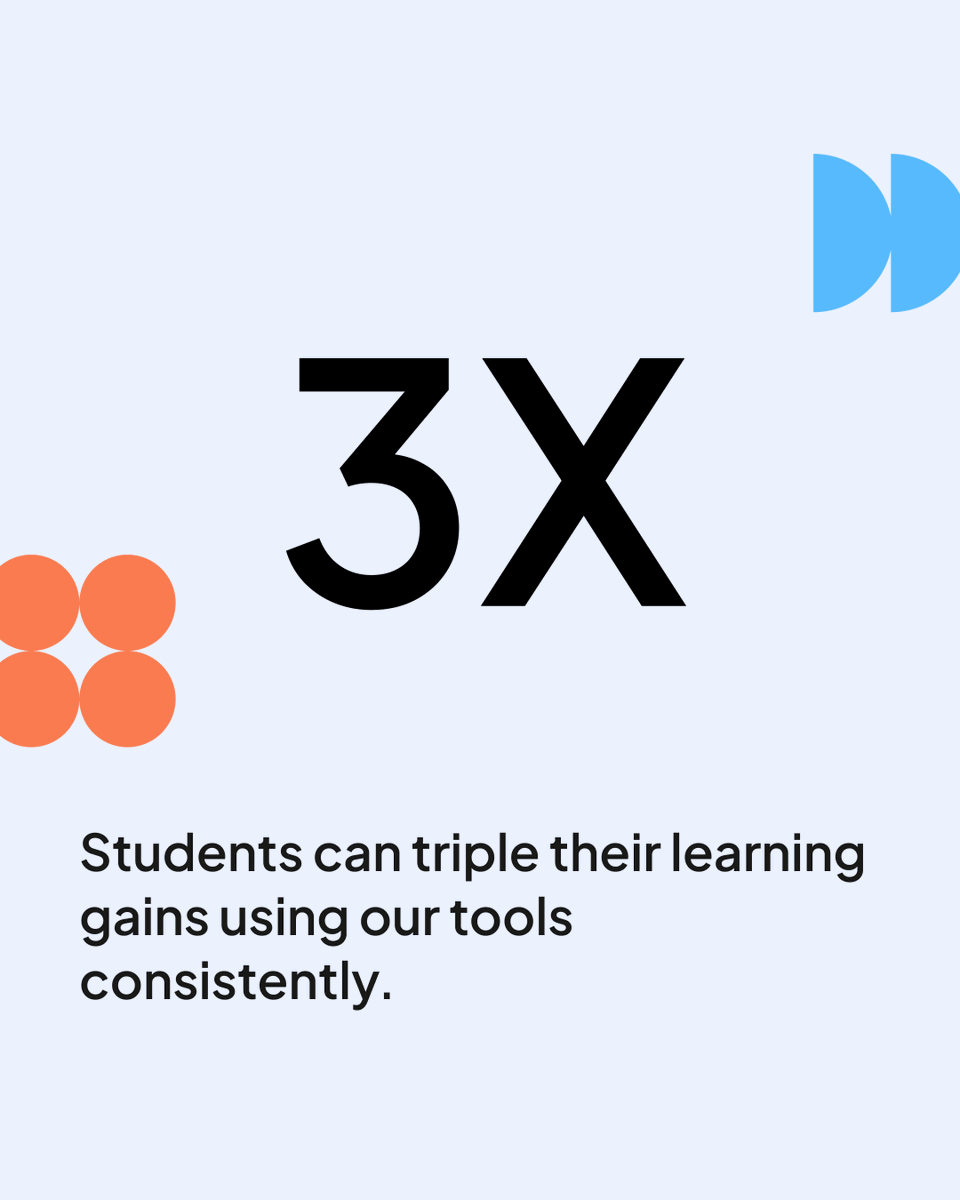
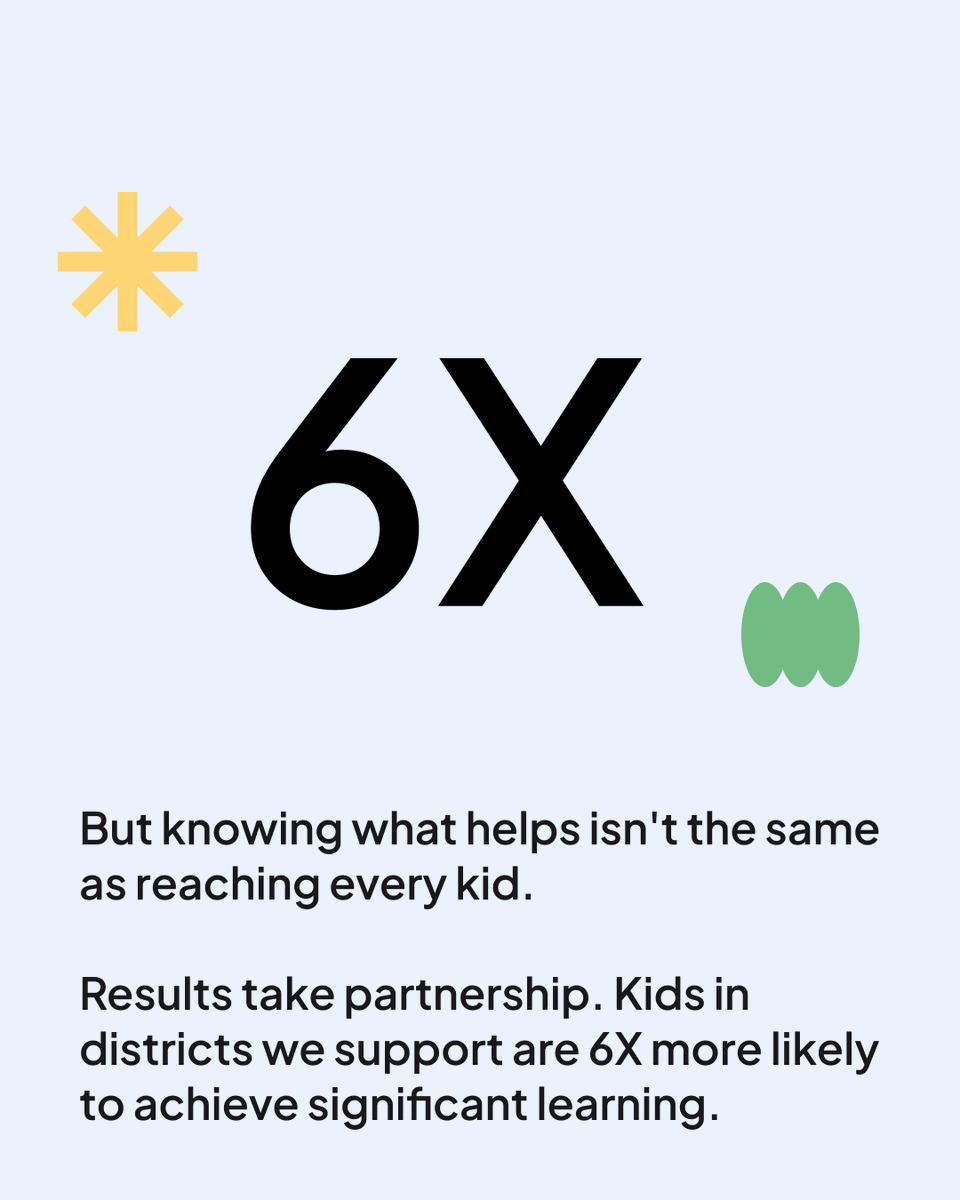
- Khan Academy says it builds alongside educators and reports that students in supported districts are 6× more likely to achieve significant learning; the post also claims that a $1,000 Learners Fund contribution supports measurable learning gains in one classroom.

Ethan Mollick proposes using AI for historical inquiry through a bank of historical mysteries and ciphers, noting that historians are already applying new models to old untranslated handwritten records. A quoted example reports that Fable used Claude to solve the 370-year-old Cyphral Distich, illustrating AI’s potential for puzzle-based research and learning.
Khan Academy highlights free teacher tools that let educators start with their current course, add students, and create an assignment.
AI systems such as Astra and Fable are becoming capable of researching and writing strong academic papers, while their remaining weaknesses are increasingly subtle and may only be apparent to people with expertise in the field. Obvious hallucinated sources and mistakes are reportedly becoming less common, making subject-matter knowledge more important for evaluating AI-generated work.

- Districts’ emerging AI quality checks emphasize ethical-use frameworks, containment, hallucination checks, technical integration, and switching costs, but these measures focus mainly on risk containment and operational fit rather than instructional efficacy. Only 40% of districts formally establish evaluation criteria before reviewing products; 94% rely on peer recommendations for EdTech-quality information, while formal evidence intermediaries account for just 8% of market awareness.
- District leaders report using AI to draft more comprehensive RFPs and support procurement research and strategic planning; AI can synthesize hard-to-access efficacy studies, but outputs may inherit bias from vendor-heavy evidence corpora and strip the provenance cues leaders use to discount marketing claims. Because AI-enabled products can evolve after purchase and are rarely re-evaluated, the recommended approach is dynamic post-adoption monitoring of student engagement and instructional efficacy, including scaled collection of student feedback.
- Classroom use is advancing faster than implementation guidance: 62% of teachers report that AI guidance is nonexistent, vague, or unclear, and 83% say managing AI is their largest daily challenge. While 56% say AI should be teacher-led or process-focused, more than half of students report using it to brainstorm and draft writing rather than genuinely engage with learning; teachers also report difficulty detecting AI use and judging whether students are learning from it.
AI can discover superhuman mathematical proofs, but emphasizing proof production may undermine attention to other important parts of the mathematics profession that AI cannot perform well—mentoring students, sustaining the scientific community, safeguarding the field’s future, and fostering a love of mathematics. Ethan Mollick expects similar pressure across professions as people are pushed to distinguish visible AI-automatable tasks from less visible human responsibilities.
Ethan Mollick describes a potential “wait calculation” for difficult problem-solving: because models in development may soon make serious gains on hard mathematics and biology problems, people may choose to postpone doing the work for a few months rather than tackle it immediately. This points to a possible shift in self-directed learning behavior from practicing now to waiting for stronger AI assistance.
Even if AI development stopped today, the models already available could still produce at least a decade of major change across education—as well as work and social life—as AI harnesses improve and uses spread. Navigating this transition will require careful policy and management.
Ethan Mollick says AI is rapidly “deskilling” him on many annoying tasks he does not want or need to be skilled at, describing a deliberate tradeoff in which AI replaces the need to retain low-value capabilities.

Norway announced on 19 June 2026 a national, non-binding, age-tiered approach to generative AI in schools: grades 1–7 should generally not use it; lower-secondary students may use it cautiously under teacher guidance; and upper-secondary students should learn appropriate, critical and responsible use for further education and work.
The rationale treats AI governance as developmental rather than one-size-fits-all: AI that completes foundational tasks for young learners could displace the cognitive work involved in developing language, memory, reasoning and attention, while older students can be prepared to evaluate and use AI. The proposed governance principles call for safeguards, accountability, data protection, professional capacity and governance before rollout, early participation by teachers and researchers, and decisions that can be revised as evidence, technology and educational needs change.
GPT-6 Pro is presented as a practical academic-review tool: users can submit a paper and ask for a critique that identifies substantive issues—not merely nitpicks—while balancing strengths and suggesting additions.