We can't find the internet
Attempting to reconnect
Something went wrong!
Hang in there while we get back on track

Feature factory 2.0
Three separate pieces made the same point: AI made building cheap, and that removed a constraint that used to force teams to prioritize. Casey Winters put it most directly. Code used to be expensive, "so you saved it for the best ideas." Cheaper code didn't come with a new way to prioritize, so teams now "ship too many ideas they shouldn't have" .
Ravi Mehta's fix is a formal curation step. The old feature factory was limited by build cost and kept going because of sunk cost. Now teams can produce more prototypes than customers have attention for . Before production or launch, teams should decide: "Is this worthy of the customer's attention?" . He also argues that PRDs and prototypes should no longer be a fixed handoff. Start with whichever artifact answers your most important open question, and let each one revise the other . On 30-page AI-written PRDs, the test is whether the person who generated it read it and agreed with every assumption before handing it to a team or an agent .
John Cutler's 10-year look back at his feature factory post goes further. Being a feature factory "isn't a 0/1 thing" . Problem statements, metrics and OKRs can be just as empty as feature lists, and promotion-driven development is common at companies that say they focus on outcomes . Sometimes shipping a list of features is the right call. His example is AppFolio, which copied the established features of property-management accounting while making bold bets on customer segments . He argues that escaping the factory is mostly a matter of investment, not mindset: customer and data access, design headcount, and promotion structures all cost money . The decisive moment often comes earlier, when the team is first funded and its business case is set . On AI, he says it amplifies bad habits and gives leverage to good ones. He describes one team whose AI-written PRDs cut out back-and-forth discussion, which he sees as a bad sign .
Agents: context, tools and trust
Hiten Shah tested agents on recurring work and found that context is what fails. Adding 16 competitive-intelligence skills made Claude cite its sources and say what it couldn't verify. It still couldn't tell which competitor changes were new until the skills were connected to shared market history . In another test, Claude in plain chat answered 1 of 5 sales-prep questions. The same prompt in Cowork with web access answered all 5 .
Aakash Gupta defines an agent as a model plus a "harness," the layer that lets it act, remember and stop. He argues that PMs should own the harness behind each AI feature, because it sets what the product "must never do" .
Agent checkout and payment tokens
On an a16z episode, a VGS speaker described Stripe Link completing a purchase at Walmart, where Link had no connection, by using a one-time virtual card. The purchase worked. But the customer's bank saw only a Stripe charge, chargebacks were hard to resolve, and a later Walmart+ upsell failed . Card-network "agentic tokens" pass the customer's own card through a verified agent, which keeps chargeback rules and follow-on purchases working. VGS says it has gone from zero to a few million tokens per week in three months .
Lessons from building a voice AI product
Teresa Torres's episode with Your360 AI covers how the team kept a voice coach on track. They replaced a single prompt with state machines, moved from Retell to LiveKit, and built evals from personas based on failed calls . Those personas are used to regression-test model and provider upgrades . Reasoning models got in the way for voice, where personality has to be traded off against time to first token . The median debrief now runs 44 minutes .
Careers and hiring
- Model PM pay: Gupta had AI pull open listings from 95 company career pages. He reports that model PMs earn a 60% median base-pay premium over PMs outside AI, with a similar gap at mid, senior and staff levels . Of 316 model PMs he reviewed on LinkedIn, 85% were PMs before, 64% have a technical degree and 2% have a PhD .
- Interview loops: One Reddit PM says take-home AI prototyping assignments are now common in hiring loops. When they asked how one would be graded, the only answer was "product sense" .
Slow-burn products
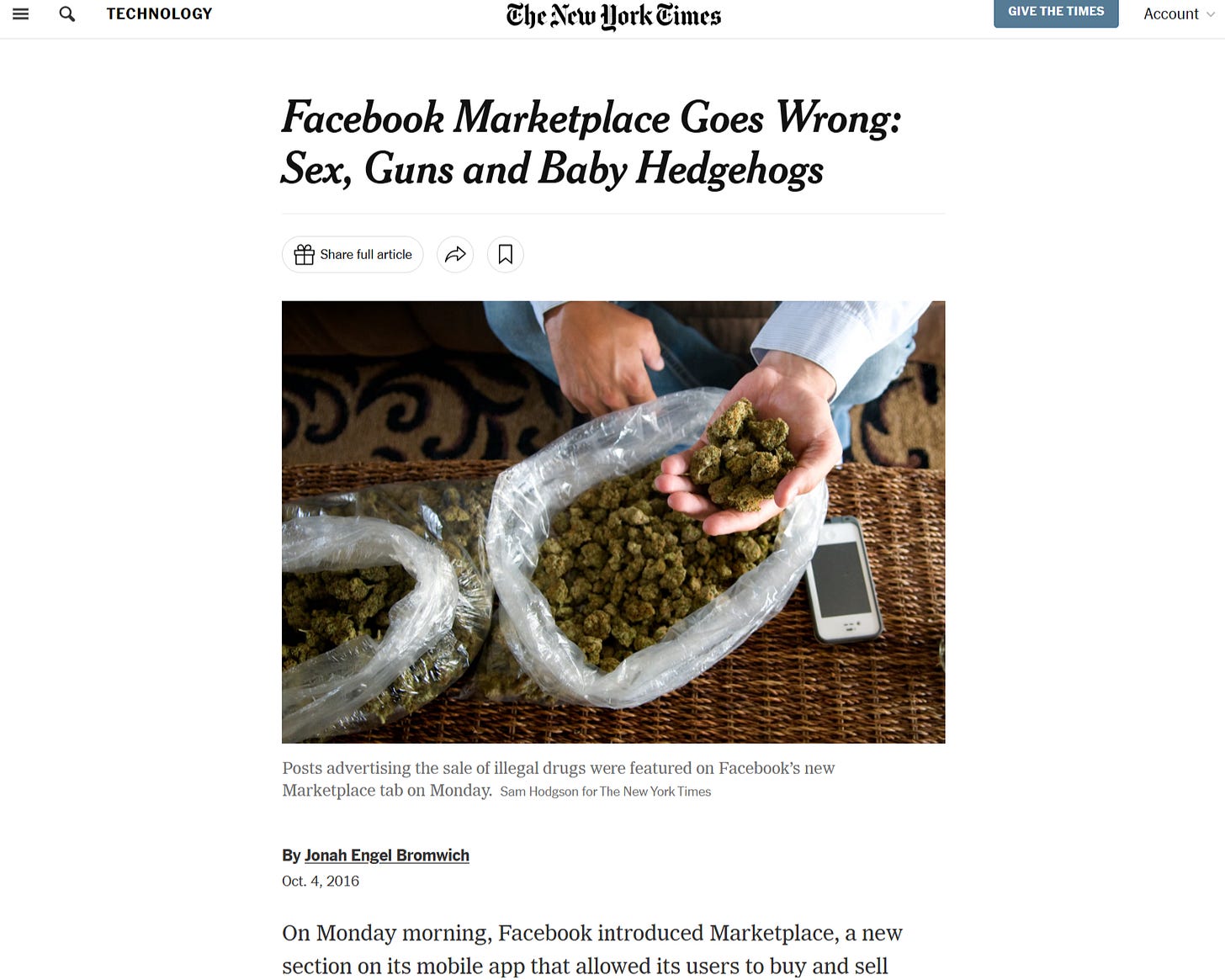
Deb Liu says Facebook Marketplace, now 10 years old, took six years to go from pitch to launch. It launched with a bug that made the New York Times, and it needed several more years to work before reaching more than a billion monthly users . Her point is that such products "don't look sexy in a performance review" .

- Treat feature-factory and outcome-oriented work as a spectrum, not a binary. When trust or familiarity is low, or dependencies are numerous, features may be the practical proxy; sometimes listing and shipping features is the right choice. Problem statements, metrics, and OKRs can also become proxies, while outcome frameworks can turn performative and displace hands-on shaping.
- Moving beyond feature-factory behavior can require structural investment—not just a mindset change—including customer and data access, autonomy, training, design capacity, and promotion incentives. Set an economically grounded rationale, funding/governance, and multi-quarter bets early; changing a feature-led team’s “game” later is difficult. Progress can begin with a small outcome, such as a customer call, one instrumented data point, or one account of whether something worked.
- Actively experiment on work close to cost or revenue when feedback loops are short; where controlled experiments are not feasible, use other imperfect methods to reduce uncertainty rather than expect binary verdicts for every product bet. Longer-horizon work needs conviction informed by data, while guarding against conviction that leads teams to ignore what is happening.
- AI can increase leverage across analytics instrumentation, connecting signals, prototyping, and eliciting feedback, but it can also amplify toxic documentation habits and encourage teams to substitute machine-generated interactions or synthetic personas for customer contact.

- Model PMs build models alongside research and engineering teams. They differ from AI platform PMs, who build tools such as APIs and evaluation tools; AI-native PMs, who build products powered by models; and applied-AI PMs, who add AI features to existing products. Model PMs need enough technical fluency to follow and use model concepts accurately in discussions with researchers and engineers.
- An author-reported scan of open PM listings across 95 company career pages found that model PMs had the highest median posted base pay, with a 60% premium over PMs outside AI; the gap was similar at mid, senior, and staff levels.
- In a review of 316 model PM LinkedIn profiles, 85% had worked as PMs before, 64% had a technical degree, and only 2% had a PhD; the author notes that about one-third lacked a technical degree. PM experience is common, while a technical degree or PhD is not a universal prerequisite.
- Barkley Dai’s route moved from AR to GenAI effects, then growth work at Luma AI and closer work with models; the author describes progressively moving toward models as a common, but not exclusive, path into the role.

- Your 360 AI first validated the product with individuals, then focused most of its effort on organizations with leadership or talent-development functions; organizational deployments often began with cohorts, and some early customers later expanded to all managers or companywide use.
- Rather than building the full end-to-end product first, the team validated an onboarding agent with friendly users, then added feedback collection and workflow, followed by synthesis and the report/debrief experience. Early use exposed needs such as call-drop recovery and support for much longer-than-expected debriefs.
- For voice AI, the team uses state machines but keeps transitions flexible because users may introduce topics out of sequence; it tests the balance between probing deeply and keeping calls manageable. The team also builds failure-case evaluations and checks quality when underlying models or platforms change.
- In sensitive 360 feedback, the team treats accuracy and confidentiality as core product requirements: automated monitoring flags cases for human intervention, and anonymity defaults plus corroboration help protect contributors. Its synthesis process separates structural checks—such as attribution and format—from additional passes to identify missed patterns; recipients see themes progressively in a coached debrief rather than receiving raw transcripts.

- Your360 AI brings interview-based 360 feedback, described as once reserved for the C-suite, to anyone: voice coach Tam leads self-discovery, interviews feedback providers, and guides the recipient through a report debrief, across three calls.
- To keep long voice conversations on track, the team replaced a single prompt with state machines, including transitions between strengths, growth areas, and requested areas; the median debrief is 44 minutes, after an early call exceeded the platform’s 60-minute limit. They moved from Retell to LiveKit for control of the speech-to-text, LLM, and text-to-speech layers.
- Voice-product tradeoffs include balancing personality against time to first token, avoiding reasoning models for voice, and optimizing feedback calls for completion and low friction, including phone calls. Usability testing combines screen recordings with follow-up interviews to compare what users think happened with what actually happened.
- For quality and trust, the team uses personas based on failed calls to regression-test model and provider upgrades, and automatically flags sentiment, customer value, and product quality instead of routinely reviewing transcripts. Critical feedback must be corroborated, provider groups are shown only when there are at least three, and report themes are revealed progressively; the team also weighs observability against sensitive data and uses structural and substantive evaluation to catch mistakes and missed patterns.
Facebook Marketplace illustrates a slow-burn product path: Deb Liu first pitched local community commerce in 2009, tested wishlists and group commerce, received approval to build in 2015, and launched the Marketplace tab in October 2016 . A launch-day bug sent the launch sideways, and the product took several more years after launch to work; it eventually reached more than a billion monthly users . Liu’s lesson for product teams is that “succeed fast or fail fast” is not the only model: the team kept building by tracking stories of people buying and selling and the local transactions happening one at a time .

A durable startup moat is a self-reinforcing advantage, not distribution or execution alone; brand can become a moat over time but usually takes too long to matter for most startups. The four compounding advantages are switching costs (deeper workflow integration supports retention and reinvestment), network effects (more users make the product better and attract more users), scale economies (higher volume lowers unit costs), and data effects (more usage generates data that can improve the product). For evaluating a startup, identify its compounding advantage, gauge its potential strength, and measure whether it is working; seeing no potential for any is a red flag when considering joining.

- Rich Roll’s podcast network addresses established podcasters’ difficulty monetizing without having to run a business themselves: alternatives included negotiating their own deals or joining networks with low CPMs, unsuitable advertisers, and little host agency. The network offers selected podcasters infrastructure and direct brand relationships to help them monetize.
- Rather than relying only on audience-size-based ad rates, the network packages some sponsorships as annual “360 deals,” combining podcast ads with appearances, travel, speaking, and events. Roll says focusing on problems a brand needs solved can build more meaningful partnerships, improve conversion, and reduce advertiser churn.
- The network has chosen a boutique, hands-on approach, prioritizing experienced podcasters who understand its value proposition; after some mismatches in expectations, it planned to scale modestly following a major hire.

A PM starting a role with a “massive” scope asked for coach recommendations and help prioritizing . One commenter advises checking whether the employer has a learning budget, since companies may pay for coaching . Suggested coaches were Rich Mironov (one commenter said he spoke to their product team and called him a visionary) and Dean Peters (another commenter’s favorite) .
On PM career paths, one commenter argues that product roles should generally follow experience in functions such as sales, design, marketing, customer experience, or engineering; a reply notes that people from sales, support, or strategy may know the business but still need tactical and technical guidance .

- Agentic commerce shifts assistants from recommending to transacting once they can access payment credentials: one example agent matched piano tutors to a family’s schedule and booked a first lesson. Wallet utility depends on reach on both sides—consumers who already have credentials there and broad merchant acceptance.
- Checkout design has a meaningful tradeoff: when Stripe Link lacked a Walmart connection, Stripe used a one-time virtual card to complete the purchase, but the customer’s bank saw a Stripe transaction rather than Walmart’s; a subsequent Walmart Plus signup failed because Walmart had the one-time card. Card-network agentic tokens are intended to let a wallet pass a transaction-scoped credential through a verified agent to the merchant, preserving the customer’s card identity, follow-on transactions, and chargeback rules; VGS says provisioning grew from zero to a few million tokens per week in three months.
- Merchant strategies may diverge: the interview attributes Amazon’s blocking of Muse largely to its advertising economics, while Shopify small businesses may see agents as a vital new channel; Walmart had not taken the same step at the time, and merchants may also offer their own agents.
- Agent authorization and liability remain unsettled. Network registration and transaction context help establish that a purchase request is authorized, but the speakers say responsibility is unclear when an agent gets details wrong or hallucinates; agent responsibility is raised as a possibility, not a settled outcome.
Katie Dill argues that AI should do more than make existing work faster: teams can raise the ceiling by having a point of view, encoding their standards into the machine, distinguishing “done” from “good,” and unleashing creativity and artistry.

- Strategy: Test whether a strategy forces trade-offs, whether most team effort and shipped work trace to its choices, and whether its parts form a coherent narrative. It need not cover every user, but product bets should not contradict its rationale.
- Building with AI: A six-level ladder runs from one-off prompts through reusable prompts, skills/connectors, vibe coding, and workflow tools to production software. Aakash recommends using the lowest level that works and moving up only when it breaks; he says L2 is enough for most PM work. His team shipped the same four sites using Claude Code, Codex, Cursor, and DeepSeek.
- AI feature design: Aakash defines an agent as a model plus a harness—the non-model layer that enables action, memory, and stopping—and distinguishes personal, team, company, and feature harnesses. He argues PMs should own feature harnesses because they determine what an AI feature can do, remember, and must not do.
- Model-PM roles and careers: The post distinguishes model PMs, who work with model research teams, from AI platform PMs (tools such as APIs and evals), AI-native PMs, and applied AI PMs. Aakash reports a 60% median base-pay premium for model PMs versus PMs outside AI across listings from 95 company career pages, with a similar gap at mid, senior, and staff levels. In his review of 316 model PM profiles, 85% had been PMs before, 64% had a technical degree, and 2% had a PhD.

- Start with the most important unanswered product decision, then choose the artifact: a concept prototype explores possible directions; a PRD records why to build, success measures, scope, and open questions; design, research, and technical prototypes clarify the intended experience, customer value, and feasibility, respectively.
- Treat PRDs and prototypes as complementary parts of an iterative learning loop, not a linear handoff: feedback may change the rationale, goals, or success measures, and the team should update either or both artifacts as decisions and assumptions evolve. The PRD holds the problem, bet, measures, and non-goals; the prototype makes flows and interactions tangible.
- AI can generate prototypes and long PRDs quickly, but generated details may include unapproved or mistaken decisions and assumptions; review the output and make intentional decisions visible. Add a formal curation step before production or launch: a working prototype is not automatically worthy of customer attention.

Casey Winters argues that Google Discover is undermining its product/market fit by sending half of news links to Threads, which he criticizes as a poor product Google does not own.
AI has made code dramatically cheaper, but it has not replaced the prioritization discipline that code scarcity once enforced; teams can now build nearly everything and risk shipping too many ideas they should have rejected.

In Hiten Shah’s sales-meeting prep test, Claude in basic chat without web access answered 1 of 5 requested items , while the same model and prompt in Cowork with web access answered all 5 . He highlights that AI’s ability to complete a job depends on having the necessary tools and information .
- One PM describes an AI-assisted workflow spanning backlog triage and problem diagnosis, solution and PRD drafting, PM review and approval, prototype generation, a separate model’s adversarial review, and AI-generated acceptance tests, release notes, and post-launch thank-you emails.
- The PM argues that routine work such as standups, weekly reports, and status updates can be automated, but choosing the right plan still depends on human judgment grounded in business fundamentals and product taste.
- A suggested 30-day SWE-to-PM portfolio plan is to interview 5–8 users, compare 3–5 competitors to identify an underserved user or a same-job solution at less than half the cost, then create a PRD and thin working prototype; Claude or Codex can help.
- One PM’s account of China tech roles describes long schedules: 10:30 a.m.–10:30 p.m., five days a week at ByteDance, and 11 a.m.–11 p.m., six days a week for a friend at PDD; these are personal examples, not industry-wide figures.
Hiten Shah frames a potential milestone for local AI as users no longer caring which model does the work—a product signal that the experience may matter more than the underlying model choice .
AI-agent capabilities that Hiten Shah had been running on his own hardware for months are becoming available in products that do not require users to set up their own infrastructure; he framed the next question as deciding what work to give AI to do.
In an audit of hiten.com focused on what might be costing registrations and what to fix first, Hiten found that two Grok bots both passed his checks but fit different jobs: one surfaced immediate homepage and schedule changes, while the other was better for recurring technical checks. He uses this kind of task fit to assess which work agents are useful for and trustworthy to delegate.
- A PM candidate reports encountering AI-prototyping take-home assignments across interview processes, with companies seeking different outputs; one gave only “product sense” as the success criterion, leaving the candidate unclear how performance would be judged.
- A newly hired PM describes having no clear examples or location for existing PRDs, difficulty finding documentation about how the company’s technology works, and no access to a demo environment despite asking IT and a referred contact; they were also expected to create a roadmap for a major initiative.
- One PM says their company has shifted from its original mission toward revenue extraction from existing users, and that UX improvements or reduced friction no longer meet its ROI bar, while the company pursues its first $1 billion in revenue.