We can't find the internet
Attempting to reconnect
Something went wrong!
Hang in there while we get back on track


Subsidized agent pricing starts to break
Some Grok Bot users ran through a week's usage overnight . Elon Musk's explanation was that "the cost of serving Grok Bot was unsustainably high relative to revenue" . Amjad Masad drew the wider lesson: "If you're enjoying a subsidized AI subscription get ready to get rug pulled" . OpenAI is also reportedly capping how many paid ChatGPT accounts one person can hold per device and payment card .
Jason Calacanis read the same signal as a sign of demand. He called it "an extremely bullish sign that people are getting value from their bots" and valued Grok bots at about $30 an hour of employee-equivalent work . He says he spends under $40k a year on AI tools, gets more than $2M in value, and has automated "at least seven full-time jobs" . Both readings can hold at once: agents are producing real value, and the companies serving them are not covering their costs. For portfolios, the risk is gross margins built on flat-rate plans with heavy agent use. The prior brief's theme of cheaper tokens but larger bills now shows up as rationing by providers.
The capex math, and who is financing it
Rob May at Investing in AI says Amazon, Alphabet, Microsoft and Meta now guide to about $720–745B of 2026 capex, up from about $410B in 2025 . In Q2, cash capex was 115% of operating cash flow at Alphabet and 119% at Amazon, and long-term debt at both has roughly doubled since December 2025 . He sets Anthropic's $16.8B Q3 revenue and OpenAI's roughly $50B run rate against that spending. His conclusion: "Revenue is real and the gap is real" . He also cites Epoch AI data showing the price of reaching a fixed level of model performance falling about 50x a year. In his view, value is shifting to whoever owns the scarce inputs and the customer relationship . His screen for investments: a company should own at least two of three things — a binding constraint, proprietary domain data, or a workflow customers can't easily leave . He discloses that his own routing business benefits if this thesis is right .
SaaStr's notes on the week's 20VC episode add more financing detail:
- Banks and Blackstone are providing $63B to buy Broadcom chips for Anthropic, and Broadcom is guaranteeing part of the chips' resale value to senior lenders. SaaStr called this the week's most worrying number .
- Meta launched about $35B of equity offerings, backed by a $60B at-the-market program, after its first negative free cash flow in more than a decade .
- Anthropic disclosed roughly 900% net revenue retention (NRR). SaaStr estimates the durable figure is closer to 300–400% once pilots converting to production are excluded .
- Rory's reading of the S-1 is that about 80% of Anthropic's revenue comes from models less than six months old .
The advice to founders is not to count on venture debt or compute financing at good terms in 2027 plans . On supply, Bindu Reddy expects spot GPU prices to reach 3–5x existing contract prices. If so, neoclouds locked into low-priced contracts would lose out . A Reddit post relays a SemiAnalysis headline warning that 2028 data-center buildouts face serious risk of pausing after the US midterms. No details beyond the headline were visible . Hunter Walk puts a "nonzero chance" on the US government becoming an equity or debt buyer of last resort for Anthropic, OpenAI or neoclouds if the AI market wobbles. He cites the Intel golden share as precedent .
On the hard-tech side, Garry Tan called YC "the YC for hard tech" . He was pointing to Viraj Aero (YC F26), which adapts a flight turbine to power data centers. The company says the turbine makes its own cooling water from exhaust, gets 40% more power from the same fuel, and can be permitted in weeks .
Altman in Abu Dhabi: an unverified Millennium Prize claim
Speaking at an ADNOC event, Sam Altman said 10,000 agents of the "next GPT" worked for about four days with no hierarchy "when we proved the first Millennium Prize problem" . He did not name the problem or say how the proof was checked. Given the disputed math claims in the prior brief, treat this as unverified. In the interview that followed, he said global average use is now about 100,000 tokens per person per month. He called energy "the very dominant factor" in AI's future cost . The host described ADNOC as the first energy company to adopt OpenAI Frontier, as part of agreements with G42 .
AI-found vulnerabilities keep piling up
Martin Casado pointed to a remote-code-execution flaw found in the Linux TCP stack. Searching kernel code used to not be worth the effort, he said, "But with AI, it's basically free" . Altman argues that AI is exposing vulnerabilities that already existed and that security-fix practices need to change . The linked article reports that Oracle's latest quarterly patch addressed about 3,000 issues, most of them found with AI. Oracle is now partnering with OpenAI on vulnerability discovery . That points to a market for automated patching and attack-surface inventory.
Robotics: is Astra the "GPT-3 moment"?
Freda Duan, summarizing talks with 50 people in robotics, argues that Astra is robotics' GPT-3 moment and that robotics is becoming "just another vertical for frontier labs" . Garry Tan amplified it: "Practical robotics is nigh" . Her reported signals:
- OpenAI reorganized its 30–40-person robotics team around Astra.
- There is talk of data-procurement budgets approaching $1B per frontier lab .
She expects the moat to shift to reliability, integration and deployment . That puts pressure on robotics foundation-model startups, whose pitch she calls a "narrower value proposition" . She also says Astra is about a month old and it is too early for firm conclusions .
Agents as buyers: churn risk for B2B software
A core SaaStr vendor went down for a full day. SaaStr's AI "VP of Marketing" agent, 10K, set up a replacement and recommended never using the vendor again. SaaStr switched at least partly that same day . 10K had earlier replaced Notion, and a heavily throttled API drove SaaStr off Marketo . SaaStr's takeaway for vendors: "Your API is the product," and sunk-cost prepayments protect much less when customers' agents can switch in hours .
DeepSeek's Harness team open-sourced an MIT-licensed "super-agent" prototype. A persistent Router assigns tasks to isolated Worker sessions, and by default the system only observes on work it infers rather than acting . Its reported speedup came from a simulation with synthetic messages and did not measure code quality .
Venture: tranched rounds and "pre-consensus"
David Tisch, speaking on 20VC, warned that VCs who structure tranched rounds can push co-investors "to a different product than you get to invest in." He added that he has "a long memory" . He also argued tranches can help some founders through more runway, momentum and buzz for recruiting, and called the lean startup "a total fake" .
Hunter Walk argues that truly non-consensus seed deals often can't raise follow-on rounds from major VCs. His advice to emerging managers is to be "pre-consensus": investments should become consensus within 6–24 months . Paul Graham warned that investors underrate how much simply talking to them distracts a startup, even for YC companies .
Other signals
- Courts: Shenzhen says its judges each closed 744 cases in 2025 with an AI assistant that drafts rulings, 249 more than in 2024. Sir Geoffrey Vos, who just retired as head of England and Wales' civil courts, said simple cases "can and will be decided by AI if the parties agree" .
- Commerce: a16z says shoppers referred by AI convert 60% better and bring 53% more revenue per visit than other online shoppers .
- Math talent: an MIT survey reportedly found nearly 76% of math grad students and postdocs are increasingly unlikely to stay in academic math .
- Cheaper models: Garry Tan claims Particle-1 matches much larger models on agentic retrieval at 1/23 the price .
- Deadline: YC W27 applications close Nov 2 .

- The interviewer says WhisperFlow’s revenue grew 30× in the prior year and that it had recently raised at “something like $2 billion.” Its content lead credits product-led fit first, with paid and organic channels adding fuel. He says paid can be tested early, within budget, to learn whether messaging converts cold traffic; if growth has to be forced, revisit product value and positioning.
- WhisperFlow’s earlier organic UGC program generated about 500 million views in 2.5 months but did not deliver the conversions it wanted, and the company shut it down. Its current performance-based paid creator program has 50 creators and launches 500–600 ads a month. For freemium SaaS, it pays creators a share of ad spend because attribution is difficult, and uses a conditional retainer to help creators stay while commissions build. The team favors distinct creator perspectives and open-ended experimentation; copying top ads risks repetitive creative and faster ad fatigue.
- For marketing hires, Hector prioritizes demonstrated content-making and audience-building ability, work ethic, and fit over grades or school pedigree; he says hires need room to experiment and improve. He argues young hires can bring an edge in understanding fast-changing social channels that older founders may not know well.
- Hector’s AI view is specific to customer-facing creative: internal automation can help, but he recommends keeping humans on the final creative output because generic or error-prone AI assets can damage brand reception; he favors quality over volume.
- He treats founder-led content as a long-term trust and brand investment: center it on the company’s mission and building journey, provide value before selling, and use organic touchpoints alongside paid acquisition.

- At an Abu Dhabi event, the interviewer referenced newly signed OpenAI–Abu Dhabi agreements spanning energy, education, investment and government; Sam Altman described the UAE as an early, broad AI adopter and estimated that 80% of young people there use ChatGPT weekly. Altman said OpenAI, G42 and ADNOC had discussed their relationship for years and described using frontier AI on ADNOC’s hardest, highest-value problems as a new opportunity; the interviewer called ADNOC the first energy company to adopt OpenAI Frontier.
- Altman said energy use per AI query is falling dramatically, but demand is rising; he cited average per-capita use of about 100,000 tokens a month, versus near zero six years earlier. He said the physical energy needed to power AI could become the dominant factor in its cost and abundance.
- Altman said AI had advanced from mostly being less capable than the best scientists to mostly exceeding them, and from being unable to perform much white-collar work to handling many parts of it. He said preventing serious safety and alignment incidents—and demonstrating that they can be prevented—will become increasingly important.
- Altman said AI will increase global energy demand while also helping energy operators produce more energy efficiently, citing possible advances in materials, turbine designs, and operations as examples of AI-enabled improvements.
- Altman claimed that 10,000 agents of an upcoming GPT model collaborated for about four days without hierarchy and “proved the first Millennium Prize problem”; the speech does not identify the problem or describe how the result was verified.

- Garry Tan called practical robotics “nigh,” amplifying Freda Duan’s thesis that Astra could be robotics’ GPT-3 moment: general models may make robotics more scalable and underwritable, rather than requiring a separate intelligence stack for each industry. Duan cautions that Astra had been out only about a month and it is too early to draw firm conclusions; she expects room for multiple approaches and winners.
- Duan reports hearing that OpenAI reorganized its 30–40-person robotics team around Astra and that Tesla may be moving similarly. She also describes a robotics-data procurement rush, with programs potentially reaching tens of millions of hours and budgets approaching $1B per frontier lab.
- Duan argues that more accessible intelligence could expand robot hardware volumes, while the moat shifts to reliability, dexterity, integration, and deployment; she identifies real-world deployment, failure recovery, hardware variation, and economics as key bottlenecks. She also flags potential edge-memory demand: a 100B-parameter model at 4-bit precision would require about 50GB for weights, before multiplying across millions of robots.
- Duan questions whether self-driving is insulated from general models, suggesting frontier-lab entry could create an “Apple vs. Android” dynamic for Tesla, Waymo, and other automakers; this is her forward-looking view, not an established market outcome.

- Harry Stebbings says he was wrong to doubt that a portfolio of 150+ companies in a $200M+ fund could generate outsized returns; he points to BoxGroup holdings Cursor, Baseten and Clay as examples.
- The recap argues seed investors should avoid competing head-to-head for 10%–20% ownership in outlier companies. It contrasts concentrated funds’ claimed 90% win rate with David Tisch’s estimate of around 20%, and says landing 30 investments at 10% ownership may require offering to 120–150 companies, creating adverse selection.
- The post’s investment-process view is that partners who have not spent time with founders should not be negative about a deal; with 70%–90% of early-stage companies failing, generic reasons a company might fail are not useful, and investors should focus on saying yes to the right opportunities.
- The recap describes pro rata as an earned right even when it is not written into deal documents, says documenting it can help founders, and warns that refusing a founder’s request to step back risks a losing conflict. It also says fast-growing companies’ Series B–D rounds now involve 3%–8% dilution rather than 12%–20%, reducing dilution across rounds for early investors.
- BoxGroup has stopped investing in consumer brands at seed because evidence such as customer purchasing and viable CAC-to-LTV ratios is not yet available; the recap sees Series A brand investing as viable for some investors, but not as a fit for traditional venture firms generally.

Rabois called Harry Stebbings’ conversation excellent; Stebbings’ recap says BoxGroup’s 150+ company portfolios and $200M+ fund sizes can still produce outsized returns, citing Cursor, Baseten, and Clay as examples.
- The recap contrasts concentrated-fund claims of winning 90% of desired deals with David Tisch’s estimate of about 20%; targeting 30 companies at 10% ownership may mean offering to 120–150 companies, with adverse selection as a concern.
- It says later rounds at fast-growing companies now involve 3%–8% dilution rather than 12%–20%, lowering dilution for early investors; BoxGroup stopped seed consumer-brand investing because seed-stage evidence of demand and viable CAC-to-LTV ratios is lacking, though Series A brand investing may suit some investors.
- The recap argues that pro rata is earned whether or not it is written into documents, and that written rights help founders; refusing to let a founder step back can create a fight. It also says partners who have not spent time with founders should not criticize deals, given the high failure rate and the need to identify investments to back.

After an initial candy business making chocolate-covered almonds and raisins failed, H.B. Reese incorporated H.B. Reese Candy Company in 1923, selling on consignment and hand-coating candy in department-store windows. A customer’s difficulty obtaining a competitor’s peanut-butter candy prompted Reese to make a penny-priced cup in 1928; by 1935, sales had paid off the mortgages on his house and factory. During World War II material shortages, he dropped other candies to focus on the cup; Hershey later bought the company, and the cups were Hershey’s best-selling product by 1969.
YC president Garry Tan framed YC as “the YC for hard tech,” linking to YC F26 startup Viraj Aero. Viraj Aero says its turbine technology, originally built for flight, now powers data centers; it generates cooling water from exhaust, delivers 40% more power from the same fuel, and can be permitted in weeks, avoiding a water connection and waiting for the grid.

Jason amplified Tucker Carlson’s claim that the Trump administration may decide within days whether to launch a nuclear strike on Iran, while acknowledging the account could be “90% exaggerated”; he nevertheless urged concern, citing Tucker’s sourcing, Netanyahu’s cornered position, and Trump’s impulsiveness. Tucker’s post warned that further conflict could worsen pressure on Gulf economies and global energy and fertilizer markets—an attributed, high-impact scenario rather than a confirmed development.

- Y Combinator spotlights Shivani Patel and Chris Markus, who worked at SpaceX before starting Layers Bio and BootLoopAI; it points to zero-to-one execution, solving hard problems, and owning outcomes as experience that can translate from engineering to founding.
- YC’s W27 application deadline is Nov. 2; its pitch to prospective founders is that they need conviction to build, not everything figured out in advance.
Jason says he spends under $40,000 a year on tokens and subscriptions from Anthropic, Loveable, Grok Bot, 11labs and other products, and gets $2 million-plus in value for @launch and @twistartups. He says the tools have automated at least seven full-time jobs and made average tasks 100% faster. He also argues that products from the past 90 days have changed more than the previous two years, with some work that took hours now taking minutes.
Garry Tan claims Particle-1 matches much larger models on agentic retrieval at one-23rd the price; he links to an evaluation write-up, but the post does not provide its methodology or results detail .

Paul Graham warns that investors may underestimate the distraction caused to startups by fundraising conversations; he says the linked example is a YC company, which he describes as having an easier time fundraising than the median startup.

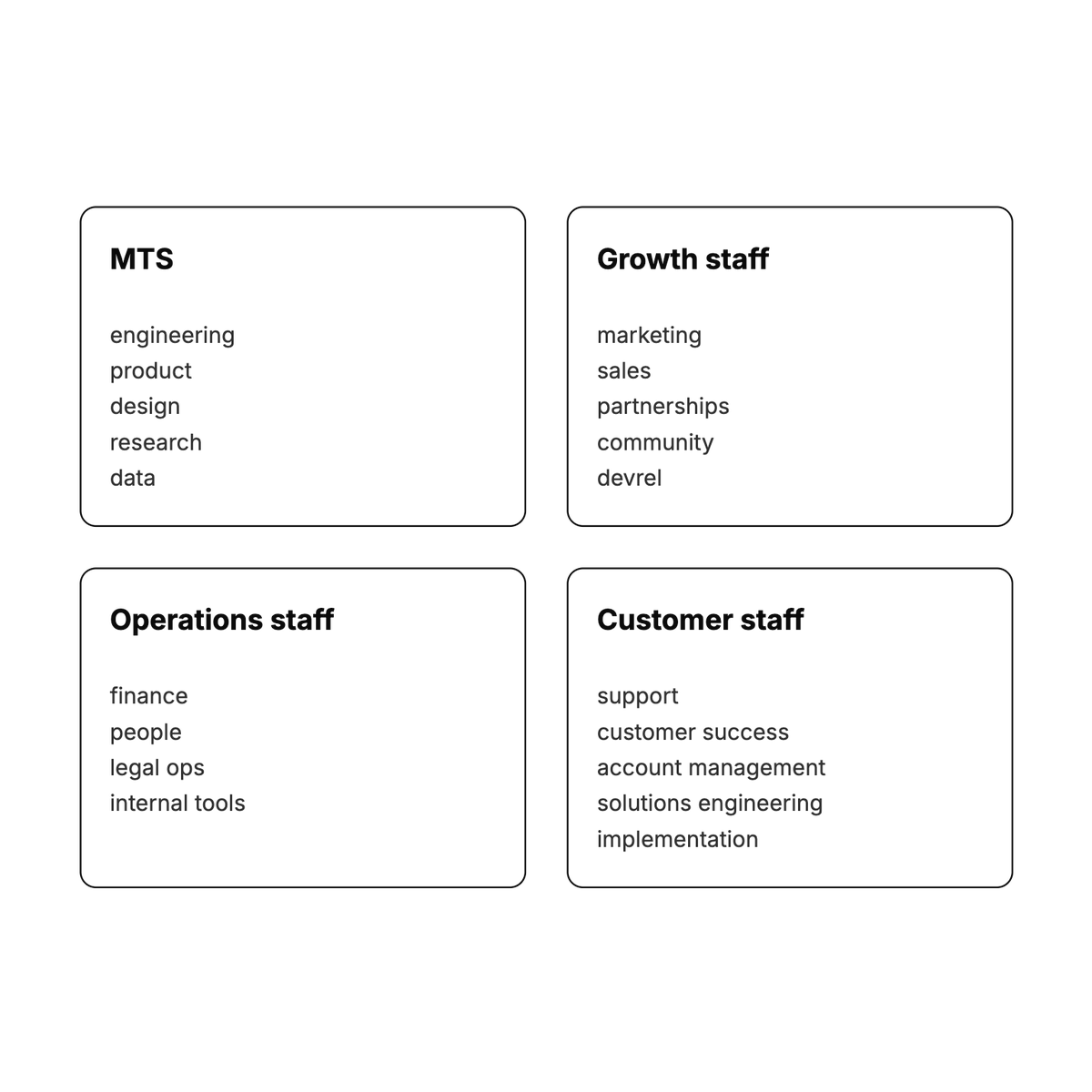
Nathan Benaich frames an AI-era labor shift in which workers become “members of agent management staff” across roles . The linked thesis argues that AI can handle average work, shifting differentiation toward agency, judgment and distinctive strengths, while roles increasingly describe what people own rather than what they do .

Sriram Krishnan argues that social and media platforms balance users’ interests against those of other users/platforms and business models that can be user-hostile; AI agents may let people construct their own experience despite those incentives, potentially prompting companies to respond. He says this may be harder on mobile because local models cannot take over the browser, while expecting frontier-token internet experiences to trend toward what users want.
The quoted post frames one possible use case as agents improving recommendations and helping users resist short-form video feeds that they cannot permanently turn off.

Martin Casado says an RCE in the Linux TCP stack has been found, calling it a throwback to the 1990s; he argues AI has made deep kernel-code spelunking cheap enough to surface vulnerabilities that were previously not worth pursuing.

Aravind Srinivas highlighted Perplexity Computer’s interactive Earth-history visualization: users can explore a timeline or enter a city to see its location 400 million years ago; the accompanying AskPerplexity post describes a globe covering Earth’s 4.5 billion years, built from 14 open datasets with 258 moving plates and 109 paleo-elevation maps.

a16z reports that AI-referred shoppers outperform other online shoppers: conversion is 60% higher, revenue per visit is 53% higher, and bounce rate is 34% lower .
a16z’s Connor Love argues that defense procurement can produce outdated systems because the military buyer, end user, and funding appropriator are disconnected, while traditional contractors wait for requirements and funding before developing products. He says venture capital, including a16z’s American Dynamism effort, can fund startups ahead of government procurement, building for current technology and anticipated needs; he argues this could deliver better soldier-facing products and improve battlefield capability, deterrence, security, or safety.
After Elon Musk said Grok Bot’s serving costs were unsustainably high relative to revenue, Jason Calacanis called this a bullish sign that users were getting value from bots. Calacanis estimated that $5,000 a year could provide the equivalent of two or three competent mid-tier employees, and valued Grok bots at about $30 per hour on average, blending clerical work at $15–25/hour with developer work at $50–100/hour; he added that this was as bad as the technology would get.