We can't find the internet
Attempting to reconnect
Something went wrong!
Hang in there while we get back on track

PM demand is rising, and the job description is changing
Lenny Rachitsky's latest job-market report goes against the "AI replaces PMs" story. Open PM roles are at their highest in nearly four years, up 75% from the March 2023 low. PM openings have grown 56% since the start of 2023, against 43% for engineering . Actual hiring is a different picture: it has been flat or falling for every core product role. PM hiring has held up best, though, and PM's share of hires rose from 16% in 2021 to 21% . Lenny reads the gap between openings and hires as growing demand combined with more difficulty landing great PMs .
Other product roles are shrinking:
- There are now 3.8 open PM roles for every open design role, up from 1.9 in early 2023 .
- U.S. user-research hiring is down 66% from 2022, the steepest drop of any role in the report. Lenny thinks teams now learn after launch instead of through research, and that better tools let people outside UXR run studies themselves .
- Open mobile and front-end engineering jobs have nearly halved in a year, while forward-deployed engineer (FDE) roles are growing .
For PMs, it may matter more that discovery work traditionally done by researchers and designers is moving onto the PM. Required skills have shifted too. "LLM" is now the most-mentioned skill in PM job descriptions. "Claude" is third, Cursor, OpenAI and MCP are in the top eight, and "evals" is in the top ten . Even in designer job descriptions, Claude is now the second most-mentioned skill, although demand for Figma has also grown .
What AI-era PM interviews test
Aakash Gupta adds his own hiring data. Hires of PMs from outside the company are down 45% since 2022. 48.3% of first AI PM jobs went to people who had held a PM role without "AI" in the title. Career switchers have better odds in healthcare (37.0%) and finance (36.5%) than in tech (29.5%) . Agent PM grew from 2.1% to 9.5% of AI PM hires . He also found that 40–45% of job seekers faced a take-home or past-project presentation. Companies that use them include Anthropic, OpenAI and Stripe. Because every candidate has AI help, the assignments now test whether your judgment adds something AI can't produce for everyone else .
Hiring managers in r/ProductManagement disagreed about vibe-coded side projects. One 15-year PM likes them as a chance to show real PM skills instead of a scripted product-sense exercise . Others care only about users or revenue , or about "what broke when real users touched them" .
Does continuous discovery have product-market fit?
Teresa Torres and Petra Wille treated discovery habits as a product, with the organizations that buy training as the customer. The habits work for individuals and teams . The demand is real: companies want better discovery and will pay for it. What fails is follow-through: reserving the time, keeping going through busy weeks, getting customer access . Boards reward predictable results, and executives are rewarded for certainty and for dictating solutions . Change rarely survives a leadership change . Torres's reframe: treat those constraints as fixed and adapt the method to fit quarterly incentives . Wille's counter is that partial adoption still has lasting value .
SaaS strategy after AI builds version one
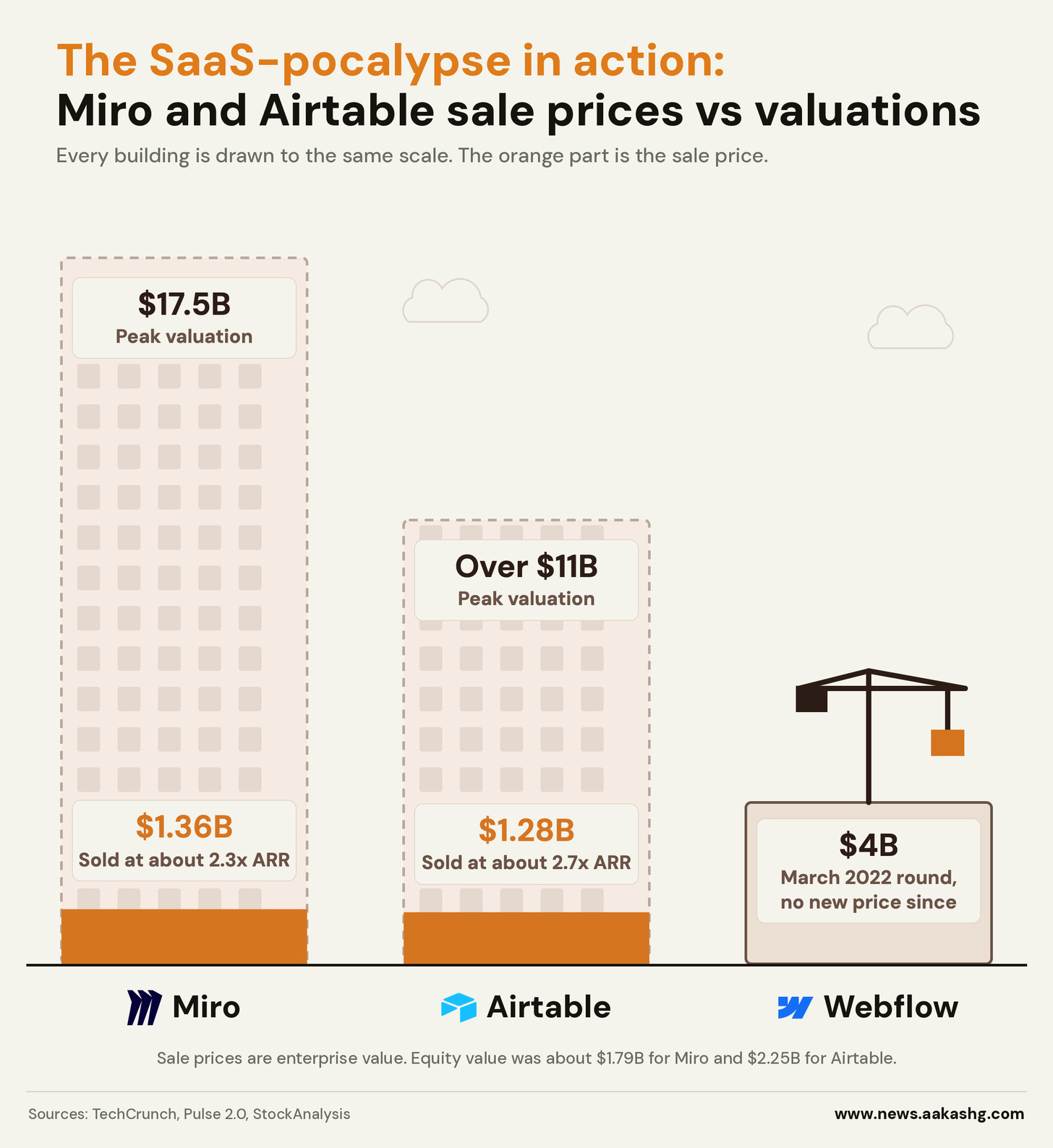
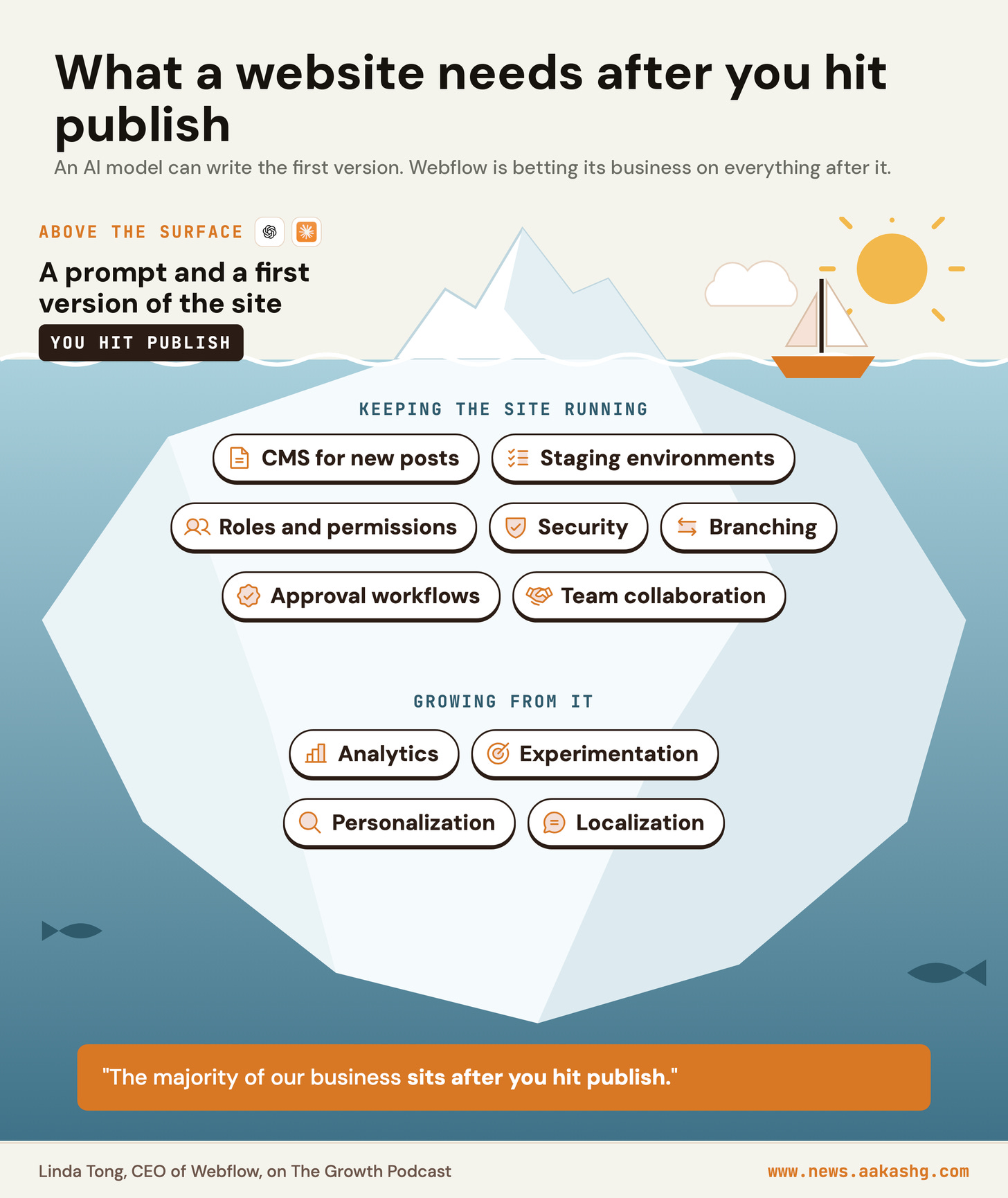
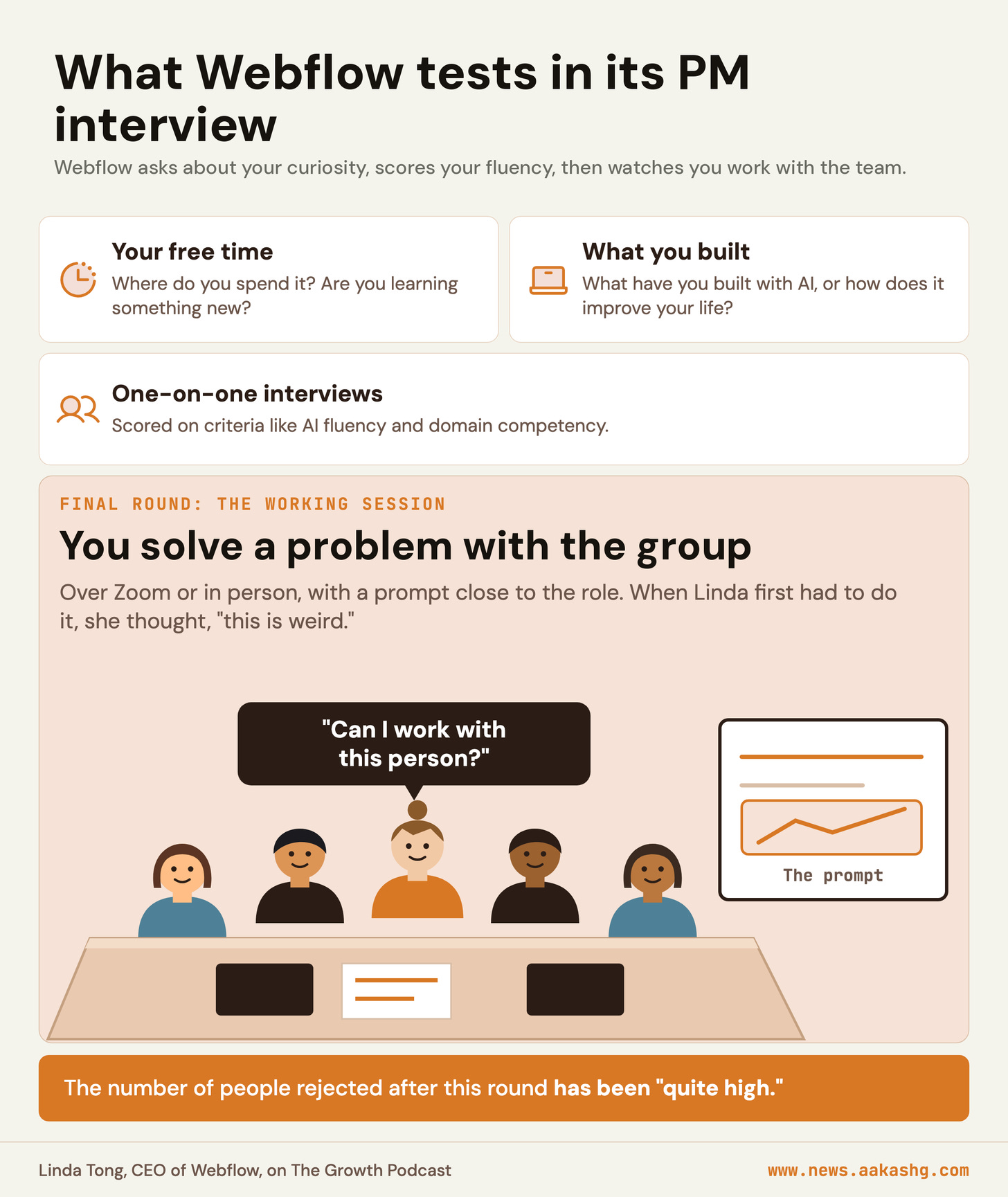
Webflow's argument is that AI is good at version one, so most of its business comes after a customer hits publish. Its three bets: build what AI is bad at, go deep on one buyer, and use AI tools as an acquisition channel . Its PMs code the first prototype, and each product area is staffed by two or three engineers, a designer and a PM . There is no separate AI PM title, because every PM is expected to be one . HubSpot's Dharmesh Shah offers a related rule: anything a structured query can answer deterministically should not be answered by an LLM . HubSpot is pairing its system of record with a "system of context" for unstructured data .
Validation and other news
- Paid pilot vs. pivot. A founder had 20 conversations, and only 2 agreed to a pilot, both for a minor feature . One commenter's advice: agree a small, fixed scope and a review date, and see whether they'll pay to keep using it. Treat the feature as a wedge into the bigger product only if the need recurs across unrelated buyers .
- Stripe closed its OpenRouter acquisition to help businesses explore models and optimize token routing . Patrick Collison says OpenRouter now serves about 125% more tokens per week than when the deal was announced in August .

- PM openings are at their highest level in nearly four years: up 75% from the March 2023 low and 56% since early 2023, versus 43% growth for engineering openings. The report combines global job-opening data with U.S. hiring data; actual hiring across core product roles has been flat or declining, but PM hiring has held up best, and PMs are the only core role whose share of hiring rose—from 16% in 2021 to 21% today. The author interprets the gap as rising demand but greater difficulty landing strong PMs.
- AI fluency is increasingly prominent in PM job descriptions: “LLM” is the most-mentioned skill, Claude is third, Cursor, OpenAI, and MCP are among the top eight, and evals are in the top ten and gaining momentum; SQL remains strong.
- Product-team hiring is uneven: there are 3.8 open PM roles per open design role, up from 1.9 in early 2023, and U.S. product-design hiring over the past 12 months was less than half its 2022 level. U.S. user-research hiring was down 66% from 2022; the author suggests faster release cycles and tools enabling non-researchers to do research may contribute, while presenting the possible decline of UXR as a dedicated function as speculation.
- PM opportunities are geographically concentrated: one in four open PM and design roles is in the Bay Area. About 21% of PM openings are remote, a share that has held steady for two years but remains near a record low.

For products intended to sustain a user behavior, Eyal’s motivation model suggests that a clear action and its benefit are not enough: users also need to believe they can perform it, since disbelief in their ability can prevent action. He argues that beliefs shape what people notice, feel, and do, making user confidence and limiting assumptions useful considerations alongside action clarity and perceived value when diagnosing behavior-change challenges.

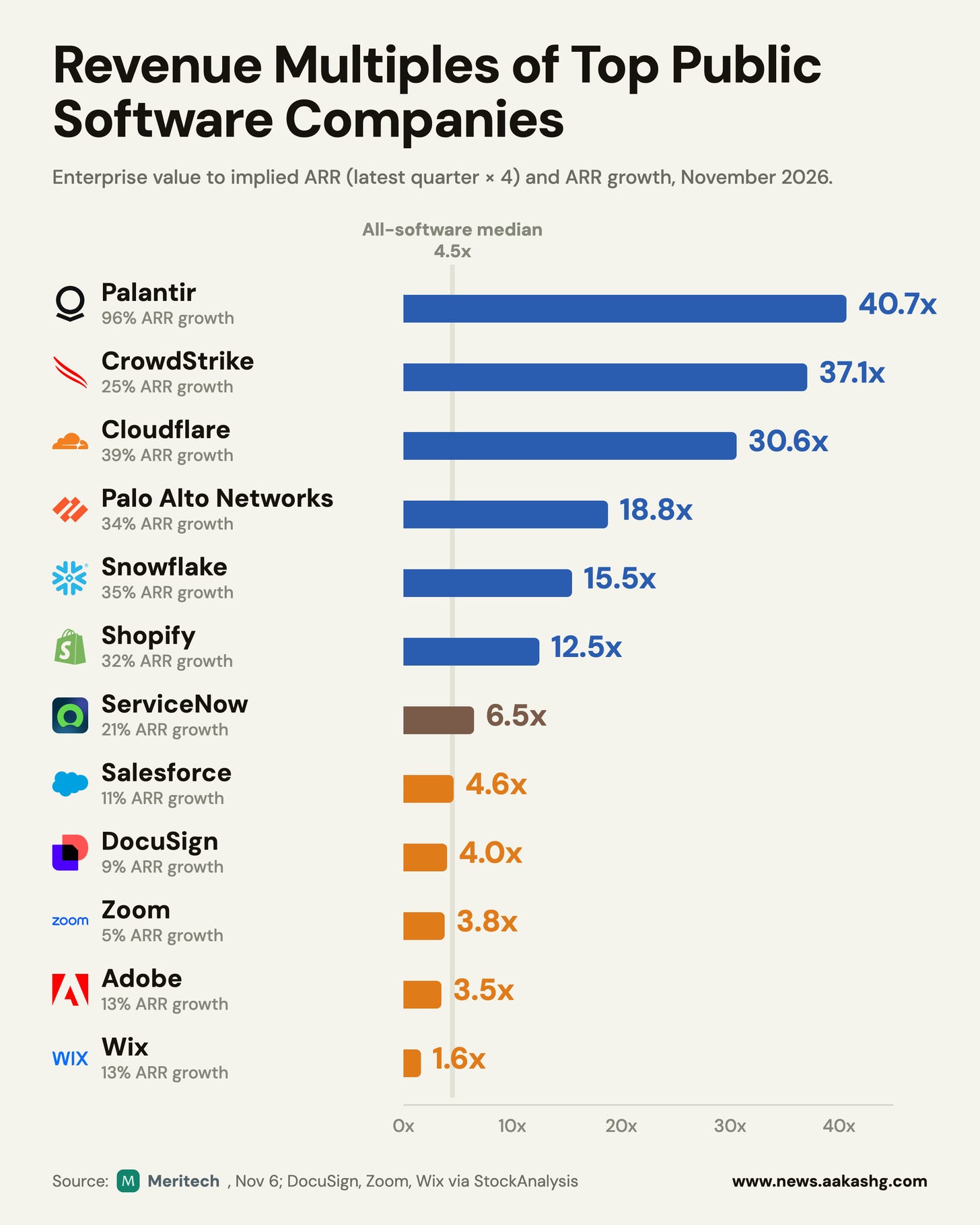
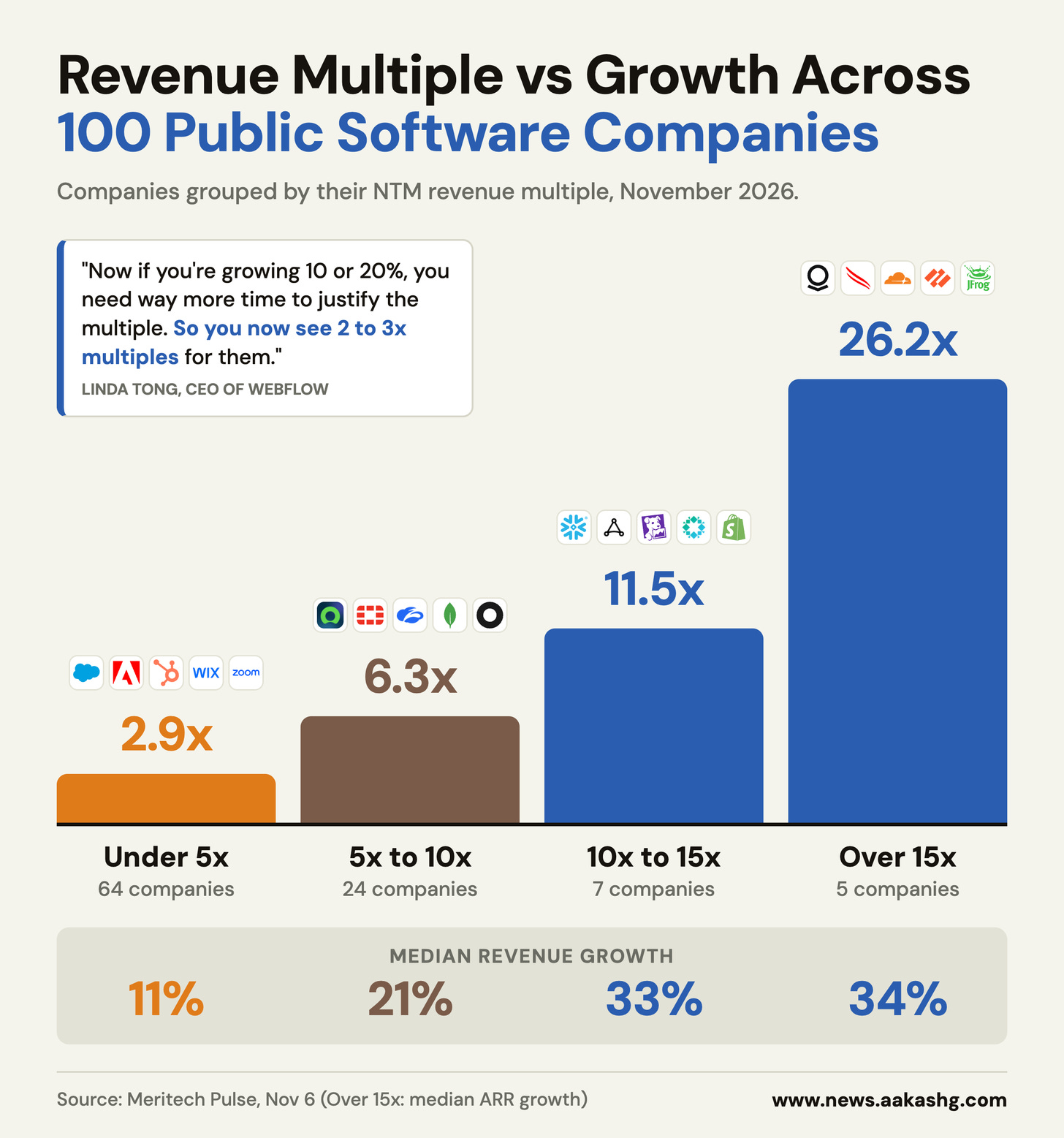
- The software market is still rewarding growth, particularly among companies perceived to have AI tailwinds; in the author’s analysis, 64 public software companies valued below 5× had median growth of 11%, versus 34% for companies above 15×.
- Webflow’s AI-era strategy is to monetize what comes after AI-generated “version one”: build for work AI handles poorly, focus on a specific buyer, and use AI tools as a customer-acquisition channel. Webflow identified marketing teams at larger companies as its core buyer; its suggested ICP exercise is to group usage by job and job title, then identify unmet needs such as governance and collaboration.
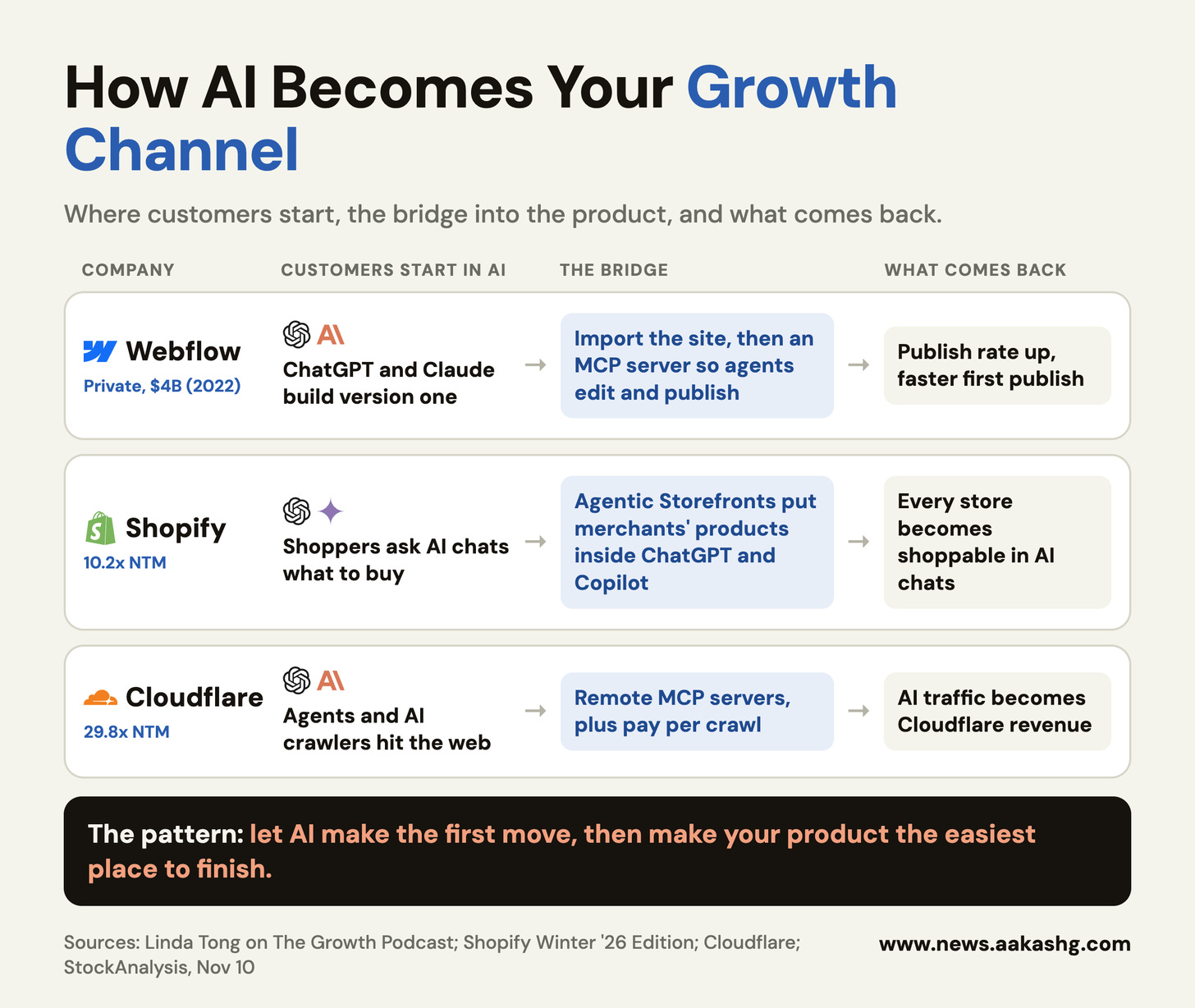
- Webflow encourages users to bring ChatGPT-generated sites into Webflow to iterate; the article reports that people using Webflow’s MCP publish more often and new customers reach their first publish faster. Its Source feature, then in research preview, was intended to create on-brand assets, obtain approvals, and publish.
- Webflow’s operating model has PMs code initial prototypes, small teams of two or three engineers plus a designer and PM swarm on them, and product teams prioritize user behavior over feature counts while spending more time with customers. Webflow treats AI fluency as a baseline for PMs rather than a separate title, and interviews probe candidates’ curiosity and what they have built with or done using AI.

A 2026 tech-job-market report says PMs are “winning in the AI era” and that every role now requires AI skills; it also says engineering demand has stalled and design openings are at a record low.
Lenny says Forward Deployed Engineering openings are exploding and points readers to a list of FDE jobs.

- Teresa Torres and Petra Wille ask whether Continuous Discovery has product-market fit when treated as a product for organizations buying training. Torres says the habits work at the individual and team level, but questions whether they can stick across an organization; the concern is willingness to reserve time, persevere through busy periods, and secure customer access—not whether companies want and will pay for better discovery.
- Organizational incentives are a key barrier: boards favor predictable growth, executives are rewarded for certainty and dictating solutions—undermining the trust discovery requires—and adoption often struggles to survive leadership changes or company growth.
- A proposed reframe is to adapt the discovery approach to existing structures, incentives, and quarterly results rather than expecting the whole organization to change; even partial adoption can be valuable because, as Petra puts it, “what has been seen cannot be unseen.”
Lenny Rachitsky’s 2026 tech-job-market report says PMs are “winning in the AI era,” AI skills are now required across roles, and design openings are at a record low. In designer job descriptions, demand for Figma experience has grown over three years, while Claude became the second most-mentioned skill as of spring—suggesting AI tools are spreading alongside, not replacing, Figma.
Lenny’s 2026 tech-job-market report says PMs are “winning in the AI era” and that every role now requires AI skills. It also reports engineering demand has stalled and design openings are at a record low. Tech recruiter openings are described as at an all-time high, up 300% since 2023.
- Lenny Rachitsky’s 2026 tech-job-market report characterizes PMs as “winning in the AI era” and says every role now requires AI skills; it also reports stalled engineering demand and design openings at a record low.
- In a related hiring shift, he says FDE is ascendant while open mobile and front-end engineering jobs have nearly halved over the past year.

PM hiring views on vibe-coded side projects are split: one experienced hiring manager says even noncommercial projects can show passion, creativity, problem-solving, and PM skills, while another says candidates beyond new-grad level should prioritize tangible users or revenue over how the project was built.
The stronger signal is the product work behind the project, not simply shipping code: explain the problem, user response, decisions, and learning. One commenter warns that zero-user weekend apps may count against candidates unless they can discuss what broke with real users; another says candidates should be ready to defend design choices.
Presentation options include linking a public repo or a README describing the project goal, process, and learnings; one commenter says that approach supported a successful product-leadership job search.

- AI makes iteration and learning cheaper, so test ideas with real users rather than relying on analysis; successful products often diverge from their original idea. Narrow the initial market and shorten learning loops, especially as easier software creation makes distribution harder.
- HubSpot found that 60% of its surveyed marketing customers used no CRM; citing intimidation and cost as barriers, it launched an easy, free CRM and later expanded it into a platform.
- HubSpot CTO Dharmesh Shah argues that business software should optimize for the work and customer outcomes, not the interface; use deterministic queries for structured questions instead of LLM inference. HubSpot is revisiting its architecture to pair a structured system of record with an unstructured context store, potentially a graph, for inference and agents.
- HubSpot Next operates as a startup within the company, with room to test new products, markets, and technologies outside core constraints; successful components can be brought into the main product. Uspot, its one-person CRM for solopreneurs, was used to test product ideas and monetized early to learn about pricing and customer-perceived value; Shah reported willingness to pay for a consumption-based model but gave no figure.

- The article argues the “SaaS-pocalypse” is overstated: among the public software companies analyzed, the 64 valued below 5x revenue had median growth of 11%, while companies above 15x had median growth of 34%; its product-leadership takeaway is to prioritize growth. Webflow’s AI strategy is to capture value after AI creates a first version: build what AI handles poorly, choose a specific buyer, and use AI as a distribution channel. Webflow focuses on marketing teams at large companies, encourages customers to start with ChatGPT’s site builder and bring the result into Webflow, and says MCP use increases publishing and speeds customers’ first publish; its Source feature is in research preview and is designed to plan launches, create on-brand assets, obtain approvals, and publish.
- Webflow’s product operating model has PMs code first prototypes, small teams of two or three engineers plus a designer and PM, a focus on behavior over feature count, and more time with customers. It has no separate AI PM title: the expectation is that every PM works with AI.
- Aakash’s note on AI-first PM roles says postings at OpenAI, Anthropic, and Google DeepMind seek PMs who can run evals, prototype with code, understand model-architecture tradeoffs, automate with agents, and use MCPs; he argues the PM-engineer boundary is dissolving. Another proposed PM skill set for this model is design sense, taste at speed, and continuous discovery.
- Aakash’s 2026 hiring-market report says outside PM hiring is down 45% since 2022, Agent PMs grew from 2.1% to 9.5% of AI PM hires, and 48.3% of first AI PM jobs went to people who had PM experience without AI in their title. For people new to PM, healthcare and financial companies accounted for 37.0% and 36.5% of first AI PM jobs, respectively, versus 29.5% in tech.
- PM take-home assignments were reported by 8 of 20 interviewees (40%) and 45% of 160 job seekers in Aakash’s cohorts; he says AI assistance makes distinct judgment more important than polished basics. His suggested differentiators include talking to customers, sizing impact, prototyping, and practicing the presentation aloud.

- A product strategy for serving overlooked customers: identify the gap between what customers want and what is available, challenge incumbents’ conventions rather than compete on their terms, and scale in that whitespace.
- Direct customer feedback can shape both roadmap priority and delivery speed: after 15,000 people joined an e.l.f. TikTok Live and asked for bronzing drops, the CEO pushed the innovation team to accelerate the product from a planned 12–18 months out to launch in six months.
- Tubi says it uses fan feedback to greenlight shows and movies, and sees AI as a way to improve content discovery and help more stories find audiences as content grows; its CEO said viewers may spend 15 minutes searching for something to watch.

For e-commerce personalization, use A/B-test results to assess whether ideas move outcomes such as conversion, revenue per visitor, average order value, engagement, or loyalty sign-ups, and to guide what to build or test next. Frame a proposed site change as a hypothesis about a customer-journey problem; state what you would measure and what would make you drop the idea. For personalization, pair a primary metric with a guardrail, such as conversion alongside returns.
Lenny Rachitsky’s 2026 tech-job-market report identifies PMs as “winning in the AI era” and says every role now requires AI skills.
Lenny Rachitsky’s 2026 tech-job-market report says product managers are “winning in the AI era”; its other headline trends include stalled engineering demand, design openings at a record low, AI skills required across roles, jobs concentrating in the Bay Area, remote roles at a record low, and most tech-job growth occurring outside software. The analysis triangulates global job openings at more than 9,000 tech companies with U.S. hiring, departure, and promotion data covering 124 million professionals.
Lenny Rachitsky’s 2026 job-market data shows PM demand rising despite concerns about AI replacing PMs: open PM roles are at their highest level in nearly four years, up 75% from the March 2023 low, and have grown faster than openings for any other core product role since early 2023. PMs were also the only one of five core product roles whose share of hiring grew over the past five years, rising from 16% in 2021 to 21% in 2026.

Handshake built 13 simulated banking firms with 100 tasks and about 14,600 grading checks to train AI on banking work; the top model passes only 11% of the tasks. Its AI training business is near $1B in gross annualized revenue.
- For an entry-level PM interview, show that you think in terms of value rather than deliverables and can prioritize and reprioritize; research the company, product releases, and interviewer, and be candid about skill gaps while focusing on understanding problems before proposing solutions.
- A practitioner debate distinguishes discovery-oriented PM work—such as market and user research and synthesis—from PO-style backlog and project delivery, arguing that titles should reflect the work; commenters also note that feature-factory delivery can be intentional in cost-constrained or exploitation-focused settings, and that responsibilities vary substantially by organization.
A BITSOM course on product management with agentic AI, offered by Masai, is being shared as a crosspost from r/AIProductManagers.
- A candidate with one year of software engineering experience and no product-management background was considering a 0–1 YOE product associate role; the recruiter described it as “high ownership,” without hand-holding, fast-paced, and with possible crunch, prompting concern because the candidate expected training.
- Commenters disagreed on how to read that signal: some viewed entry-level expectations combined with little support as a potential mismatch, while others cautioned that recruiter language may not reflect the actual role. They recommended asking the product director or current PMs how ownership works and what support is available to build missing skills.