We can't find the internet
Attempting to reconnect
Something went wrong!
Hang in there while we get back on track

🔥 TOP SIGNAL
Use Opus 5.5 xhigh as the baseline, not max. Theo’s self-described “silly” Skatebench moved from 78% to 79% accuracy on max, while token use grew 15×, cost 13×, and average latency rose from 6s to 50s; the slowest max run was 20× slower. A separate 70-task scientific-research benchmark reported 62% on xhigh versus 59% on max—useful direction, not a coding benchmark.
⚡ TRY THIS
Make unattended runs bounded. Put this in
CLAUDE.md: “When a step doesn't need my input, keep going. Put status notes in the same message as your next action. Stop and ask only when you can't continue without me, or before anything destructive: deleting data, force-pushing, or changing anything outside this repository.” Keep destructive-command permission prompts on. For remote work, Theo explicitly authorized environment-variable copying, required checks for the clone, environment, and Claude Code/T3 Code setup, told the agent not to control his active machine, and said to ask if setup failed; he reports the handoff took about 17 minutes.Build executable backpressure. Huntley recommends tests for architectural rules (e.g. fail when SQL-domain code couples to REST) and properties checked against generated inputs, rather than only hand-picked cases; his string-reversal example shows how Unicode can expose gaps. Feed reproducible failure reports back to the agent. Huntley says he works at Antithesis, so the deterministic fault-injection offering is a company-affiliated pitch.
Separate builders from reviewers. In his T3-codebase experience, Theo says a different model family can catch issues Claude misses, though it may return more low-value findings. Give the reviewer the diff; ask for only merge blockers, with file/line, why it is wrong, and a reproduction path. Require it to flag what it could not verify, and provide tests or browser access to check claims.
Prune tests by proof, not quota. Steipete reports OpenClaw removed around 400k LOC of tests with little change in coverage; his suggested prompt is to “remove 20% of the least useful tests while maintaining code coverage within 2%.” The linked skill is more conservative: do read-only discovery, document what each candidate catches and what stronger proof remains, retain independent contracts and regressions, then validate a coherent owner-boundary batch with owner and sibling tests. Coverage parity alone is not a deletion case.
📡 WHAT SHIPPED
LangSmith Trajectories + Fine-Tuning (
smithtune, public beta). Trajectories orders human, AI, tool, and system-prompt messages across the main agent and subagents.smithtuneturns LangSmith traces into supervised fine-tuning data (SFT only), trains via Fireworks or Baseten, and replay-evaluates the tuned model against the base before deployment; preserve each turn’s context and tool availability, which can change during long runs. The demo’s 50 accepted examples split 41/4/5 across train/validation/test and showed only a slight agreement lift; the presenter said the sample was too small to expect much benefit. It also knowingly uploaded PII for later removal—redact before reproducing.LangSmith Engine v2: LangChain says it red-teams agents before production, tests proposed fixes before presenting them, and surfaces inefficient agent work plus cost/latency trends.
🎬 GO DEEPER
- Video — Theo, “Getting the most out of Opus 5.5”: The
xhigh/maxsegment shows the informal comparison behind the top signal; treat it as a practitioner test, not a broad benchmark.
- Video — LangChain’s SmithTune walkthrough: Watch how the demo preserves per-turn context, drafts a task rubric, and uses two judges to curate traces; it demonstrates the data workflow, not robust model gains.
- Repo — OpenClaw’s
test-auditskill: A practical counterweight to percentage-based pruning: read-only discovery, evidence for each deletion, and validation at the owner boundary.
Editorial take: Keep reasoning effort adaptive; spend the saved budget on checks that can disprove a patch and give the agent a reproducible fix target.
Direct answer: This skill gives no numeric deletion quota to operationalize. It says to optimize for confidence, not deletion count; outside a campaign, pursue a few high-confidence candidates. Treat any target as a sequence of scoped, evidence-backed batches rather than a quota. A campaign instead prunes one subsystem’s whole test surface and requires reading CAMPAIGN.md first.
- Discover before editing: Read the complete test and production owner, entry point, callers and callees, sibling implementations, overlapping tests, CI routing, relevant history, and applicable
AGENTS.mdfiles; inspect dependency source or types when a test claims dependency-backed behavior. Keep discovery read-only and report evidence first. - Screen candidates for low value, then apply the retention bar: Hunt for tests such as exact source/import/string greps, duplicate boundary coverage, assertion-free probes, or tests that preserve test-only seams. But retain tests that independently enforce meaningful contracts or credible regressions; static or slow tests are not deletable for that reason alone. Source inspection can be valuable when it guards a contract independently and survives identifier-only refactoring.
- Require a deletion case for each candidate: Before editing, record its exact name/location, what failure it detects, non-test callers, stronger remaining proof (or why none is needed), relevant history, what production/test-support deletion it unlocks, and risk plus focused validation command. Missing evidence means the candidate is not ready.
- Preserve regression coverage at the owning boundary: A bug regression must fail on pre-fix code for the intended reason and pass after the repair; one owner-boundary regression covers the bug rather than replaying it at every layer. A retained test that fails on baseline may indicate a product bug—reproduce and repair the owner instead of deleting the test.
- Make coherent edits and prove the remaining coverage: Use one owner-boundary batch; remove obsolete test-only exports, wrappers, globals, and dead paths; move retained regressions to canonical owners and consolidate repeated assertions. Do not add replacement tests that restate the same implementation or pursue deletion counts. Validate owner and sibling tests, relevant executable contracts, formatting/diff, and the required changed gate; inspect production versus test LOC separately.

LangSmith Fine-Tuning was announced as Public Beta: the smithtune CLI is intended to take LangSmith agent trajectories through dataset preparation, managed fine-tuning, evaluation, and optional deployment.
- Workflow and features:
smithtunecan be run directly or with a coding agent. It pulls trajectories from a LangSmith tracing project, supports optional filters, helps humans and agents label and review traces, and uploads the agreed “golden” set as a persistent LangSmith dataset. It also filters traces that exceed a model’s sequence-length limit and creates train/validation/test splits. - Training partners and requirements: The announcement names Fireworks managed SFT and Baseten Loops; both support LoRA training on prepared trajectories.
smithtune planlets users review the model, example count, and hyperparameters before starting a job, and the announcement says users do not need to provision GPUs or manage training infrastructure. Getting started requires a LangSmith account with agent traces, an API key for Fireworks or Baseten, and the CLI. - Evaluation and deployment: The CLI compares the selected fine-tuned checkpoint with the base model using replay evaluation on golden trajectories; a judge scores predictions against recorded examples, and results are available through a LangSmith comparison link. Users can run
smithtune deployto serve the tuned model, or revise the data/settings and repeat training and evaluation. - Key scope and data-handling caveats: The announcement says
smithtunecurrently supports supervised fine-tuning (SFT), using examples of desired behavior. It describes trajectories being copied to a local directory, the agreed golden set being uploaded to a persistent LangSmith dataset, and training jobs being submitted to Fireworks or Baseten. The announcement does not specify privacy, retention, or provider data-use terms for these steps.
The guide gives a concrete long-task workflow: hand over the whole task with an observable definition of “done” and explicit stop conditions, then let it run; its migration example defines completion as all endpoints moved, the old client deleted, and tests passing, with a pause only for an unexplained test failure. The supplied sources do not include Theo’s video or claims, so which recommendations are new relative to it cannot be established.
- Steer Claude Code through
CLAUDE.md: instruct it to keep going when it does not need input and combine status notes with its next action; have it stop when blocked or before destructive actions such as deleting data, force-pushing, or changing anything outside the repository. The guide also says to keep destructive-command permission prompts on; for pair programming, it suggests the alternative of requiring a one-line plan and a short recap. - Delegate and preserve long-run state: for audits or migrations, assign each service to its own subagent, check each report’s evidence before accepting it, and request a final table of service, affected status, and evidence. For a long run, keep an updated checklist in
TASKS.mdand use it to see what is done and remains. - Verify outputs with criteria, not just a general review request: the suggested diff-review prompt asks for only merge-blocking problems, each with file and line, why it is wrong, and how to demonstrate failure. For research or analysis, ask it to mark what it could not confirm and say where it looked. The guide also recommends reading first for what the finished run needs from you, and gives a configurable summary format: “Blocked on me, Changed, Found.”
- Tune prompts to the model: remove “think carefully” or “think step by step” instructions; for simple questions, ask for a direct answer, and adjust effort in Claude Code if you want to change how much it thinks. Rather than request internal reasoning in the reply, ask for a brief explanation of the chosen approach.

- Define completion before handing off: Theo recommends giving the whole task at once, stating what “done” means, and specifying when to ask for help—for example, a payment migration is complete only when every endpoint uses the new client, the old one is removed, and tests pass; ask only if a test fails for an unexplained reason . In a firsthand T3 Code remote-machine setup, he asked the agent to clone the repo, configure environment variables, and run Opus 5.5 through Claude Code and T3 Code; he explicitly authorized copying environment variables, prohibited disruptive computer use on his active machine, and told the agent to ask if setup failed. He reports the setup took about 17 minutes .
- Steer long runs and set boundaries: Theo recommends adding requirements while an agent is working rather than restarting the task . His Claude MD rule is to keep going when input is unnecessary, put status updates alongside the next action, and stop only when blocked or before destructive or out-of-repository changes; if the agent asks whether to continue, reply “continue” and strengthen the rule if needed . For large audits, migrations, or reviews, explicitly authorize subagents: Theo says Opus 5.5 may otherwise be reluctant to use them, while early testers reported success with lightly supervised parallel audits .
- Avoid Max reasoning by default: In Theo’s self-described “kind of silly” Skatebench test of Opus 5.5, Max averaged about 5,000 tokens and 50 seconds per response versus 338 tokens and 6 seconds on X High; accuracy rose from 78% to 79%, while cost was 13× higher, token use 15× higher, and worst-case latency 20× higher. He recommends X High rather than Max, which he says forces more reasoning instead of simply raising the ceiling .
- Use independent review and make verification possible: Theo finds cross-family review useful: OpenAI models tend to examine details more exhaustively than Claude, though they can report more low-value findings; in his T3 codebase benchmark, Opus 5.5 was almost twice as successful as Opus 5 by his judging system and had no unresolved or contradicted findings . Ask reviewers to identify what they could not verify, and provide suitable tests, browser access, or computer-use tools where possible .
- For UI work, give specific direction and visual feedback: Theo says a generic instruction to “avoid generic” can merely swap one default style for another; specify styles or patterns to avoid, then iterate using annotated screenshots and targeted feedback .

-
A user reported reproducing an autonomous Claude Code workflow with Opus 5.5 for a Friendr.nl explainer: in about 1.5–2 hours and for roughly $4, it generated the concept and script, collage assets, TTS, music/SFX, and a JavaScript canvas animation rendered to MP4, synchronized animation to narration, and used another model for review; an English version took about 30 minutes longer. In a separate replication, a commenter’s prompt requested a 45–60-second pure-JavaScript explainer runnable in Firefox, allowed internet access and an
.envOpenRouter key for TTS capped at $10, and reportedly needed only minor corrections. -
Dan Greenheck built the browser-based interactive island TideWater with Opus 5.5 in roughly eight hours, using iterative prompts such as
add Xandmake it better; the reported token spend was $1,874.40, or 59% of a Max 20x weekly allowance. The demo supports walking, object interaction, and sailing, beyond a static scene. - Databricks reports that its engineers stopped reaching for closed models after open-source models were routed to its internal coding agents. Separately, Gemini 3.8 Flash became available for free in Cline and is reported with a 1M-token context window.
-
LangChain’s Managed Deep Agents 0.8 adds user/agent memory with access policies, HTTP channels, sandbox file APIs, proxy-authenticated sandboxes, and parallel web search; its Trajectories feature handles deferred tool calls and context compaction. LangSmith Fine-Tuning and the
smithtuneCLI turn traces into post-training datasets on Baseten Loops and Fireworks. A separate reported context-management pattern pairs action agents with dedicated memory agents; Meta’s reported result for Sonnet 4.5 rose from 37.6% to 45.9%.

Runway described its video agent as an LLM orchestrating image and video tools through an ad workflow: turn a brief into a storyboard and video, analyze ad performance, then generate further content using those results . Runway’s broader architectural view is that harnesses can precede capabilities learned directly by models; it points to chain-of-thought prompting and multi-shot video orchestration as examples of functions that may move into the model .

Runway's Anastasis described an early interface-world-model system that renders software interfaces as pixels rather than HTML/CSS/React; it accepts clicks, drags, and scrolling, with prompts defining how interface elements should behave. Runway sees the system as a way to generate synthetic data and potentially live RL environments for computer-use agents, with varied interactions intended to improve agent robustness; the work is early, and serving cost remains a challenge.

- Salvatore Sanfilippo reports building a Tinkercad-style CAD with extrusions, holes, and fillets, including a 3D engine based on mathematical representations of solids; he says he is not a 3D-engine specialist. Fable 5.1 struggled with complex feature and topology work involving faces, vertices, edges, and fillets. After switching to Astra, he judged the result essentially a real CAD that could potentially become a commercial product.
- For a Commodore 64 emulator he had modified to expose an API for LLM-assisted software development, Sanfilippo gave Astra staged tasks: preserve the original programmer’s minimal style while fixing VIC timing for LFT Demo 9, then use technical documentation—not code—about the SID chip to improve audio fidelity. He reports that Astra made the timing fixes and substantially improved SID emulation.
Runway’s GWM Worlds 2 is a research preview that streams interactive worlds at 720p and 24 fps; Runway’s principal research scientist Robin Kahlow identified testing agents across thousands of simulated environments as a use case, while CTO Kamil Sindi cited synthetic-data generation for agents. A key caveat for evaluation: GWM Worlds exposes no structured state, so agents observe through cameras.
For computer-use agents, co-CEO Anastasis Germanidis described an interface-world-model research update that takes clicks, drags, and scrolling as input and predicts the resulting interface pixels. Runway sees potential to generate varied interfaces for synthetic training data or a live RL environment; this is an early research direction, and serving the model requires substantially more computation than rendering HTML.

Geoff Huntley shared a speculative reconstruction of the reported OpenAI Medicare-agent incident; the linked account says it relies on public reporting and archive records, has no inside information, and involved no hacking in the investigation. Its security takeaway for systems agents can access is to enforce authorization at the backend: the reconstruction says the site’s JavaScript exposed report paths and a guest endpoint accepted requests without credentials, leaving front-end bot blocking ineffective; it attributes access to the system’s configuration, not a software exploit.

Jerry Tworek, Core Automation’s co-founder and CEO, says his team primarily uses OpenAI Codex as programmers and researchers, and uses agents extensively in its AI research; consumer AI products have not been a major part of his own use. Tworek says his earlier OpenAI work included coding models and starting an internal AI-scientist project. He puts Core Automation at about 23 people and estimates that agents let a group of 20 do roughly what 200 people could do a year earlier. His caveat: current models still have poor research taste and ideas, and are not capable of fully autonomous, strong self-improvement without human supervision.
- Geoffrey Huntley argues that verification—not code generation—is the unresolved problem: AI cannot verify its own output across the gap between development and production, so autonomous Ralph loops need agentic backpressure to stay on track.
- Turn architectural decisions into executable checks using language services and code introspection; for example, make an agent’s SQL-to-REST domain coupling fail a test and feed that failure back in the prompt. For functional correctness, define properties and generate chaotic inputs rather than relying only on hand-written test cases, which can miss edge cases such as Unicode in string reversal.
- Huntley describes Antithesis deterministic testing and fuzzing as a way to inject faults, find and reproduce root causes, and give agents detailed failure reports as backpressure. He says he works at Antithesis, so this is a company-affiliated account.
- For a free software-quality uplift, he recommends “Bomdadil” (described as Terminal/Web and linked to the Bombadil repo) and/or Hegel.
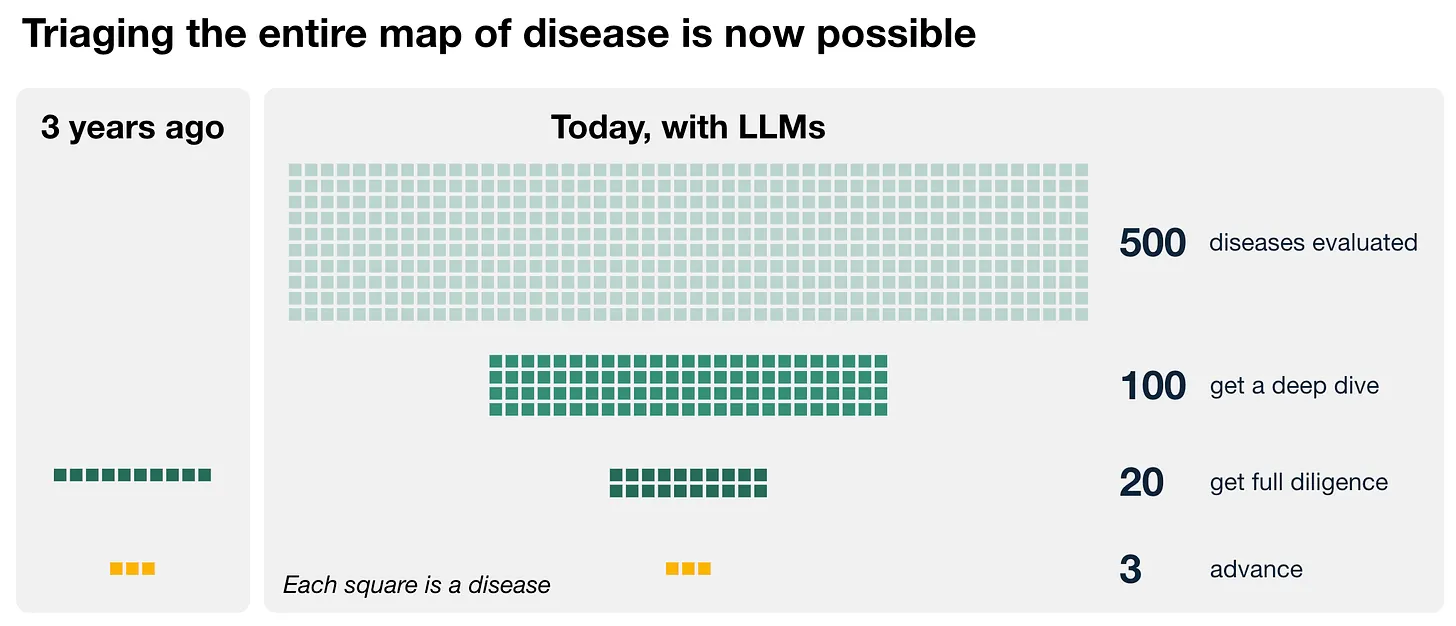
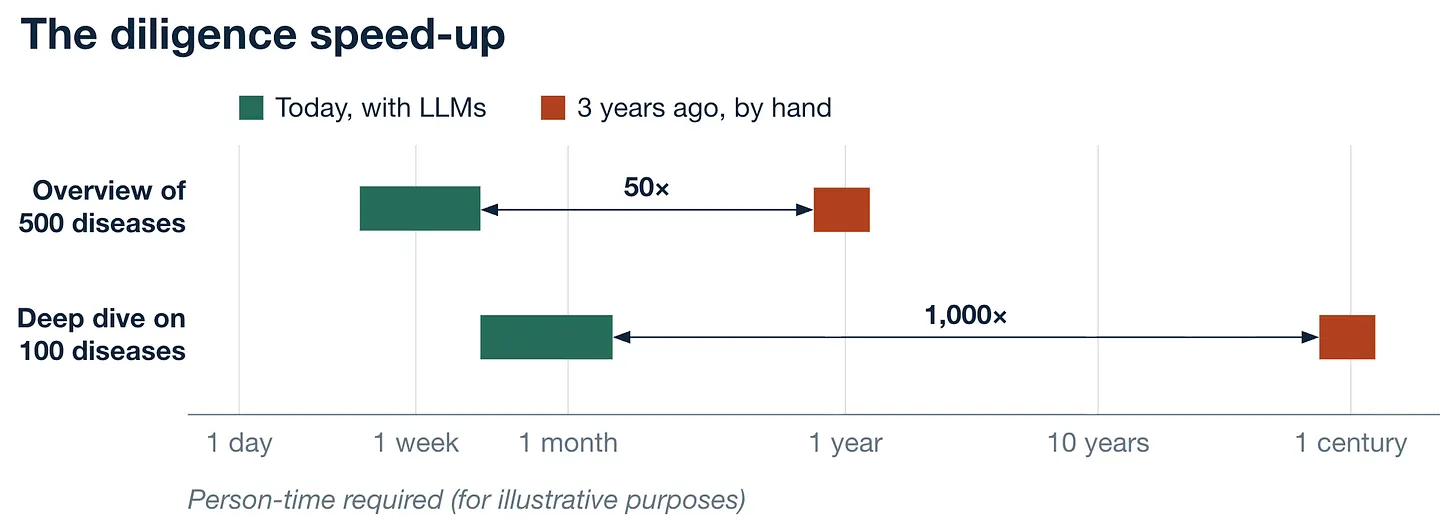
- At Endura Therapeutics, CEO and cofounder Adrian Sanborn describes using a two-stage fleet of LLM research agents to assess disease targets: the first pass screened about 500 targets with roughly three-page reports, then the second produced roughly 30-page analyses for the approximately 100 remaining targets. The initial screen checked disease prevalence, existing treatments, and whether lowering the target could relieve the disease.
- For the deeper pass, Sanborn says they prompted agents to act as skeptical experts: identify failed programs, explain why they failed, and specify what would need to be true for Endura to succeed where they did not. They checked second-pass reports against primary sources and retained full human diligence for selected programs; first-pass errors were considered tolerable because they could mean a missed opportunity rather than time spent pursuing a bad idea.
- Related coding practice at Endura: Sanborn reports that adapting analysis code when an experimental protocol changes is now an afternoon’s work rather than a project; an internal dashboard was built in a few hours, and scientists who ran experiments can present their own results instead of waiting in an analyst queue.

Simon Willison says his experience working with coding agents has made him more convinced they make software engineering harder: they enable impressive work, but realizing their full potential requires extraordinary discipline and knowledge.

Addy Osmani highlighted Claude Opus 5.5 as 40% cheaper than Opus 5, with cache reads 60% cheaper; the post claims it performs at the level of “Claude Fable 5.1” for most tasks. For a first Opus 5.5 session, Claude Devs recommends handing over a whole task with “done” and check-in criteria, skipping “think carefully” because the model already thinks first, and checking after a long run what it needs to continue.
- Anthropic made Claude Code cloud sessions generally available, with one-time credits of $100 on Pro and $250 on Max, and Projects now run locally. Anthropic’s team also reported using Claude for profiling and debugging to make claude.ai 3× faster in two weeks.
- Cursor launched Rollouts, which write a monitoring plan and verify deploys; the update also cut Security Reviewer runtime by 21%. Cline Desktop added worktrees and parallel subagents.
- Artificial Analysis ranked Opus 5.5 first on its Coding Agent Index with a score of 66, up from 60 for Opus 5; component scores were 63.1% on Terminal-Bench 4.0, 68.4% on DeepSWE v1.1, and 66.4% on SWE-Atlas-QnA. Pricing is $4/$20 per million tokens, with cache reads at $0.20, but reported cost per task is still $13.04 at 15.6M tokens per task and more than double the output tokens.
- CLM-8B, a released System-1 model with weights and data, is reported to run up to 9× faster than Jev at comparable zero-shot agent performance; after fine-tuning, it scored 81.6% on DeepSWE and 87.6% on Terminal-Bench 2.1.
- Harness and agent-training results offer both a technique and a caveat: Google’s RRSI regularizes automated harness evolution to reduce overfitting, raising Gemini 3.5 Flash on Terminal-Bench 2.1 from 64.6 to 78.7 and adding 3.5–4.7 points on held-out benchmarks. Salesforce’s RIVER audit found only 35.8% of the cleanest public terminal-RL collection sound, with reward errors in both directions; NVIDIA’s Skill2Env compiled 7,971 tasks from public Agent Skills, and RL on them raised Qwen3.8-27B from 49.4% to 54.1% on Terminal-Bench 2.1.
Addy Osmani relayed that Claude Code cloud sessions are now generally available, letting a task continue while the laptop is closed; the original announcement says the feature is out of research preview. Existing Pro and Max subscribers receive one-time credits of $100 and $250, respectively; sessions use the credit before regular plan usage.

Peter Steinberger reports that after ChatGPT began crashing following a macOS 27 update, Astra found an approximately 14-year-old bug in libuv (PR 5283). He then put Daybreak on libuv and says it found eight more long-standing leaks; he links his open libuv PRs. The practical pattern: trace a real crash into an open-source dependency, then broaden the investigation to look for additional defects there.

ThePrimeagen says his custom harness is apparently running at about 2× the speed and using half the tokens, but he had not yet confirmed it could complete a full test suite; treat the performance figures as preliminary, with no comparison baseline specified.

LangChain launched Smith Tune in public beta, a CLI for post-training models from LangSmith traces; Jake from LangChain demonstrates using it with a coding agent to curate traces and run the workflow.
- For trace curation, retain each agent turn’s full context—including the tools available at that turn, which can change in long-running agents—then pull and filter candidate trajectories. Define a task-specific rubric with the coding agent and use independent model reviewers to select golden examples; Jake’s demo targeted 50 trajectories from a candidate pool capped at 500 and required both configured judges to approve each example.
- Prepare the curated data with a training provider and base model, create separate train/validation/test splits, and review the plan’s learning rate, batch size, and epochs before authorizing paid training. In the demo, 50 accepted trajectories were split into 41 training, four validation, and five test examples; Jake cautioned that this was too small for a real job, which should use broader splits. Training selects the checkpoint with the lowest validation loss, then compares it with the base model on held-out data; inspect trajectory replays and judge agreement, deploy if results meet the quality target, or refine the examples/settings and repeat.
- The demo used Base10 with Qwen 3.8 27B; its fine-tuned model showed only slightly higher average agreement with the judge/golden trajectory, and Jake said the small job was not expected to show much benefit—so this is a workflow demonstration, not strong evidence of a general performance gain. The demo also knowingly uploaded data containing PII with a plan to remove it afterward, a data-handling caveat for anyone replicating the process.