We can't find the internet
Attempting to reconnect
Something went wrong!
Hang in there while we get back on track
UX is the PM's job, and AI raises the stakes
Ravi Mehta's main example: at Tripadvisor, an icon-heavy redesign of the hotel-search filters cut conversion by 20%. He puts the potential cost of a full rollout at $100M . He rejects the idea that UX belongs only to designers. You can't take responsibility for a product's success while treating the experience as someone else's job. AI raises the stakes because teams can now bury users in "more screens, more choices, and more chat boxes" .
Three parts of his argument are practical:
- Chat is an option, not the default. A blank prompt can create translation work. Dragging an object or picking from a calendar is often easier. Hybrid designs pair language for stating what you want with familiar controls for refining the result, as in Magic Patterns and Lovable. When an agent is the user, a structured interface may be the more reliable choice .
- More automation isn't automatically better. Granola lets people take their own notes while it transcribes, then merges the two. For many customers, taking notes is part of how they think .
- How to find opportunities: watch someone do an important task and look for physical effort, cognitive burden, translation work and workarounds. Start with friction that is frequent, costly and close to the product's core value. Then count the checking and repair work a user does after the AI responds .
Building is cheap for everyone now
Hiten Shah points out that customers who used to wait six months for a feature can now build a rough version over a weekend and ask why your product can't do it. "The most threatening product feedback is going to arrive as working software" .
Sachin Rekhi, after two years of vibe coding, describes four distinct modes. For landing pages and feature prototypes he never looks at the code; prototypes work as a "modern-day Figma" for trying out different UX options. For personal apps he chooses simple, maintainable architecture. For production features at Notejoy he uses plan mode, mini-specs, explicit security and caching decisions, hundreds of unit tests and PR review. He says the last mode looks nothing like the others .
A widely discussed r/ProductManagement thread shows what happens without those guardrails. A PM said developers demand "ultra-granular" waterfall specs, skip estimates and unit tests, and leave the PM accountable for every failure . Out of desperation, the PM started building features with Claude. Third-party QA noticed better code quality, and the PM said the work finished in a tenth of the time. The PM doesn't want to be responsible for security or other things "beyond the UI" without engineering expertise .
A related post says recruiters now openly want "solution-oriented" PMs who reach features quickly . Commenters split on the cause. One says AI means PMs are expected to prototype on their own . Another says short runways make teams prefer something they can show investors over discovery .
Leadership and strategy
- Founder vs. steward. Scott Belsky argues that because models and whole layers of software are being displaced so quickly, companies whose roadmaps go from concept to execution in under a year need a founder mentality: the willingness to "churn strategy in short cycles" without fear of being wrong. He says steward leaders may suit hardware businesses with multi-year roadmaps .
- HubSpot re-founds. Brian Halligan is back as CEO. He and Dharmesh Shah say they are "completely re-founding" the company as "the Customer Harness Company" . Hiten Shah notes HubSpot is on track for $3.7B in revenue and compares the move to its original inbound playbook .
- Walmart agent profiles. CEO John Furner says Walmart will launch agent profiles in the coming weeks. Customers will be able to let their own agent or Walmart's buy for them, with limits such as a spending cap. He calls it "early in the journey" .
Talent signals
- Where UX researchers went. Lenny Rachitsky followed up on the decline in UX research roles. Of 2,779 US user researchers who changed jobs in 2024–25, 49% stayed in research, 17% moved to design, 9% left the field and about 2% became PMs. Almost half of those who stayed in research joined companies outside tech. Banks, financial firms and insurers hired about 1 in 7 .
- Hiring rules have side effects. Deb Liu argues that requiring CS degrees for PMs, which was meant to make PMs more technical, "cost us a generation of women PMs," since women earn only 1 in 5 CS degrees . That's worth keeping in mind as AI PM postings add technical requirements.
- Use the Hook Model early—before major engineering and design investment—as a product filter, or later to diagnose weak engagement. It is suited to businesses that depend on frequent repeat use; Eyal’s rule of thumb is at least weekly, and he advises against trying to build habits for infrequently used products.
- Prioritize engagement before buying growth: Eyal frames a business around growth, engagement, and monetization, and warns that spending on acquisition before establishing customer retention creates a “leaky bucket.” Engagement must be designed into the product rather than bought.
- Start product discovery with the user’s underlying emotional need, not with a technology seeking a problem. The Hook cycle is trigger, action, variable reward, and investment; for habit-forming products, investment should make the product more valuable with use. Eyal sees AI-enabled personalization as an opportunity and expects customers to increasingly want tailored digital experiences.
- Fitbod illustrates behavior-based targeting: rather than trying to turn non-exercisers into gym-goers, it serves people already at the gym who are unsure what workout to do; their logged sets and reps inform subsequent workouts.
- Eyal’s ethical test for behavioral design is whether the product materially improves users’ lives and whether its creator is a user; he says answering yes to both makes the creator a “facilitator.”
Job Search OS v2 packages job discovery into a workflow that creates a tailored application package, including a resume or work product, networking support, and interview preparation . Its autopilot fills applications in the user's browser; users supervise, are advised to humanize resumes, and send personalized connection notes themselves . The creator reports more than 2,000 monthly active users for Job Search OS and offers standalone access for $49 one-time with lifetime updates .
In response to a new PM asking what junior PM behaviors frustrate product leaders , commenters highlighted:
- Discovery: Don’t jump to a solution or anchor on a customer’s or leader’s first idea before understanding the problem. Listen to customers to understand their behavior and needs, and balance quantitative data with qualitative context.
- Stakeholder judgment: Avoid being an automatic “yes”; question requests with the “5 Why’s” rather than sending unsupported stakeholder opinions to engineering. One commenter warned that agreeing to every stakeholder creates a wish-list roadmap and frustrates engineering.
- Execution and trust: Know the product and domain well enough to answer basic questions, take ownership, and proactively update on promised ETAs; communicate mistakes clearly and build agency as trust grows. A commenter also cautioned against passing along AI-generated work without context or review.
Lenny’s 2026 tech-job-market report describes PMs as “winning in the AI era,” while engineering demand has stalled and design openings are at a record low.
Among 2,779 US user researchers who changed jobs in 2024–25, 49% took another research role, 17% moved into design, 9% left the field, and about 2% became PMs; nearly half of those who took another research job joined a company outside tech.
- PM hiring: Deborah Liu says requiring product managers to have computer science degrees to improve technical capability narrowed the eligible pool—women earned only 1 in 5 CS degrees—and changed the profession’s gender makeup, costing “a generation of women PMs.”
- Decision-making lesson: Requirements can create second-order effects as people adapt to rules and incentives; revisit the data and adjust rather than assuming a well-intentioned rule works as intended. The goal, Liu argues, should be better outcomes rather than perfect rules.
- Walmart said its AI can interpret plain-English shopping requests and context—such as tacos for four people with a gluten-free requirement—and connect them to products, inventory, and pricing, with the goal of enabling 25-minute fulfillment.
- Walmart said it planned to launch agent profiles in the coming weeks, allowing customers to delegate purchases to their own agent or Walmart’s while setting controls such as spending limits and purchase times; it described the work as an early-stage effort and emphasized keeping customers in control.
- Walmart’s associate-facing AI vision is to reduce friction by putting needed information and recommended next actions in workers’ hands; one forklift driver said a script he wrote for himself on a Walmart-provided platform saved time on each shift.
- For change in a large organization, Walmart described a mix of weekly feedback sessions with about 500 top US leaders and leadership-led alignment on major changes; it stressed providing context and understanding staff responsibilities and incentives.
Lenny Rachitsky’s 2026 tech-job-market report identifies product managers as “winning in the AI era”; it also says engineering demand has stalled, design openings are at a record low, and every role now requires AI skills.
- Gupta presents PM pay as employer-tiered: for PMs with 8–11 years’ experience, he gives Meta/Google total compensation (TC) of $400K–$550K, Tier 2 company median TC of $245K–$325K, and financial/payment technology company pay of $173K–$210K; he separately cites OpenAI and Anthropic AI PM postings at $293K–$490K in base pay. He advises building experience within product and then moving up company tiers rather than focusing only on titles, with market capitalization offered as a rough pay correlate.
- Gupta’s US PM leadership pay ranges, which he identifies as 25th–75th percentiles, are $288K–$485K for Group PM, $374K–$809K for Director, $739K–$1.31M for VP, and $2.86M–$7.86M for CPO. His progression framework shifts from Group PMs doing IC-like work while managing PMs, to directors setting standards for inherited teams and involving sales/marketing, VPs handling P&L trade-offs with the CFO/CEO, and CPOs owning product and business health, organizational changes, and board-level company trajectory. His advancement checklist is to learn strategy, expectations, org design and organizational politics, while avoiding down-level moves.
- Gupta says Job Search OS v2 adds an AI agent that uses a browser to find roles, tailor application materials, draft networking notes and fill applications, with the user supervising. He says users personalize and send connection notes themselves, while resumes may be sent without humanizing if users do not review them. He reports more than 2,000 monthly active users for Job Search OS and offers v2 for a one-time $49 purchase with lifetime updates.
SuperMe’s expert-search product for AI group chats aims to select five people from thousands of profiles for a question in about 2.5 seconds; it cautions that a prominent company logo on a resume does not necessarily indicate relevant expertise.
In workplace collaboration, people may respond to organizational contradictions in very different ways: questioning them, working around them, or prioritizing delivery can reflect different experiences and learned strategies, not necessarily their character or competence . Product teams should avoid assuming they know what drives a colleague’s behavior and turning those assumptions into judgments about their intentions or ability .
HubSpot is on track for $3.7B in revenue as Brian Halligan and Dharmesh Shah call it “Day 1,” saying they are “completely re-founding” the company as the “Customer Harness Company.” Hiten Shah connects the move to HubSpot’s earlier response to changing buying behavior with its inbound marketing playbook, and says the company now wants to create the next one.
- Product managers should own user experience rather than treat it as design’s job: product value depends on what customers can do with it, not only what it can do. At Tripadvisor, an icon-heavy hotel-filter redesign reduced conversion by 20%, representing a potential $100M revenue hit if rolled out.
- For AI products, choose interaction and automation to fit the task, not to showcase AI: chat can add translation work, familiar controls can help users inspect and refine results, and agents may need structured interfaces. More automation is not always better; Granola combines users’ own notes with a meeting transcript because note-taking can be part of how customers think.
- To find UX opportunities, observe people doing important tasks and look for physical effort, cognitive burden, translation work, and workarounds; prioritize frequent, costly friction near the product’s core value, test alternatives, and count review and repair work after AI responds.
For AI product work, Hiten Shah calls “Look at your data” the most useful advice and endorses evals, citing Evals for AI Engineers by Shreya and Hamel Husain.
A PM reports recruiters asking for “solution-oriented” candidates who reach features quickly rather than emphasizing problem definition; the post raises AI, funding scarcity, and competitor-copying as possible explanations, but does not establish a wider shift or its cause. One commenter interprets the demand as AI making it easier for PMs to build prototypes themselves, not as a call for unlimited feature growth. Another suggests short runways can push teams to favor work they can show investors next quarter over discovery.
Feature requests are shifting from descriptions to customer-built prototypes: customers who once waited six months can now build a rough version over a weekend and ask why the product lacks it, making working software a particularly challenging form of product feedback.
- Aide’s proposed workflow keeps Claude Code as the reasoning layer and uses MCP to access the screen and existing browser; simple commands run as skills without model tokens, while a short activity log links back to original context instead of copying everything. Visible execution pauses for approval before actions such as sending email or deploying changes, and projects retain their own tools, notes, and rules.
- The author describes Aide as a personal prototype used daily and says productizing it depends on whether enough people want it; they frame the intended value as speeding up research, specs, code, and repetitive workflows, not merely writing email replies. A commenter questioned the product’s Gmail-integration story because the post also describes manually copying emails into chat.
- A PM described developers requiring highly decomposed specs while engineering practices, estimates, and blocker communication were weak—and the PM was held accountable for delivery. The discussion highlights an engineering-process and accountability problem, not simply a need for more detailed requirements. A commenter recommended leaving estimates and delivery ownership with engineering, tracking commitments, and reporting missed deadlines rather than acting as the team’s TPM.
- Another commenter said improving a team without an engineering partner can take months or quarters; in their experience, a Scrum offsite helped build trust and surfaced organizational gaps.
- The post’s author reported using Claude to build features, with QA noting improved code quality and the author claiming they finished with better results in one-tenth the time; they were concerned about owning security and technical correctness without software engineering expertise.
A PM supporting roughly 17–18 developers argues that the role extends beyond managing the backlog and prioritizing incoming requirements: continuously identify product opportunities through user or operations friction, stakeholder and engineering conversations, usage patterns, and workflow improvements . The aim is meaningful product and business value, not simply keeping developers busy .
- The proposed coding-agent scope combines interactive CLI/IDE use with asynchronous sandbox workflows and multi-turn tool use; it targets codebases of 10–100 million lines without prebuilt indices and sessions that can be compacted, resumed, forked, replayed, and restored from checkpoints.
- Make permissions and user approval core safety requirements: the design rejects fully autonomous execution of dangerous commands and calls for policies at user, organization, or company level.
- Proposed enterprise requirements include keeping source code and embeddings client-side, zero data retention, a 1–2 second P90 time-to-first-token target, and four-nines availability.
- To control inference costs, route simple commands and local file/context operations locally, reserving inference for tasks that need language-model reasoning; more specific prompts can reduce costly model turns even when they are longer.
- For frequently changing codebases, the speakers favor agentic search over RAG: it avoids stale indexes and server-side embeddings and enables iterative correction, while accepting more round trips despite RAG’s lower per-query cost.
- Faster shipping does not necessarily mean fewer roadmaps: commenters argue it makes choosing the right work more important and call for careful planning, rigorous experimentation, and clearly defined and measured success. One recommends keeping experimentation, research/results, and company goals in shared context rather than siloed in individual PMs’ Claude accounts.
- The thread also contains opposing views: commenters predict agentic coding by non-PMs and agents’ broad connections could make roadmaps sprawl, while another argues that only one relevant strategic roadmap is needed.
User Experience Design.
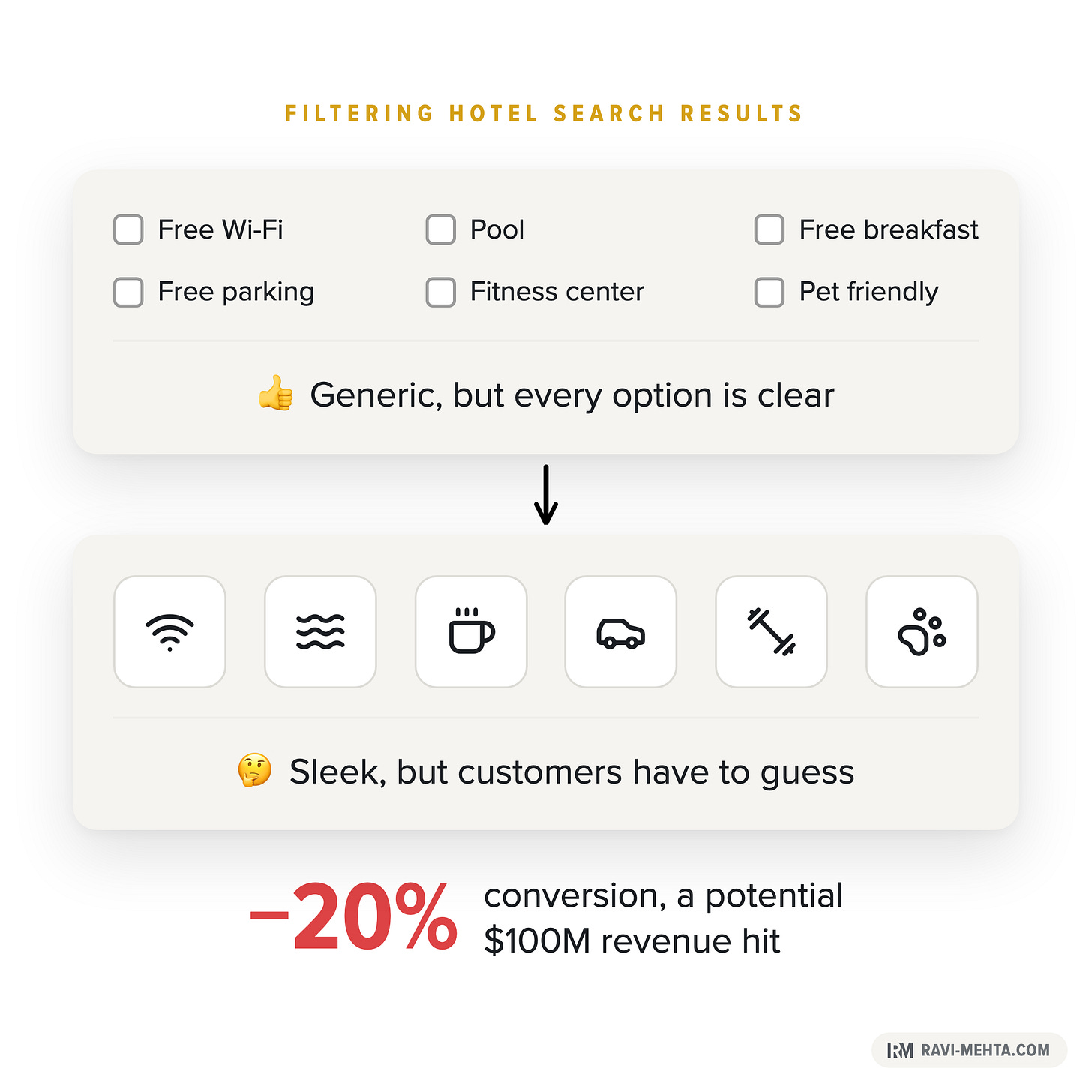
At Tripadvisor, we replaced a generic UI for filtering hotel search results with a sexy, icon-heavy experience. The result? A 20% drop in conversion — a potential \$100M revenue hit if we rolled it out.
Icons can look polished and save space. They can also leave customers confused, and that confusion can have real consequences.

At Tripadvisor, we replaced a generic UI for filtering hotel search results with a sexy, icon-heavy experience. The result was a 20% drop in conversion, a potential \$100M revenue hit if we rolled it out.
Top 1% Builder with Ravi is a reader-supported publication. To receive new posts and support my work, consider becoming a free or paid subscriber.
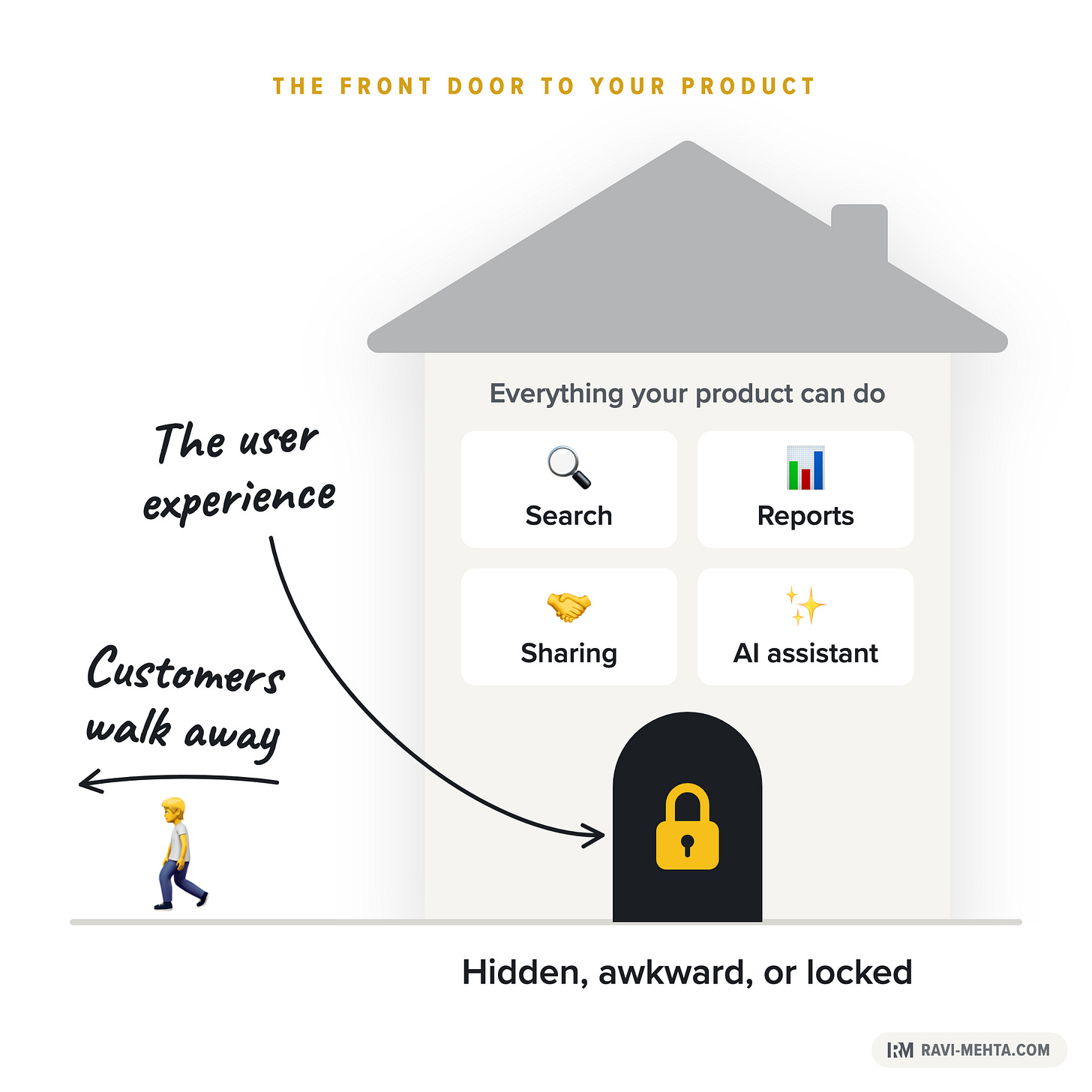
Imagine your customer standing outside a house. Inside is everything your product has to offer. The user experience is the front door. If it is hidden, awkward, or locked, customers walk away — even when the product is exactly what they need.

The user experience is the front door to everything your product has to offer. If it is hidden, awkward, or locked, customers walk away.
That is why I disagree with the idea that user experience belongs only to designers. You cannot take responsibility for a product’s success while treating user experience as someone else’s job.
AI makes this responsibility more important. We can build products faster and make them more powerful & more intelligent. But we can also bury users in more screens, more choices, and more chat boxes.
A product isn’t valuable because of what it can do. It’s valuable because of what customers can do with it.
That brings us to User Experience Design, the sixth of the 12 competencies essential for building remarkable products.

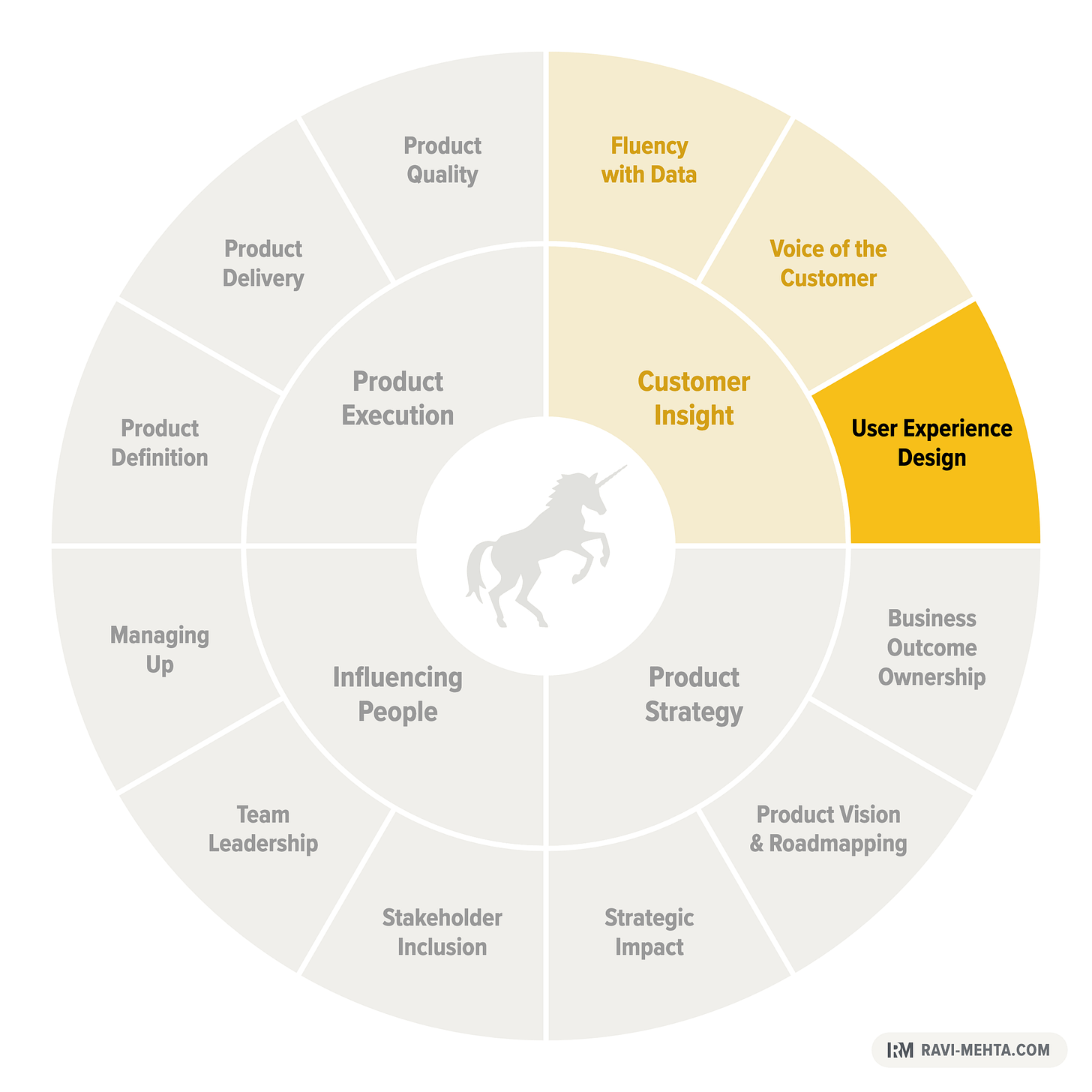
User Experience Design is the third of three Customer Insight competencies, alongside Fluency with Data and Voice of the Customer.
Join the Top 1% Builder Series
The Top 1% Builder Series is a free 12-part live workshop series (one week per competency) with Ravi for product managers, leaders, founders, designers, engineers, and builders who want to ship products customers love — with AI amplifying the judgment they already have. Live attendance is free. On Friday, November 13, we’ll dive into User Experience Design at 9 a.m. PT / noon ET. Replays and slides are available to paid Top 1% Builder Club members.
How to build remarkable products

The 12 competencies necessary to build remarkable products
Last week, we explored Voice of the Customer — staying close to customers and understanding what they need. This week is about translating that understanding into an experience that makes the product’s value easy to reach.
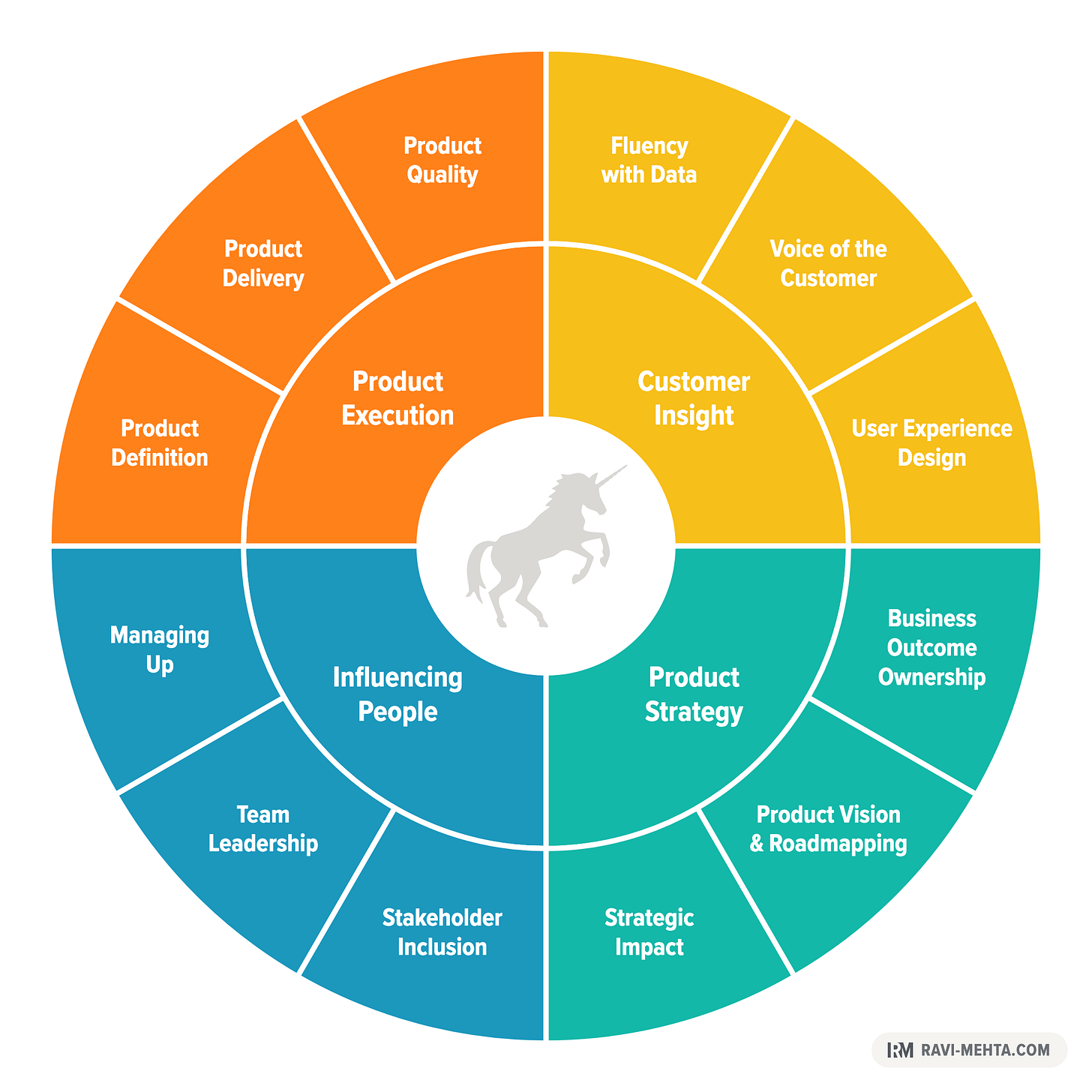
The Product Competency Toolkit organizes the work of building remarkable products into 12 competencies across four areas:
Product Execution — getting the right product built well
Customer Insight — understanding the people you build for
Product Strategy — choosing the outcomes that matter
Influencing People — rallying people around the org to make it so
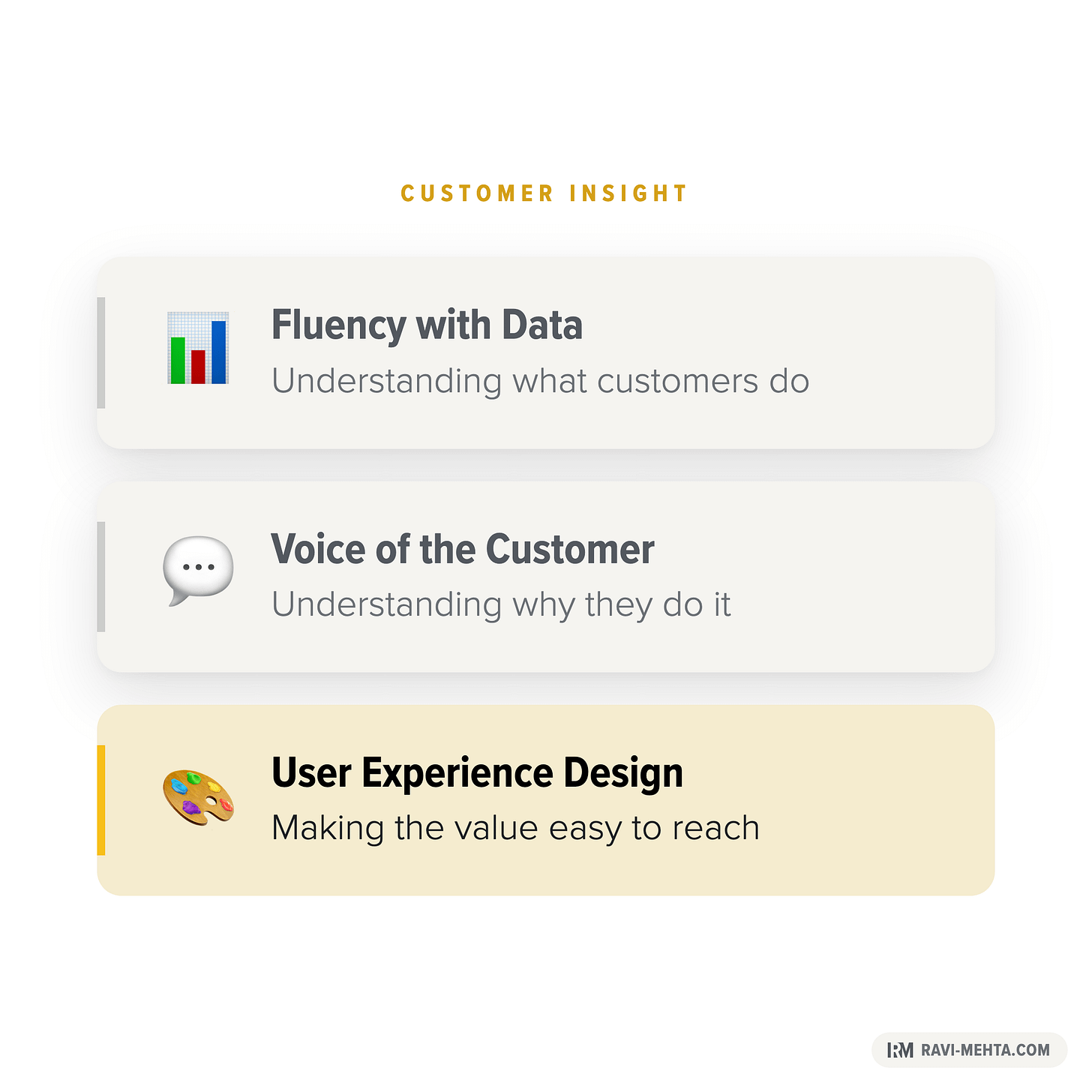
User Experience Design completes Customer Insight. Three competencies work together:
Fluency with Data — turning evidence into an understanding of customer behavior and the levers that drive outcomes
Voice of the Customer — staying close to customers to learn from their needs and underlying motivations
User Experience Design — making it easy for people and agents to access the product’s value

Customer Insight is the ability to understand customer behavior, needs, and experiences well enough to make better decisions.
These are interconnected ways of understanding customers, not separate stages. Data can reveal where people get stuck. A conversation can explain why. A prototype lets you quickly test the solution, making it easier to design the user experience that works best.
User Experience Design, defined
User Experience Design is the ability to apply usability principles, design patterns, and interaction models — independently and with design partners — to make it easy for people and agents to access a product’s full value.
Three parts of that definition matter:
Usability principles, design patterns, and interaction models. Good UX is more than a sense of what looks nice. Labels & copy help people understand their choices. Feedback & microinteractions tell them whether an action worked. Familiar patterns let them use what they already know. The interaction model determines how they express what they want — by clicking, speaking, typing, manipulating an object, or delegating a task.
Independently and with design partners. Although you don’t need to be a designer yourself, you do need to recognize a weak experience and be able to identify alternatives. This requires enough fluency with design that you can work effectively with designers and develop your own judgment to help bring strong design to life.
Access a product’s full value. A beautiful UI is not necessarily an effective user experience. The test of whether a user experience works is whether a person, or increasingly an agent, can discover your product’s features, understand how to use them correctly, and get the results they want.
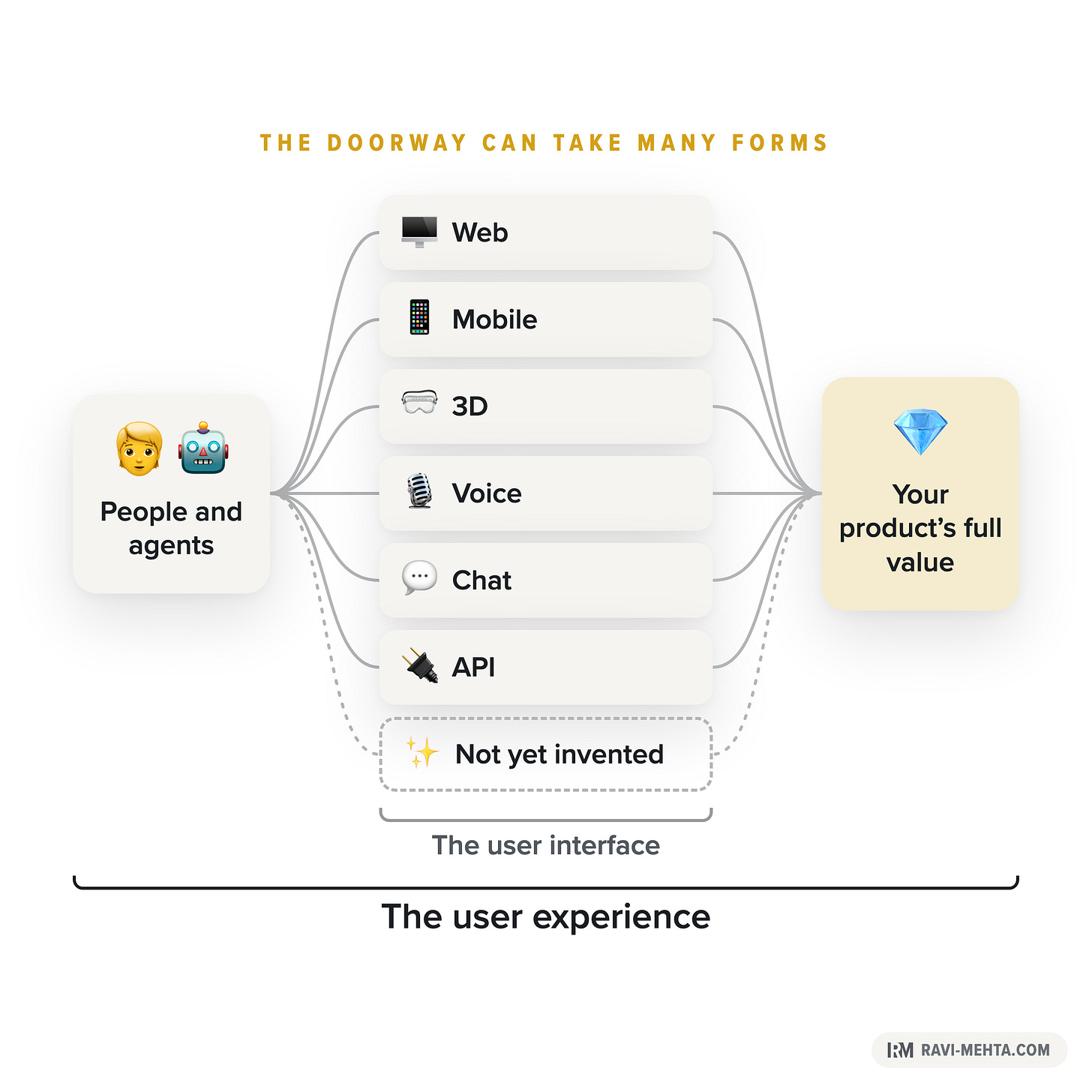
The doorway can take many forms — web interfaces, mobile UI, 3D environments, voice interactions, chat flows, APIs, and — now with the potential of AI — interaction models yet to be invented. That is why this competency is called User Experience Design, not user interface design.

The doorway can take many forms. The interface is one part of the path. The experience is the whole path, from a person or an agent to your product’s value.
How User Experience Design evolves with AI
For years, customers have done a remarkable amount of translation work on behalf of software.
They turn a question into a database query. They turn a story into clips arranged on a timeline. They learn which menu contains the command that expresses what they wanted to do in the first place.
Some of those conventions are useful. Others reflect limitations we have learned to live with.
AI lets us question which limitations still need to exist. Software can interpret language, speech, images, and context. Instead of requiring customers to translate every intention into a sequence of commands, the product can do more of that work.
AI lets us build interfaces that understand human intent — instead of forcing humans to understand software limitations.

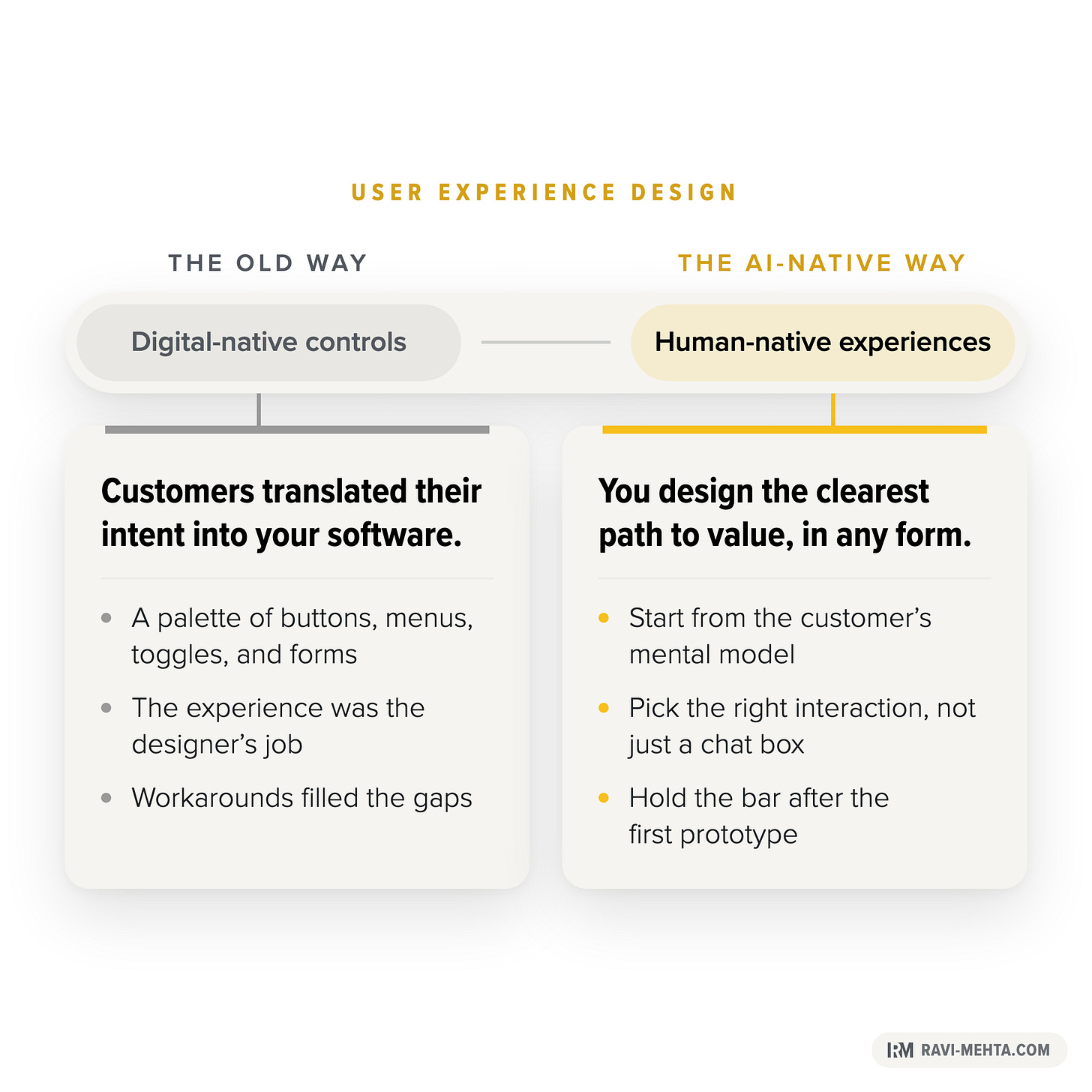
Customers used to translate their intent into the software’s terms. With AI, you can design the clearest path to value, in whatever form fits the task.
Descript: edit the words, not just the timeline
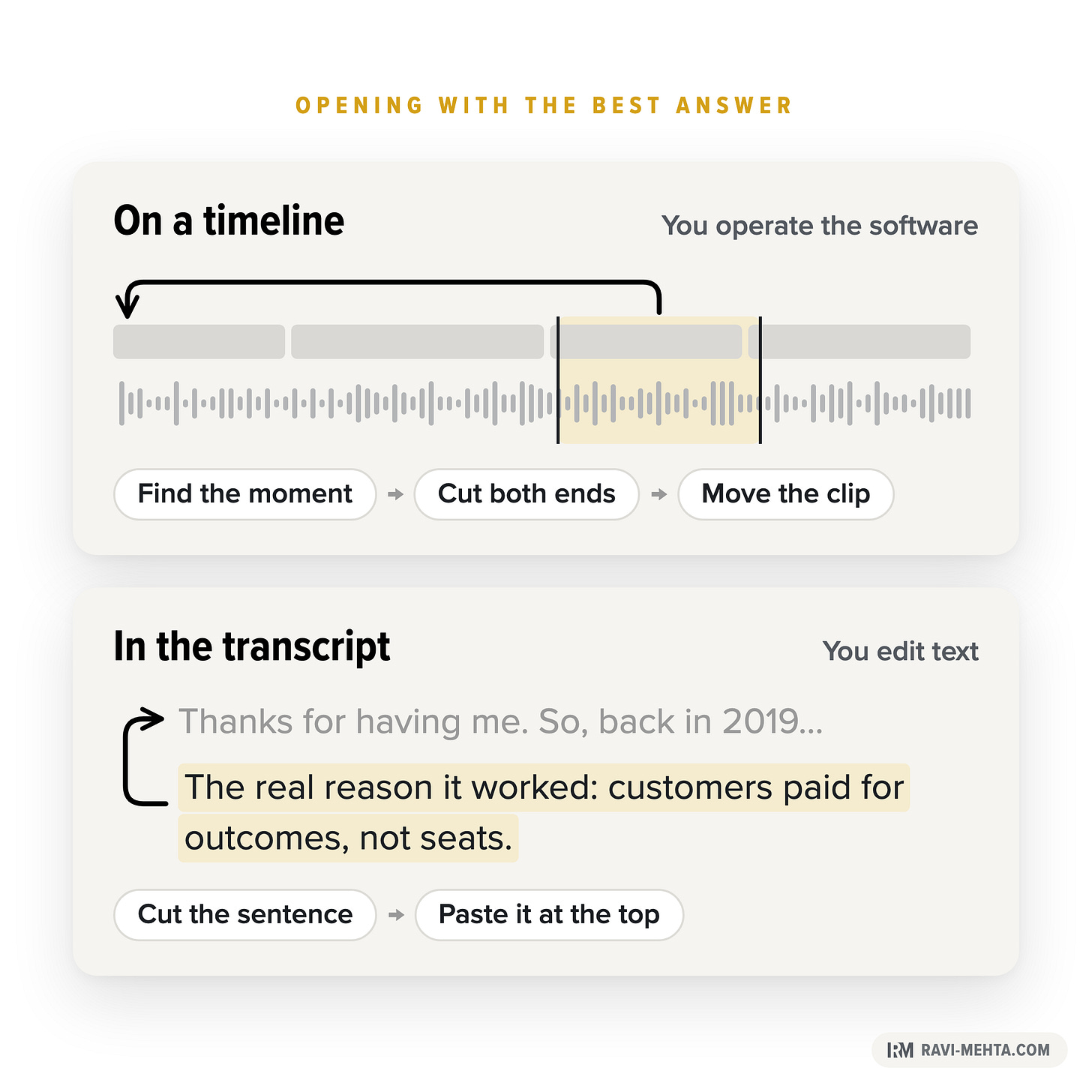
Imagine editing a video interview. Let’s say you want to open with a great explanation from the middle of the video.
You know which words you want to move. But a traditional video editor asks you to find those moments on a timeline, make precise cuts, and rearrange the clips. Before you can edit the conversation, you have to learn to operate the software. Then you have to painstakingly hunt for the exact section you want, scrubbing back and forth to find the clip and trying to read lips to cut it at the right points.
Descript offers another path: edit the transcript. Delete the words, and the corresponding video disappears. Remove filler words without finding and cutting every “um” yourself.
The experience starts with something you already know how to do: edit text.

To open with a great explanation from the middle of an interview, a timeline makes you find the moment, cut it, and move it. Descript lets you edit the transcript instead, which starts with something you already know how to do: edit text.
Other features help you look and sound your best. Eye Contact helps you appear to look at the camera rather than your notes. Studio Sound improves your audio.
You don’t need to understand the models behind those features to understand their value.
Granola: better notes, not someone else’s notes
AI note-taking was one of the first killer apps for generative AI. People could get detailed transcripts and meeting notes without writing everything down themselves.
Many of these apps worked by having an agent join the video call like any other attendee. The agent would capture the conversation in the background, then email participants notes summarized from the full transcript.
Granola recognized a gap in that experience. These apps asked people to delegate note-taking to someone else. For an important segment of customers, however, taking notes is part of how they think. They don’t want to hand over the job. They want help doing it better.
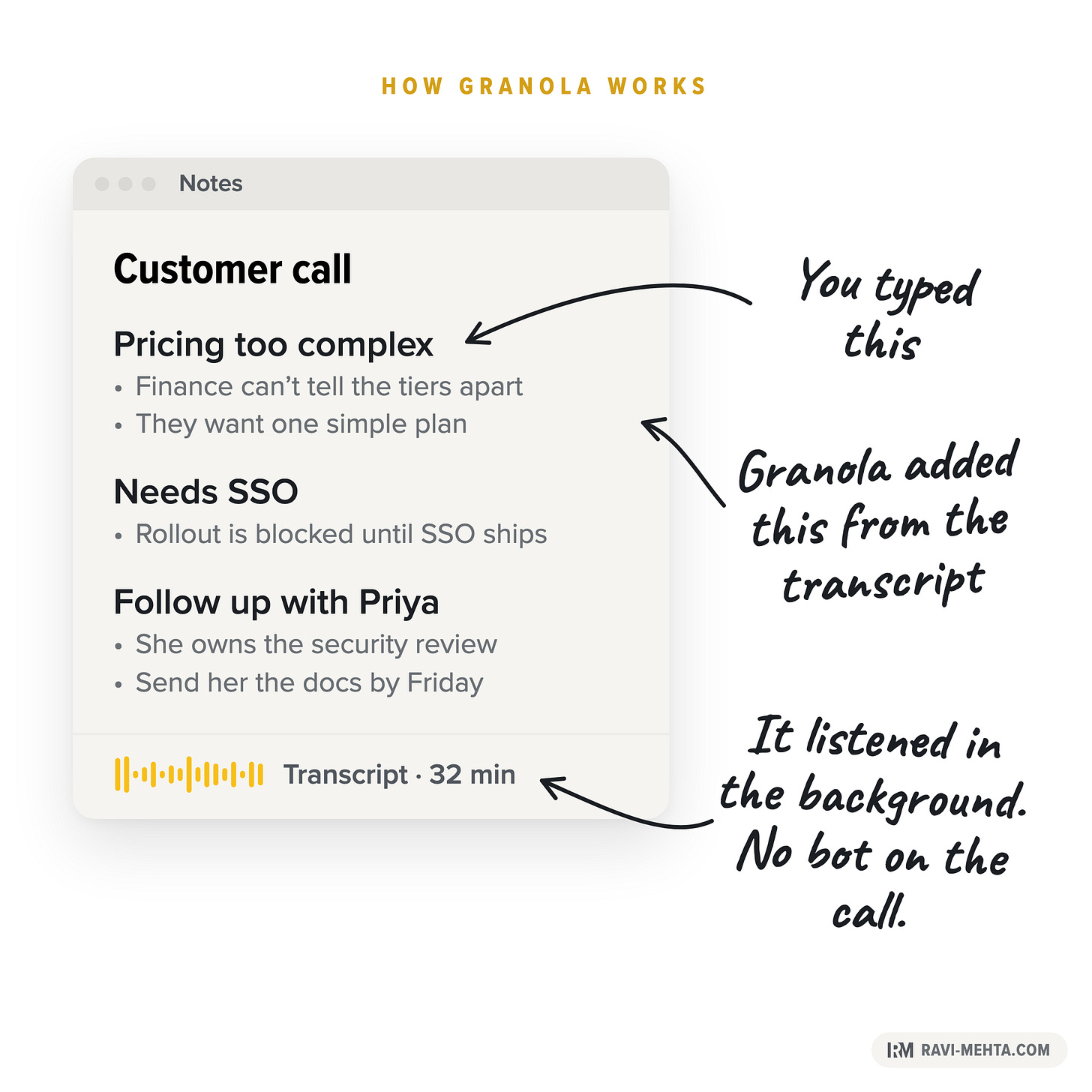
Granola broke through in this competitive market by innovating on the user experience. It works like a familiar note-taking app, letting people take their own notes while transcribing the meeting in the background. It then combines those notes with the transcript to produce enhanced, editable notes. What the person chose to write becomes part of the context for what AI produces.

Granola works like a familiar note-taking app. You take your own notes while it transcribes in the background, then it combines the two into enhanced, editable notes.
The customer’s effort is not always waste to eliminate. Sometimes it is the judgment the product should amplify.
The distinction matters far beyond note-taking. A customer may want AI to complete one task autonomously and help them stay closely involved in another. More automation is not automatically a better experience.
Descript changes how customers express an edit. Granola preserves their role in deciding what matters. Both start with the work people want to do, rather than asking them to adopt a workflow designed to showcase AI.
Chat is an option, not the answer
Natural language can remove translation work. It can also create it.
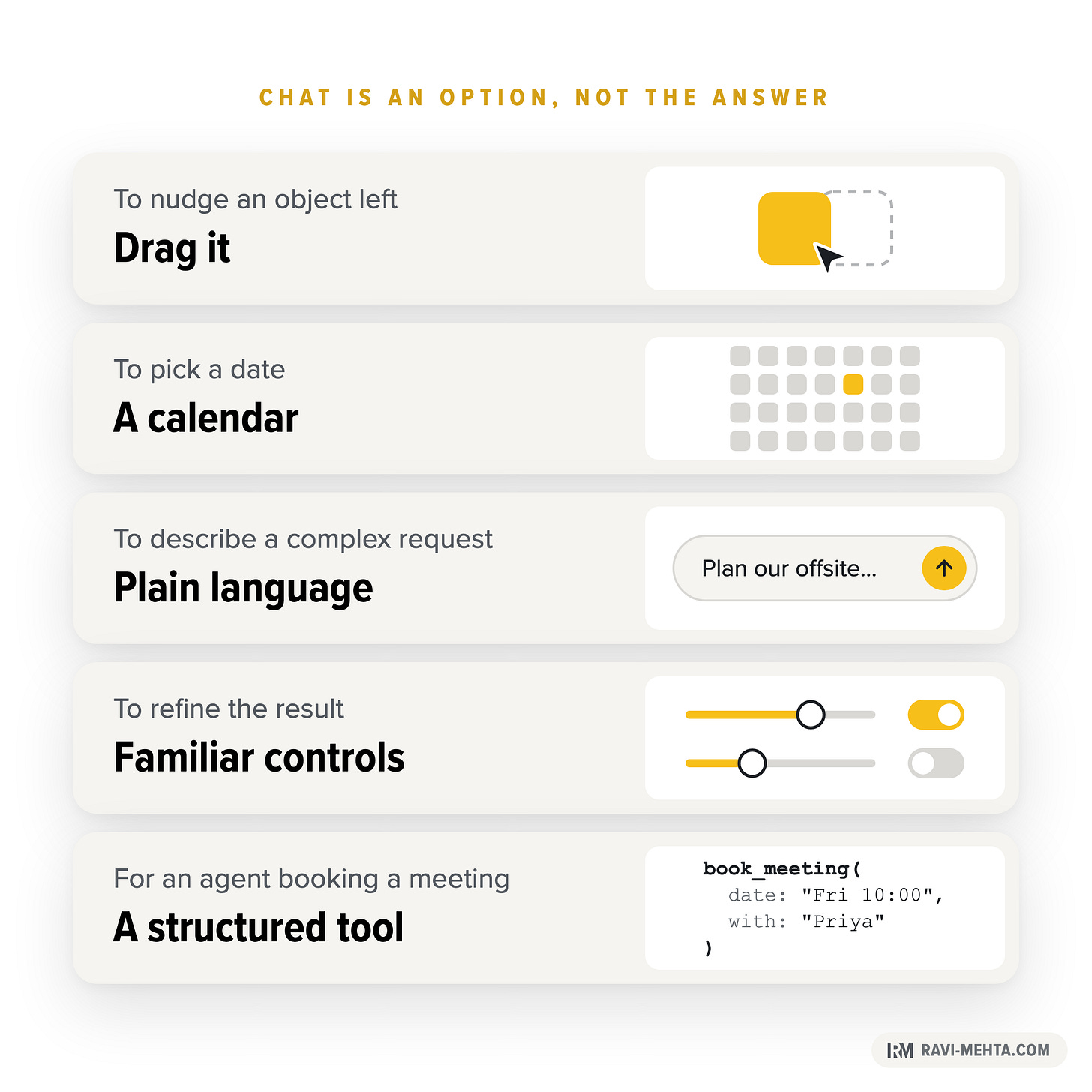
When customers want to move an object slightly to the left, dragging it may be easier than describing where it should go. When they want to choose a date, a calendar gives them useful structure. A blank prompt makes them decide what to ask, how to phrase it, and what the product might be capable of doing.

Natural language can remove translation work. It can also create it. Choose the interaction that fits the task, not the one that looks most like AI.
The best experience often combines these approaches. Language helps customers express a complicated intention. Familiar controls help them inspect and refine the result. We’re seeing this hybrid approach, combining natural language with familiar controls, emerge in a number of categories. For example, prototyping tools like Magic Patterns and app development tools like Lovable combine chat with visual editing tools.
The same care applies when an agent uses your product. Clear tool descriptions, inputs, and results help it act correctly. That may call for a structured interface rather than a conversation. Choose the model that makes the task reliable and understandable, not the one that looks most like AI.
Find opportunities to innovate on the user experience
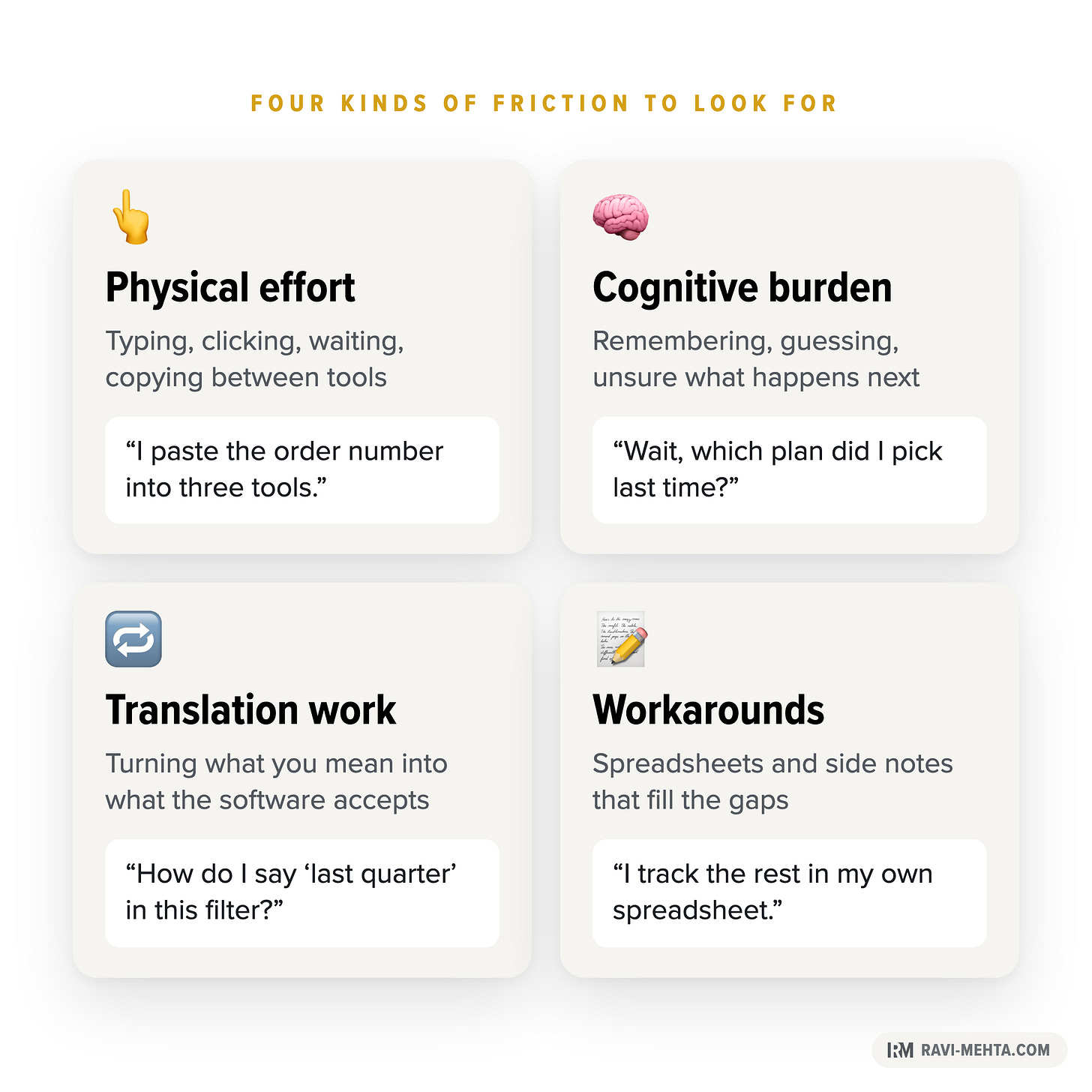
To find opportunities, watch someone complete an important task. Look for four kinds of friction:
Physical effort. Repeated typing, unnecessary clicks, waiting, and copying information between tools.
Cognitive burden. Information to remember, unexplained choices, unfamiliar concepts, and uncertainty about what happens next.
Translation work. Places where customers must convert what they mean into terms or operations the software accepts.
Workarounds. External spreadsheets, cheat sheets, side notes, and unofficial processes that compensate for the product.

To find opportunities, watch someone complete an important task and look for four kinds of friction: physical effort, cognitive burden, translation work, and workarounds.
Start with friction that is frequent, costly, and close to the product’s core value. Explore meaningfully different solutions. A clearer label, a better-organized flow, and an AI-assisted interaction might solve the same problem in very different ways.
Then put the alternatives in front of customers. Watch whether the work actually gets easier.
Count the work after the AI responds, too. A fast result is not much help if the customer spends ten minutes checking and repairing it. Make changes visible. Let people edit, reject, undo, and recover without losing their work.
How it feels to master User Experience Design
When you master User Experience Design, you take shared accountability for how customers access your product’s value. You don’t need every design skill yourself, but you recognize a strong experience, set a high bar, and bring the right partners into the work. You treat UX as part of the product definition, not decoration added after the important decisions are made.
You start with how customers think and work, rather than how the software is organized. You recognize the steps, concepts, and workarounds they should not have to learn. You can explain what makes an experience difficult and work with design partners to make it feel more natural.
You know when a familiar control provides useful structure and when a different interaction model can remove a limitation customers have learned to live with. You don’t pursue novelty for its own sake. You choose what fits the customer, task, and context — including when AI should take over and when it should help customers stay in control.
Most importantly, you don’t stop at a functional prototype. You keep testing and refining until the experience feels simple, natural, and trustworthy. The measure of success is not how impressive the interface looks. It is how easily customers can get the value they came for.
User Experience Design from APM to CPO

User Experience Design is relevant at every level, but the scope evolves as you get more senior.
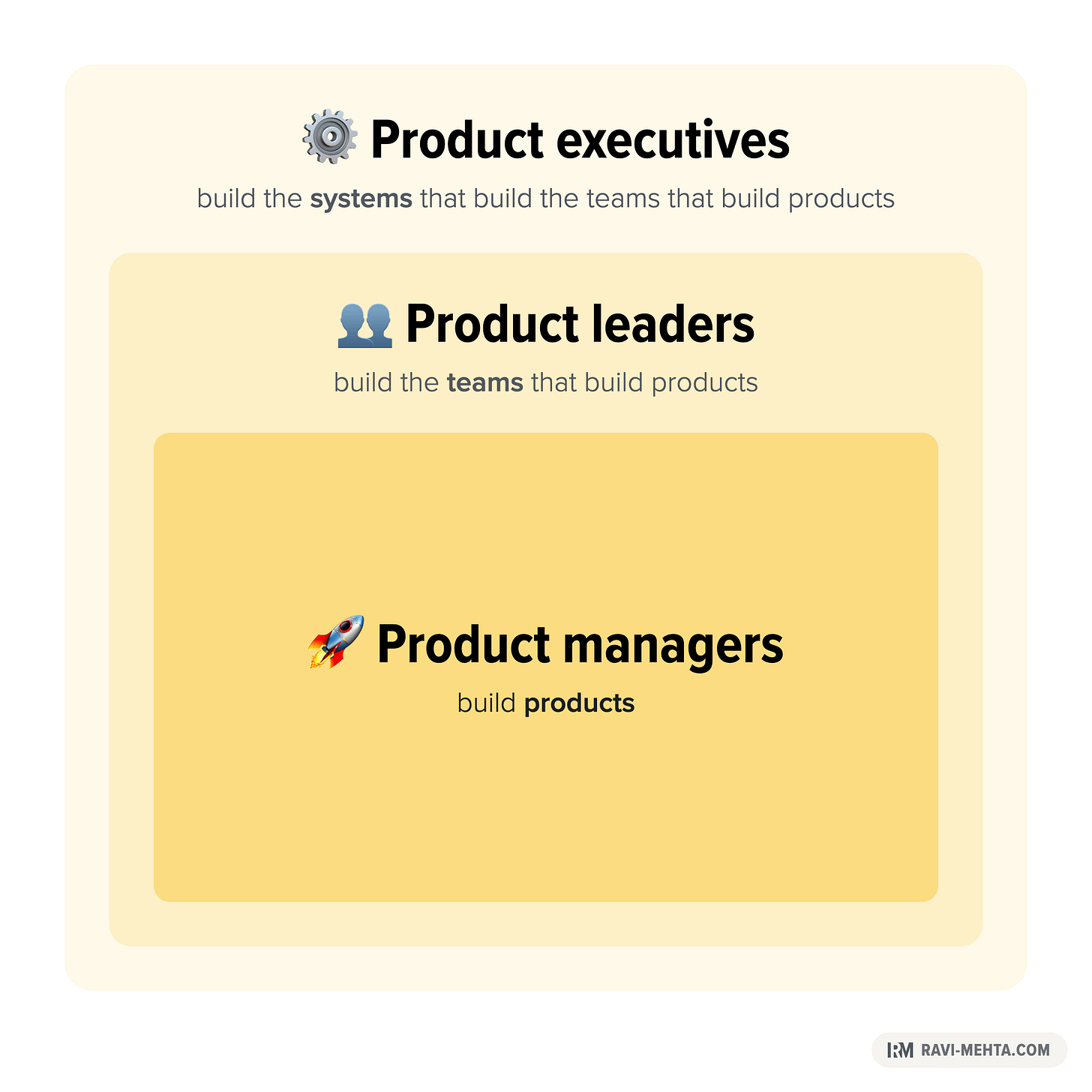
Every competency matters at every level. The responsibility remains; the scope changes:
Product managers build products.
Product leaders build the teams that build products.
Product executives build the systems that build the teams that build products.

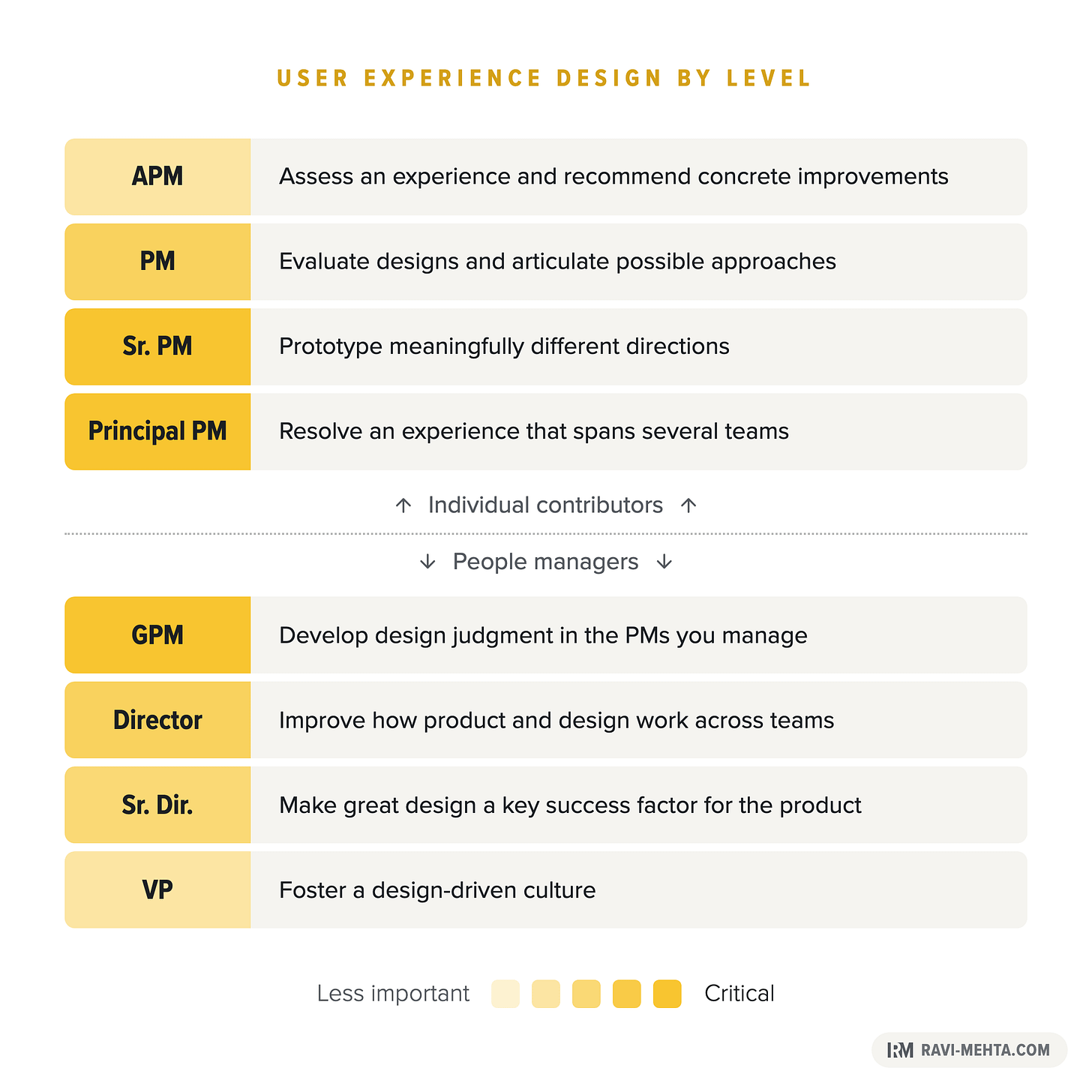
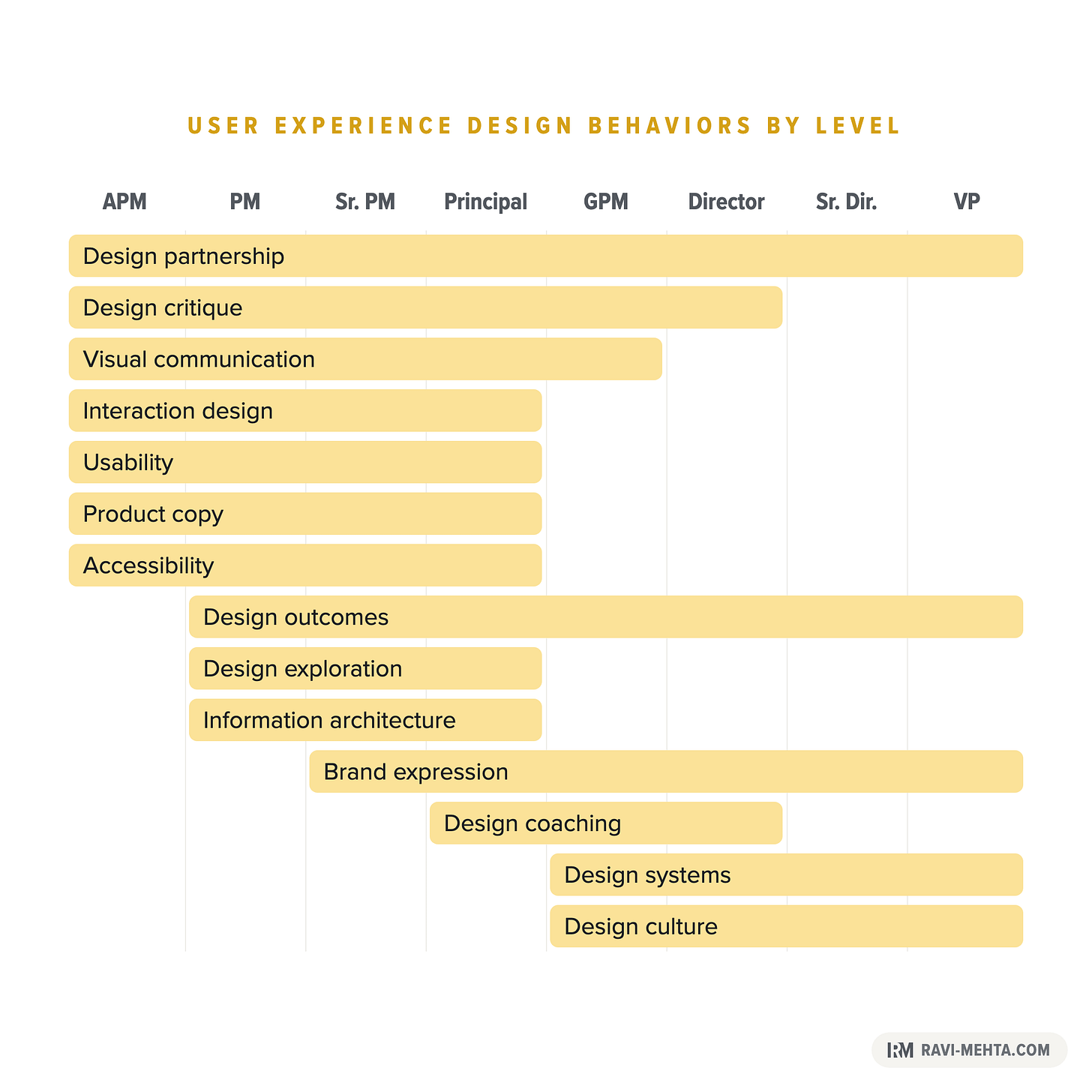
User Experience Design expectations by level, from assessing an experience and recommending improvements to fostering a design-driven culture.
As an APM, you learn to assess an experience and recommend concrete improvements. You sketch or prototype possible flows, improve copy, identify accessibility barriers, and work with design partners on a usable solution. You practice explaining how a design choice helps or hinders the customer.
As a PM, you independently evaluate designs and articulate possible approaches. You help organize information and capabilities so customers can find what they need. You explore alternatives and connect your recommendations to customer goals and business outcomes, rather than personal preference.
As a Senior or Principal PM, you handle greater scope & complexity. You use prototypes to explore meaningfully different directions and help turn the strongest one into a coherent experience. As a Principal PM, you may help resolve an experience that spans teams and mentor other PMs in design judgment without managing them.
When you manage PMs, you develop that judgment in others. You help them give specific critique, work effectively with design, and express product direction visually. You advocate for design systems that make the experience consistent without forcing every problem into the same solution.
At Director and Senior Director levels, you improve how product and design work together across teams. You partner with design leaders to set the quality bar, establish shared standards, make resourcing and hiring decisions, and resolve difficult trade-offs. You make sure teams have time to refine the experience, not just deliver the functionality.
At the executive level — VP or CPO — you foster a design-driven culture. You create the conditions for product, design, and engineering to operate as one team that values and practices the craft of good user experience design. You invest in experiences that express the company’s brand and make its value easy to access. You connect design quality to customer success and business results.

The emphasis of User Experience Design shifts with seniority. Usability, product copy, and accessibility start at APM, design exploration and information architecture start at PM, and design systems and culture become leadership responsibilities.
At Tripadvisor, I ran hundreds of A/B tests.
The biggest winners — the ones that added millions or tens of millions of dollars in value — didn’t come from a strategic epiphany. Instead, they came from the essentials of good user experience.
At the end of the day, customers are often using our products with limited attention, fitting them into their busy lives, and giving our products only the time absolutely necessary to get an important job done — whether that’s B2B or consumer. Small changes in user experience foster confidence or create confusion.
That is easy to overlook when we have so many new things we want to build. The temptation is always to add more features, but the biggest opportunity may not require that. Instead, it may come from making an existing feature easier to find, understand, and use.
The user experience is the front door to the house that we’ve spent so much time building for the customer. Before adding another room to the house, check whether the front door is locked.
Next week: Business Outcome Ownership — connecting product improvements to meaningful results for the business.
Dive deeper into User Experience Design
The free Product Competency Toolkit dives deep into the 12 competencies that turn good product builders into remarkable ones. Updated entirely for the AI era, it explains how each competency is evolving — whether you want to improve your own craft, coach your team, or help your entire organization level up.
It’s for anyone building products across product, design, engineering, marketing, leadership, or a venture of their own.
Top 1% Builder with Ravi is a reader-supported publication. To receive new posts and support my work, consider becoming a free or paid subscriber.
- Product managers should own user experience rather than treat it as design’s job: product value depends on what customers can do with it, not only what it can do. At Tripadvisor, an icon-heavy hotel-filter redesign reduced conversion by 20%, representing a potential $100M revenue hit if rolled out.
- For AI products, choose interaction and automation to fit the task, not to showcase AI: chat can add translation work, familiar controls can help users inspect and refine results, and agents may need structured interfaces. More automation is not always better; Granola combines users’ own notes with a meeting transcript because note-taking can be part of how customers think.
- To find UX opportunities, observe people doing important tasks and look for physical effort, cognitive burden, translation work, and workarounds; prioritize frequent, costly friction near the product’s core value, test alternatives, and count review and repair work after AI responds.