We can't find the internet
Attempting to reconnect
Something went wrong!
Hang in there while we get back on track


When building is cheap, outcomes are the job
Ravi Mehta defines Business Outcome Ownership as linking product improvements to team and company objectives. Every investment has to pass two tests: does it create meaningful customer value, and can that value become value for the company? He also says to stay with the problem after launch, compare the results with what you expected, and decide what to do next . His AI argument: impact used to be capped by how much a team could build. Now outcomes are limited by understanding and judgment, and a team "can... ship more features while creating less value" .
Mehta's most useful example is about economics. An AI support feature can grow usage while customers still need several attempts and still contact support, and the company pays for every interaction . Inference, human review, infrastructure and maintenance belong in the investment case. A feature "can win on usage and still destroy margins." That may be worth it only for a specific strategic advantage with a credible path to better economics .
Marty Cagan says much the same. Most companies use AI to speed up the project model, and teams get faster without getting better outcomes. He cites this "AI productivity paradox" as noted by McKinsey and Atlassian . Strong teams separate building to learn (prototyping to find a solution) from building to earn (building something the business can run on and monetize) . As the cost of building to earn falls, "the bottleneck is what do we build?" . On team shape, he says some teams now have three or four engineers instead of five to ten, while what they own is growing . The PM stays responsible for value and business viability: whether it's affordable, monetizable and compliant .
A warning about metrics
A PM at a very large enterprise says a goal to cut median epic cycle time by 15% led teams to clone aging epics and close the old ones. An internal article then celebrated a 35% drop, with no discussion of the real goal of resolving epics within 90 days .
Pricing an AI product with no usage history
An r/ProductManagement thread offers practical steps:
- Run an announced trial. Absorb costs for two to three months and say upfront that usage pricing will follow. Expect some users to "go hog wild" and then scale back, while moderate users get locked in .
- Use COGS as the floor, not the price. Build forecasts with finance, and pilot with a select group first . For school buyers, set tiers by what a teacher or class needs per term. Model peak demand from the calendar, not from traffic .
- Limit usage by tier. Put a hard cap on the free tier and soft caps (throttling or overages) on paid tiers. The soft caps show who would pay for more .
PMs closer to the build
Aakash Gupta argues PMs need design sense because they are now designing. At AI-native companies they ship to production, and at large enterprises they build AI prototypes . He had Claude Code build a feedback-triage app from one prompt and found three problems. The PRD sat about 470px below the fold. The ranking put a theme with $895K in ARR above one with $1.00M without explaining why. The pasted input took up half the screen . In a separate note he describes Rippling CPO Matt MacInnis's first changes: markdown pushed to a git repo, customer issues found through MCP, and PMs fixing their own copy. Gupta's takeaway is that PMs now need skills such as understanding repo structure and configuring tooling, which used to belong to engineers .
A tech-debt standoff with AI-reliant developers
A non-technical product owner says developers will not touch tech debt until the PO writes stories with acceptance criteria, finds and prioritizes the debt, prescribes fixes and sets time limits. The PO's manager wants them at senior-developer level within three months . The developers reportedly say it's a product-owner failure if a story can't be pasted into Claude and produce a first implementation in one pass . Their AI-generated debt list has 7,700 items, such as "Resolve escape: line 33, file XYZ", and they want the PO to rank them . The PO thinks the developers should own all of this , and most commenters agree.
Launch videos
Hiten Shah says Claude Code built a Beam launch video in nine minutes but left out the one scene showing what Beam does . After reviewing eight product videos, his test for each scene is: what does the viewer understand after it ? One example is Cursor's video, which reaches "All Checks Passed" and a merge button around 19 seconds in. Developers recognize that payoff, and he would hold on it a beat longer .

- Customer feedback should reveal users’ pain, not dictate solutions or roadmap priorities: teams should speak with customers regularly and test and gather data frequently because users may know the problem without knowing what technology can make possible.
- AI can make teams faster without improving results when it only accelerates the project model. The product model separates build-to-learn (prototyping and testing solutions) from build-to-earn (building for production and monetization); success is the outcome, not the launch, and OKRs connect the problem to solve with the result to achieve.
- In some teams, engineer counts are shrinking while teams take on broader, more end-to-end ownership. Product managers remain responsible for solution value and business viability—including affordability, monetization, legal compliance, and privacy—and coordinate with other functions; these are distinct skills, though they need not always belong to three separate people. Design’s role is less settled: code-generation tools can handle some design work, but complex human-facing AI products still need strong design.
- Product discovery should fit the product and its risks rather than default to building and releasing; use methods suited to the question and audience, from small opt-in groups to very large samples. AI can assist with synthesis and coaching, but product judgment and the thinking behind decisions cannot simply be outsourced to it.

- Business Outcome Ownership means connecting product improvements to team and company objectives, and staying accountable after launch: work should create customer value that translates into business value, and teams should compare results with expectations, investigate failed assumptions, and decide whether to refine, expand, stop, or shift investment.
- AI raises the bar for judgment, not just shipping capacity: more prototypes and features can create less value while competing for customers’ limited attention. An AI support feature can gain usage without improving customer outcomes as repeat attempts, ongoing support contacts, and interaction costs persist; evaluate problem resolution and support-demand effects alongside inference, human review, infrastructure, and maintenance costs. Usage gains can still damage margins, so a loss may be justified only by a specific strategic advantage and a credible path to better economics.
- Narrative, Commitments, and Tasks (NCT) link strategy to execution: the Narrative explains the quarter’s goal and why it matters; three to five objectively measurable Commitments define expected progress and should be aimed at 100%, with outcomes or deliverables chosen according to uncertainty; Tasks map plausible work and pressure-test resources and timing, but can change. Set Commitments at the Frontier of Understanding: the next credible step may address understanding, dependencies, execution, or the strategic outcome, with evidence moving the team closer to an outcome commitment.
- Impact accountability spans PM seniority, while scope grows: PMs connect improvements to team goals and use results to recommend next steps; senior leaders coordinate outcomes and trade-offs across teams, and executives establish clear ownership and measures while making it safe to surface bad news and act on it.

- Judge each product-video scene by what the viewer understands; cut polished scenes that add no clarity or repeat a benefit, and make each scene teach something new.
- Make outcomes and proof easy to assess: hold on a recognizable payoff, such as Cursor’s “All Checks Passed” and merge state, rather than moving on quickly. Add elapsed times to visual speed comparisons, and enlarge code changes so they’re legible on phones. In AI workflow videos, clarify the AI’s contribution at each step.
- For a demo of a multi-stage workflow, follow one work item through the handoffs so the system feels connected.

- AI coding gains may not translate into faster software delivery: requirements, testing, integration, and reorganizing teams can remain bottlenecks. Product teams should assess end-to-end workflow outcomes, not coding speed alone.
- A counterpoint in the debate was that AI assistants could reduce integration friction in information work by reading documentation and setting themselves up; this was presented as a prediction, not a demonstrated outcome.

- For an AI product without traffic history, test pricing with a selected group or free-trial cohort for roughly 2–3 months, and announce upfront that the initial or founding price is temporary; use observed demand to build forecasts before fixing tiers. One suggested pilot hypothesis to validate is that some initially heavy users will scale back once charged, while moderate users may continue.
- Use COGS as a pricing floor and work with finance on cost models; for school customers, anchor tiers to teacher/class needs per term and estimate capacity peaks from the calendar and peak-hour activity rather than average demand. Hard-cap free usage and use soft caps, throttling, or overages on paid tiers to identify who would pay for more.
- Segment heavy users by customer lifetime value as well as usage, and consider a distinct offer for high-potential accounts; account for vendor replacement or cancellation price increases in contract terms.
- For technical-debt work, engineers should surface issues, explain their technical and business impact, propose remediation, and estimate effort; the PM should translate that impact into business value and prioritize capacity against feature work, rather than independently mining the code or dictating implementation. The originating case involved a nontechnical PO being asked to write debt-specific stories and acceptance criteria, find and prioritize the debt, prescribe fixes, and set time limits.
- To prioritize, one approach is to workshop debt by architecture area, estimate rough value and effort, then select high-value, low-effort items. Another is to score each item’s likelihood and impact from 1–5, producing a relative 1–25 risk score; considerations include defects, outages, reputational harm, growth constraints, and customer-perceived quality. One reply suggests reserving 15% of sprint capacity for technical initiatives.

Lenny described Claude’s product organization as “the most female-led product org in tech right now,” listing CPO Ami Vora; product leaders Cat Wu (Claude Code/Cowork), Angela Jiang (Claude Platform), and Dianne Penn (Research); engineering leaders Fiona Fung and Katelyn Lesse; and President Daniela Amodei. In a follow-up, he said Cat Wu had left and that he thought everyone else was still there.

- For AI products, start with a specific problem and show that the solution works; gradual rollout and making the trial about the service improvement—not AI—can help build acceptance. East Lansing tested a visual-AI recycling system for $8,000, using an A/B test of two types of resident postcards; the rollout improved recycling by about 40% across roughly 12,000 tests, with two complaints reported.
- Set explicit outcome goals and invest in implementation leadership: Cleveland Clinic focused its AI work on improving patient outcomes and saving money to reinvest in care, and identified 8–10 people able to run projects and motivate adoption in its 80,000-person organization. Its vendor-developed sepsis prediction engine took a year and a half to work through; despite testing and organizational challenges, the clinic reported a 41% reduction in sepsis mortality.

A nonprofit survey promoted by Julie Zhuo is soliciting designers’ and PMs’ career-satisfaction responses using an ikigai framework, with the stated aim of gathering trustworthy data.

For product-management careers, Liu’s experience suggests leaving room for exploration alongside intentional planning: she interviewed at PayPal almost on a whim, not yet understanding what a product manager did, and the opportunity shaped much of her career . She argues that career intentionality should not eliminate detours, but should leave people open to different routes and ways of building experience .

- PMs increasingly need design judgment: PMs at smaller AI-native companies may ship to production, while enterprise PMs build AI prototypes; this does not mean designers are becoming unnecessary, and current AI cannot be relied on to handle design well.
- Review AI-generated interfaces for whether the main output is visible without scrolling, whether rankings make sense given the displayed numbers, and whether the layout prioritizes useful information. In one feedback-triage app, the PRD sat about 470 px below the fold, the ranking did not align with displayed ARR, and raw feedback consumed half the screen; the revised layout put the PRD beside the themes, showed the ranking math, and collapsed the input.

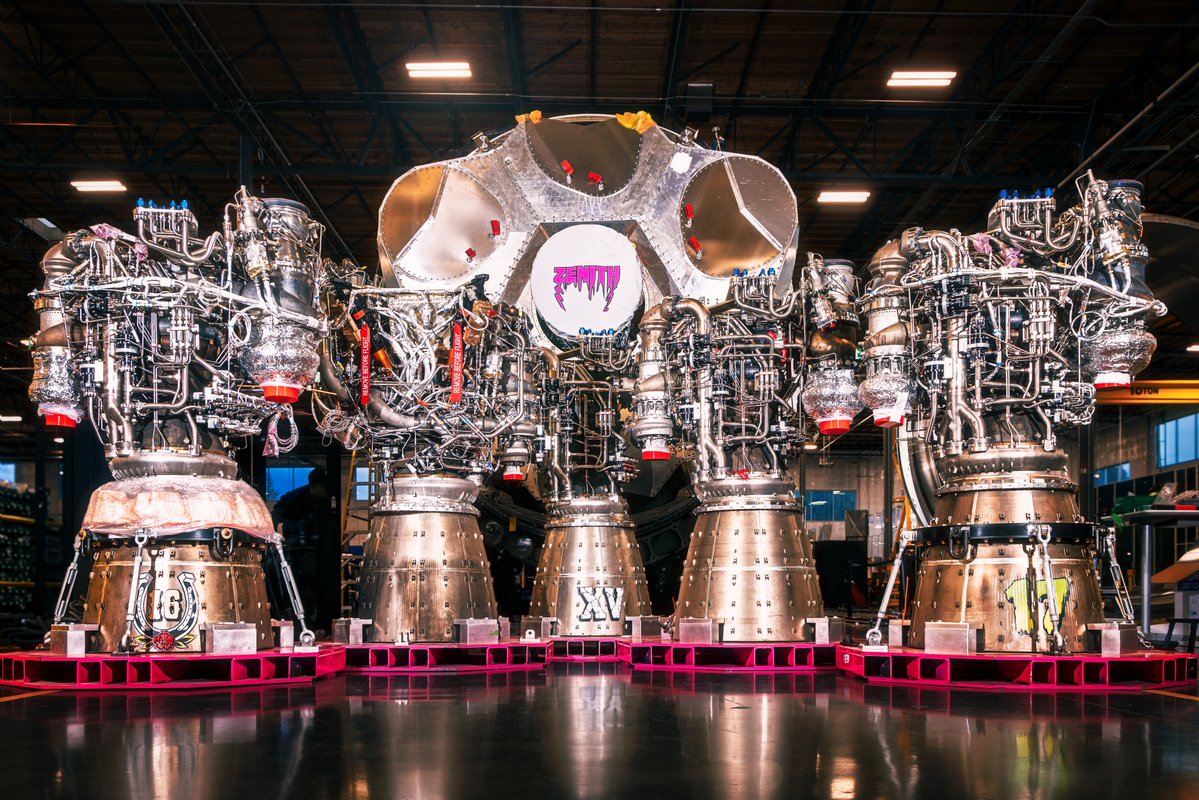
Stoke Space reports Zenith development is complete; engines that clear acceptance testing are being shipped to Cape Canaveral weekly for integration with Nova’s first stage, a concrete product-development and integration milestone .

A junior-PM candidate considering a role at a lean team described strong ownership expectations, two junior hires being added, India-based development teams with US-based software managers, and a new CPO amid restructuring—making it important to clarify the role’s actual decision authority and lifecycle ownership, not just its promised “ownership.” A commenter cautioned that entirely outsourced delivery can mean limited communication and hand-holding, and recommended asking former employees whether leadership supports operators.
Claude Code made Beam’s launch video in nine minutes but left out the scene showing what Beam actually does; Hiten Shah said he would discuss how they fixed it and what to check before shipping an AI-made video. This is a product-launch lesson: AI-generated speed does not ensure the core product is clear in launch content.

- PMs increasingly need design judgment because PMs at AI-native companies are shipping to production and enterprise PMs are building AI prototypes; Aakash argues current AI cannot yet be relied on to handle design. In his feedback-triage app example, the PRD sat below the fold, the displayed ranking put a $895K-ARR theme ahead of one at $1.00M without explaining why, and raw feedback consumed half the screen. His redesign places the PRD beside the themes, shows the ranking math, and collapses the pasted feedback.
- Zapier CEO Wade Foster’s two-part rubric for transformative PM performance with AI is to drive product strategy and an organization-wide AI roadmap through eval-first development, and to launch a proprietary fine-tuned LLM feature that supports a new pricing tier. Aakash’s proposed path covers AI strategy and evaluations, choosing between fine-tuning, RAG, and prompting, production observability, and pricing and testing a new tier.
- Aakash argues that practices attributed to Rippling CPO Matt MacInnis—putting markdown in a Git repo, identifying customer issues via MCP, and having PMs fix their own copy—move PMs closer to the codebase. He says MCP access to session replays can remove waits for analysts, dashboards, or weekly reviews, while making repo structure and tooling configuration new PM skills.
- Product managers should choose which problems to solve and in what order, shape product direction, research, and success measures; project managers plan and oversee execution within a time window. Aakash calls assigning both jobs to PMs an anti-pattern because it can leave little time for the product’s long-term horizon.
A USC product-management class team built CareerPath, a free, ad-free tool that uses a resume and five questions to match users with Product Manager, Project Manager, or Business Analyst roles, then provides skill roadmaps, AI-assisted practice, assessments, and a school leaderboard.

- Botshub differentiates its AI-agent directory with country-aware ranking, arguing that global rankings can leave businesses in India or Germany seeing tools built for the US; it also offers country, use-case, channel, and language filters, plus vendor listing claims and visitor-country click data. The founder is seeking validation of the local-ranking experience, search and filters, listing information before click-through, and willingness to pay for placements—not reporting test results.
- Destrier reviews contracts submitted by email or website, highlights risks clause by clause, and offers tracked-change rewrites or draft emails. Its first review is free for up to 20 pages, with signup deferred until the review is ready; the founder is testing trust in email versus upload and whether delayed signup feels like a trap. Payments had opened the previous day, with no paying customers yet.
- Koru Works is building a workspace for human–AI collaboration, with real-time collaboration, chat, and bots described as upcoming. The founder asks for feedback on whether the website messaging is clear and whether the app is understandable, easy to use, and fast.

- Circle’s November update introduced scheduled AI bots for recurring admin tasks, redesigned member-facing Avatars that can guide members from anywhere—including course lessons—in the creator’s voice without using AI credits, and IF/ELSE workflows that branch based on member profile, activity, or plan.
- Circle added one-click checkout order bumps (the example is a $29 mini-course added to a $50/month membership). It also consolidated monthly, one-time, and auto-top-up AI credits into one pool with spending caps, and made community summaries, writing, and transcription free on every plan. Share Circle offers up to 30% recurring commission for customer referrals.
- The update adds branded-app templates, navigation and login customization, and mobile previews; Circle AI analytics can answer questions across member, purchase, and email data with numbers, tables, charts, and follow-ups. Circle says this data is not shared outside the community or used to train models.
- Scott Belsky praised Circle’s shipping pace and said more brands see community as a differentiated, impactful form of marketing.
For a junior PM role where ownership is emphasized, one commenter framed it as owning ideas and outcomes: being able to say what should be built and why, and explain your own judgment rather than relying on a boss’s preference.
A product manager with several years of service-industry experience was looking for structured product-lifecycle learning through a company-paid Coursera license . One commenter advised, “Don’t take it,” and suggested Lenny’s or Shreyas; another recommended the IBM product manager certificate, describing it as long but covering the lifecycle step by step .