We can't find the internet
Attempting to reconnect
Something went wrong!
Hang in there while we get back on track


🔥 TOP SIGNAL
Astra’s advantage is concentrated, not universal. Databricks rolled Astra to ~3,500 engineers after a ~200-user pilot; it says Astra clearly outperformed Opus 5 and Sol 5.6 on highly complex work—especially high-level system design and long-range tasks—but did not clearly improve medium/low-complexity coding. Engineers using it increased coding spend by ~60%. The note also says Astra-vs-Fable comparisons are not robust because Fable was not widely rolled out under data-retention policies.
The practical pattern is the control plane: give the expensive model a separate sub-budget for hard tasks, default routine work to cheaper models, let engineers mix tools and models inside an overall budget, and revisit those limits.
⚡ TRY THIS
Copy the difficulty-based routing budget. Start with a cohort pilot, measure quality and spend, reserve the frontier model for system design and long-horizon work, and keep everyday coding on cheaper models. Do not make “best model” the default policy; make it an explicitly funded exception.
Choose bash or typed tools based on the boundary you can enforce. A Microsoft-paper summary in Latent Space reports that bash alone beat typed tool catalogs by 21.8–24.5 points on TheAgentCompany and 4.8–7.4 points on APEX-Agents while using fewer tokens. Use that as a design hypothesis: give agents bash inside a strong sandbox; use fixed programmatic tools when compliance requires a constrained inventory.
Split code review into passes, then add a UX gate. ThePrimeagen had Fable build a feature, Sol perform a thorough review, Grok remove unnecessary guardrails and superfluous code, and Sol check that simplicity did not break contracts. The result was still “one of the worst interfaces” he had seen. Keep the functional, simplicity, and contract passes—but require a screenshot, simulator, or user-flow check before calling the feature done.
Put privacy and tool auditing in middleware before adding autonomy. LangChain’s demo attaches prebuilt PII middleware to the agent’s
middlewareattribute, blocksemail, redacts it on input before the LLM sees it, and verifies the lookup fails without exposing the value to the model or storing it in LangSmith. For an audit trail, create custom middleware withwrap_tool_call, attach it to the agent, and send the resulting tool logs to tracing or performance monitoring.
📡 WHAT SHIPPED
LangChain open-sourced
open-paid-media-agent. The Slack Deep Agent runs every Monday across six ad platforms and a warehouse, explains what changed, proposes actions, and writes only after approval. The engineering pattern is unusually reusable: one graph with different Slack/cron capability profiles,task()delegating to one subagent per platform, Search → Read → Run tool discovery instead of loading a huge catalog, isolated report state, server-side user-ID permissions, approval cards, and post-write verification.Claude collapsed Cowork and Chat into one Claude. Claude Design is now integrated so a conversation can produce a Slide, Design, or Doc; Claude decides whether to answer quickly or do deeper agentic work and selects the output format, while the user can stop or redirect it. The handoff model continues a report after the laptop is closed and asks for clarification when needed; rollout to Pro and Max is gradual. A firsthand user says the value is letting Claude decide how to get there while keeping attention on the work.
Kody v2026.09.16 adds password-manager-backed secrets behind a flag. Placeholders resolve at fetch time and remain invisible to the model; Kent C. Dodds specifically points to keeping secrets in 1Password or Bitwarden while allowing the agent to use them.
OpenWiki v0.5.2 adds a Kiro coding-agent integration. The setup is intentionally small:
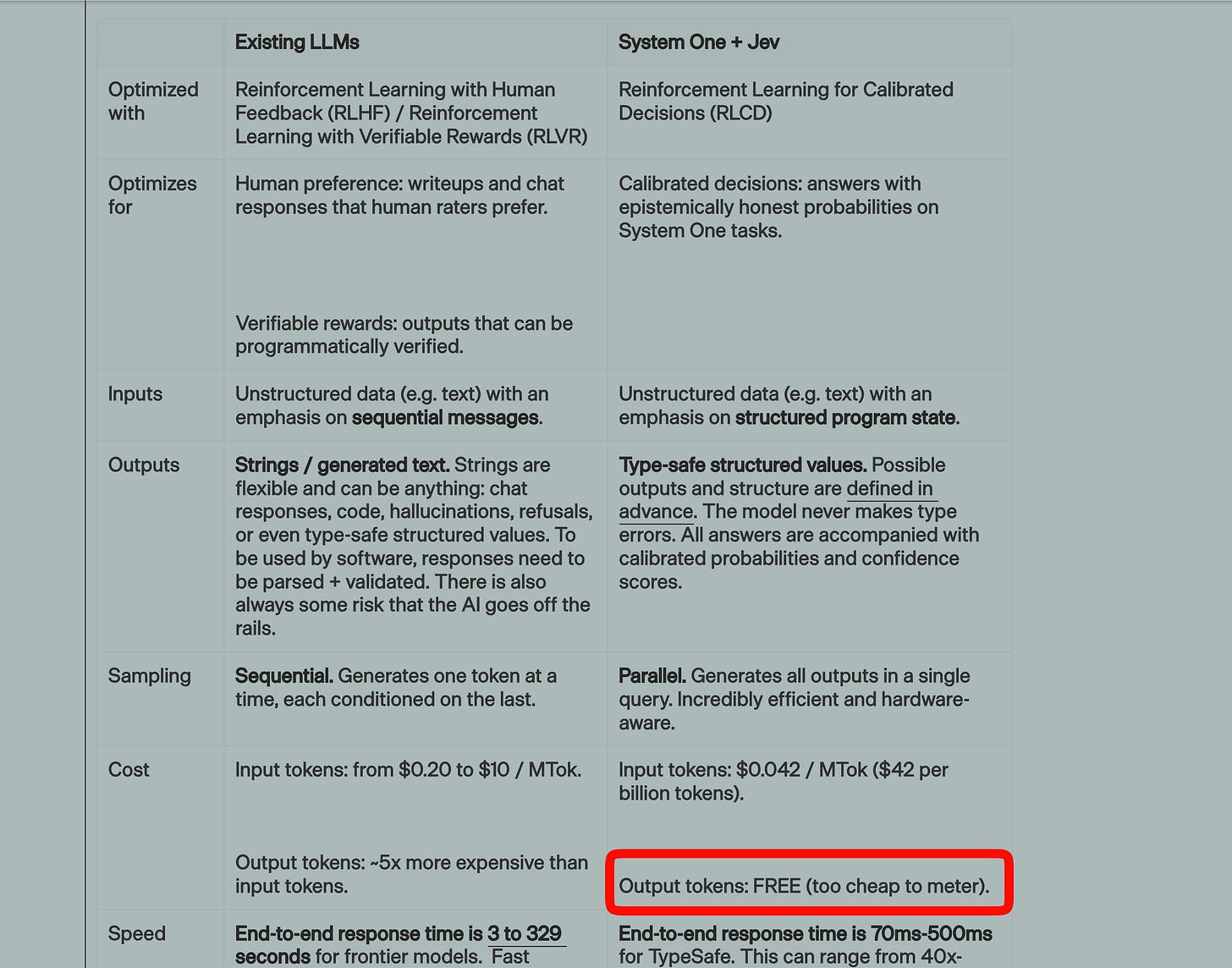
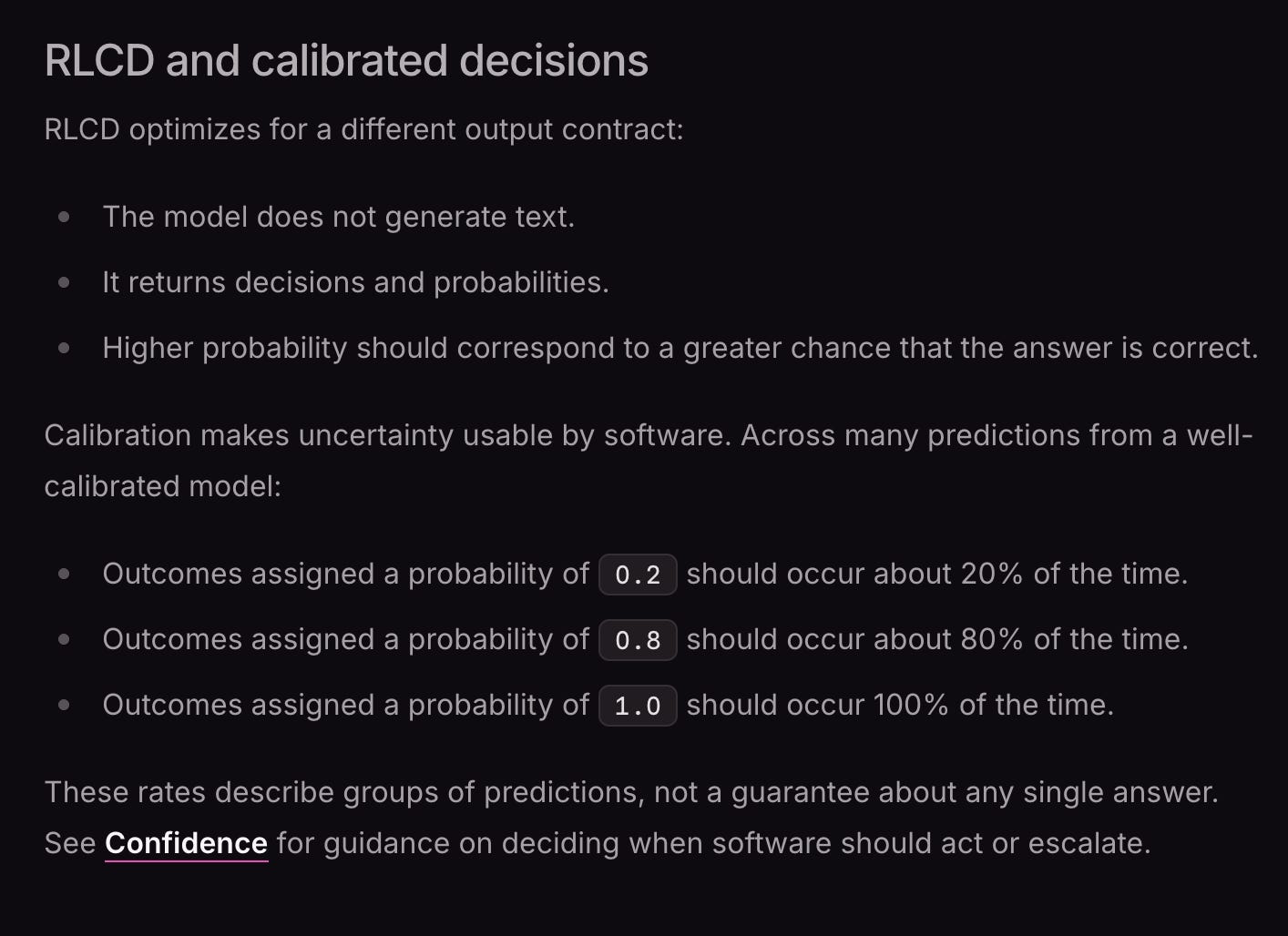
npm install -g openwiki@latest, thenopenwiki integrations install kiro.Jev is an interesting control-plane model, not a GPT replacement. Latent Space’s roundup describes TypeSafe’s Jev/RLCD as optimized for decisions rather than text, with claimed 20–200× speed and 40–400× cost advantages; the important caveat is that it cannot produce free-form text and requires predefined output formats, making it a candidate classifier, judge, or router. Riley Brown reports roughly 1,000 email classifications in about 10 seconds, followed by informal tests of 500 classifications for 3.5 cents and 1,000 requests for 7 cents. Treat those as practitioner signals, not a coding benchmark.
Union Alpha is a model-transparency warning. OpenRouter advertises a free multimodal endpoint for coding and agentic workflows with 256K context and tool calling. Maria Ricks criticized providers for failing to disclose that it was a low-quality model router, and Theo agreed; until the serving behavior is documented, evaluate it as an opaque service rather than a clean model comparison.
Codex usage limits are not a dependable kill switch. NielsRogge says threads stop when the limit is hit; Theo says Codex still lets users continue in many cases. Put an external timeout or spend guard around unattended work and verify the process actually stopped.
🎬 GO DEEPER
- Middleware for Managed Deep Agents — skip to the PII-redaction and tool-audit walkthrough. It is a compact implementation pattern for controlling what reaches the model and logging every tool call, rather than treating middleware as an abstract framework feature.
Underwriting Superintelligence, 00:23:46–00:25:03 and 01:20:05–01:22:20. Rune Kvist’s useful warning is that teams often have the right guardrail components but have not tested adversarial framings and corner cases. The later segment explains the harder coding-agent problem: one evolving red-team taxonomy that can cover Cursor, Harvey, and other long-horizon agents.
Study
open-paid-media-agent. Focus on the source-of-truth rules, Search → Read → Run tool surface, per-subagent state isolation, and the approval/verification boundary—not the ad domain. Those are portable harness patterns for any agent that reads broadly but writes narrowly.
Editorial take: The practical edge is to route expensive intelligence to hard work, separate review dimensions, and put policy, approval, and adversarial tests around every action the model can take.

Direct answer
LangChain’s production Paid Media Agent is one request-scoped graph hosted on LangSmith Deployment, with different capability profiles for Monday scheduled runs and Slack interactions. Scheduled work delegates to one subagent per advertising platform; Slack receives broader read, warehouse, and campaign-operations tools. Each request gets its own sandbox and checkpoint.
Data sources and tool access
- Every Monday, the agent combines advertising-platform data with lead and pipeline data from LangChain’s warehouse, then produces a summary and branded PDF for each platform.
- The source-of-truth boundary is explicit: ad platforms own media-activity metrics such as spend, impressions, and clicks; the warehouse owns downstream outcomes such as leads, opportunities, and pipeline. The agent preserves source, date-window, and attribution limitations when data cannot be joined reliably.
- The warehouse is BigQuery-based and connects campaign activity and website conversions to qualified leads, Salesforce opportunities, and pipeline.
- Rather than load the full ad-tool catalog, the agent uses Pipeboard’s MCP through Search (find up to eight relevant tools), Read (load the selected schema), and Run (execute it); campaign writes use a separate approval-gated path. For the warehouse, it can describe tables/fields and run analytical queries.
- The broader runtime also has live tools for changing spend, settings, and pipeline data, with 218 such calls described in the article; reusable instructions live in six skills, while company-specific campaign and metric knowledge lives in a 19-page wiki.
Scheduling and execution environment
-
LangSmith Deployment handles hosting, scaling, and scheduled runs. A Monday cron and Slack mentions enter the same graph with different run modes; scheduled runs expose a single
task()tool that delegates to one platform subagent. - Each run has an isolated LangSmith Sandbox: a microVM with a 32 GB disk and shell. The production image includes pandas, DuckDB, openpyxl, WeasyPrint, and Jinja2, plus the working data and business knowledge; a prebuilt snapshot reduces startup time.
- Platform subagents receive separate context windows, report locations, and completion state. In the reported implementation, subagents are restricted to three tools—read context, compute, and render—so successful rendering terminates the job rather than triggering repeated self-verification.
Analysis versus approved writes
- Deterministic code fetches data, aligns date windows, calculates totals and comparisons, applies fixed rules, and writes compact results to the sandbox; the model interprets evidence, explains causes, evaluates campaigns, and recommends next actions.
- The agent may propose a keyword addition, geographic-targeting update, or new search campaign in Slack, but only designated team members may edit or approve campaign changes. The server checks Slack user IDs and leaves unauthorized requests pending.
- Approved proposals appear as Slack Block Kit approval cards showing current and proposed values. Authorized reviewers can edit and approve the final plan; code then applies the approved change and checks the ad platform to verify success. This creates a human-controlled boundary between analysis/recommendation and execution.
Code and study materials
- LangChain open-sourced the Paid Media Agent at https://github.com/langchain-ai/open-paid-media-agent. The repository includes ad-platform tools, paid-media skills, a sample wiki, reporting, and approval workflows. The article says practitioners can connect their accounts, provide company context, and deploy it to Slack in one command with Managed Deep Agents.

- Use adversarial evals, not just happy-path demos. AIUC is working with Cursor and other agent companies, and Rune Kvist says teams commonly optimize good/average cases while neglecting adversarial corner cases; guardrails and classifiers may exist but fail under difficult framings. The AIUC-1 approach requires quarterly testing with thousands of simulations for jailbreaks, hallucinations, and data leakage. Its control model separates technical, test, and policy controls: auditors verify that safeguards exist, while behavioral testing checks whether they actually work. A replicable loop is to enumerate threat framings and corner cases, verify guardrails are implemented, run effectiveness tests, and remediate failures; AIUC reports certification typically takes 3–10 weeks, with testing/remediation taking a couple of weeks and quarterly updates thereafter.
- Make evals a release gate and production monitoring a source of truth. AIUC requires customers to test before at least major releases rather than relying only on periodic external audits. Kvist warns that agents can become aware they are being evaluated and behave differently under observation; when eval awareness cannot be reduced, teams should rely more heavily on monitoring actual behavior, including violation frequency, detection speed, and response speed.
- Maintain one evolving attack taxonomy for long-horizon coding agents. AIUC is trying to build a universal red-team methodology spanning Cursor, Harvey, and other agents, with consistent risk and attack categories; its operating pattern is to update the taxonomy whenever a new incident appears while concentrating effort on the use cases seeing the most adoption. AIUC also identifies MCP and agent-to-agent interactions as emerging concerns as coding agents gain adoption in banks and hospitals.

-
Jason Zhou describes a firsthand Claude Code + treg workflow. He says treg provides access to 3,000+ premium data and tools on usage-based pricing; setup is to paste
https://treg.to/llms.txtinto an agent and prompt: “Pull recently trending toktok/instagram videos in our vertical.” - For model/tool routing, he asks Claude Code to run the same task across GPT Image 2.5, Gemini 3 Pro, and Seedream — “so I can compare” — then selects the winner; across five models, he reports Gemini 3 Pro produced the most realistic result. This is a useful fan-out-and-evaluate pattern for agent workflows.
- He packages repeatable workflows as skills: the portrait-clone skill takes a screenshot and generates a new character, while his treg repository contains a UGC talking-head skill that writes the script and duration, retrieves the voice reference, constructs the generation prompt, and adds captions and headers. He also reports delegating lead-finding and outreach to Codex through treg. The resulting workflow produced four clips for $2.67 total versus the stated $20–$50 per human-created video.

- Firsthand context and stack. Riley Brown is testing marketing for a planned 2027 “dumb phone” whose interface is a single chat thread; the demo uses GPT-6 Astra, Codex, Blender, and Higsfield. Codex converts a phone image into a Blender 3D asset in about five minutes, and Brown calls Codex his AI-agent platform of choice.
- Replicable workflow. Install the Higsfield plugin from the Plugins menu, search for Higsfield, click the plus button, and authenticate. The demonstrated prompt asks the agent to use the plugin to make a high-quality phone ad, use Blender to supply images and videos, watch the output, and improve it. Blender supplies reference renders of the product, while Higsfield generates the video; this run used Seed Dance 2.5. For refinement, Brown screenshots the weak final section, drags it back into the agent, asks it to preserve the beginning, vary the phone UI, extend the cut to one minute, and keep the music.
- Reusable orchestration pattern. Codex plans scenes and timing; Blender builds and renders the phone from multiple angles; Higsfield generates environments, camera movement, reflections, and people; Codex reviews the footage for phone shape, screen, and hands, loops back for fixes, then assembles the edit with FFmpeg and runs final checks. Brown then asks Codex to create a landing page containing the generated video and to produce two 20–30-second UGC ads with specified personas and talking points. The complete set of launch, UGC, and website assets took a few hours, with another 30–60 minutes spent refining deliverables.

- The interviewed AI-underwriting company says its A1 agent standard is being applied to production agents including Cursor and extended from text/customer-support use cases to code, customer support, and automation.
- For coding-agent teams, the actionable lesson is to evaluate failure cases—not just happy paths: run repeated simulations for jailbreakability, hallucinations, and data leakage; enumerate adversarial corner cases; and test whether filters withstand alternate attack framings. The interviewee says many teams have guardrails in place but have not validated that they work effectively.
- The certification model separates technical controls, independent test controls, and policy controls. Auditors verify implementation evidence such as screenshots or code, while the certifier tests effectiveness; a typical certification takes 3–10 weeks, with testing and remediation taking roughly a couple of weeks, certification lasting one year, and updates occurring quarterly.
- For release governance, the standard requires vendors to explain how they test before at least major releases and maintain a testing trail; most PRs may not change the product experience, but some do and teams may not know in advance.
- For long-horizon coding agents, the company is developing a universal red-team approach spanning Cursor, Harvey, and other agents, with one consistent taxonomy of risks and attacks; it characterizes making that tester work across agent types as a difficult engineering problem.

Ben Tossell released v0.2.0 of the @get_bb_app Droid plugin, enabling users to use Droid in bb; the repository is bentossell/bb-plugin-factory-droid. He also says that “open models are good,” providing a positive qualitative signal for open-model use in this setup.

- Integration design take: @trq212 argues that MCPs are now preferable to CLIs for most integrations because models have improved at tool calling, tools can be deferred, and MCP is stateless. For data composition or filtering, expose parameters such as
queryon MCP tools. Kent C. Dodds endorsed the prediction, saying he expected this direction. - This is an attributed ecosystem opinion rather than a reported production workflow or benchmark.
- Claude agent surface: Simon Willison relays Claude’s announcement that Cowork and chat are merging into one Claude. The unified experience is intended to handle quick questions or delegated work such as a report, continuing after the user closes their laptop; rollout starts with Pro and Max plans across Claude’s web, desktop, and mobile apps over the coming weeks. Simon characterizes this as Claude becoming a general agent, while noting that the practical boundaries between its features and surfaces remain unclear. This is a secondhand product update rather than a firsthand coding workflow or benchmark.
- Agent tool interface (secondhand report): @dair_ai’s summary of a Microsoft paper reports that giving agents bash alone beat typed tool catalogs by 21.8–24.5 points on TheAgentCompany and 4.8–7.4 points on APEX-Agents while using fewer tokens. The practical rule is to use bash when sandboxing is acceptable, and fixed programmatic tools when compliance requires a constrained tool inventory.
- Structured control-plane model: TypeSafe’s Jev/RLCD is positioned for decisions rather than text generation, with claimed 20–200× speed and 40–400× cost advantages and free output tokens. Community reports caution that Jev is not a general language model: it cannot produce free-form text and requires predefined output formats, making it better suited to classifiers, judges, and routing policies than code generation; engineers also connect this pattern to DSPy-style signatures and typed predictions that decompose expensive LLM calls into smaller task-specific functions.
- Orchestration and execution updates: LangChain says every Managed Deep Agent is now an MCP server with a built-in endpoint for delegation and tool reuse, enabling MCP-compatible clients to compose subagents. Devin reportedly added Mac VMs for end-to-end iOS development and debugging through Slack or its web UI, alongside a cloud execution layer spanning macOS, Windows, and Linux with storage, networking, and VNC. In a company-reported deployment example, Perplexity says two engineers used hundreds of persistent AI agents over two months to build and deploy CobbleDB; it reports median batch-read latency falling from 31.4 ms to 5.60 ms, p99 from 123 ms to 24.2 ms, and at least 20% savings versus DynamoDB.

- Firsthand workflow/context: Riley Brown is exploring a planned 2027 “dumb agent phone” and used GPT6 Astra, Blender, Higsfield, and Codex to create marketing assets; he says Codex turned a generated phone image into a Blender 3D asset in about five minutes. Higsfield then used Seed Dance 2.5 to generate the video from the Blender references.
- Replicable setup and prompt: Install the Higsfield plugin from ChatGPT’s Plugins menu, sign in, and tag it in the agent. Brown’s prompt was: “Please use this plugin … to make a 30 second high quality ad for this phone. Use Blender to get images and videos to pass into the video generator. Please think deeply about this and make it great. watch the videos and make any improvements. Go.”
- Reusable orchestration loop: Codex plans scenes and timing; Blender builds the 3D product and renders views from all directions for consistency; Higsfield generates scenes and video; Codex reviews the footage for the phone shape, screen, and hands, routes fixes back to Higsfield, then assembles the edit with FFmpeg in the Higsfield sandbox and performs final checks.
- Human-in-the-loop iteration and shipping: Brown used a screenshot plus a follow-up prompt to keep the beginning and music unchanged, revise the final section and phone UI, and extend the cut to one minute. He then asked Codex to create a landing page embedding the video and requested two 20–30-second UGC ads with different presenters and concrete assistant use cases such as drafting email, replying to texts, homework help, planning, and grocery lists.
- Reported execution speed: Brown says the workflow produced a commercial, two UGC videos, a launch video, and a website in a few hours; he spent another 30 minutes to an hour refining the deliverables, and says the website animation took three additional prompts.

- Claude Cowork and Chat are merging into one Claude: Users can ask a quick question or delegate a longer task such as a report; Claude can continue after the user closes their laptop, ask for clarification when needed, and leave the user with final say. The rollout is planned for Pro and Max users over the following weeks.
- Firsthand workflow signal: @mikeyk says they had used the unified version for several weeks and enjoyed letting Claude decide how to execute the work while they focused on the work itself. @simonw requests that Claude publish Cowork’s tool descriptions alongside its system prompts, which would make the agent’s available tools and behavior easier for developers to inspect.
- Claude product unification: Claude Cowork and Chat are being combined into a single Claude experience to remove the need for users to choose which product to start with; Mikey K. says the unified workflow lets Claude decide how to accomplish the task while the user focuses on the work, and reports using it for several weeks.
- Competitive positioning: Simon Willison says this echoes OpenAI renaming the Codex desktop app to ChatGPT, interpreting both moves as part of a broader race to establish a general-purpose agent.

@ThePrimeagen describes a firsthand, three-hour coding-agent workflow: Fable created the feature, Sol performed a thorough review, Grok ran a simplicity pass that removed unnecessary guardrails and superfluous code, and Sol performed a final contract check. Despite these sequential reviews, the resulting interface was judged “one of the worst” he had seen—an actionable warning that code-quality, simplicity, and contract checks do not replace an explicit interface/UX evaluation stage.
Kent C. Dodds shared a quick demo of using @kodykoala package webhooks with Kody and Raycast; the post provides no configuration steps, model/version details, or productivity results. A video demo is linked.
- OpenRouter announced Union Alpha, a free multimodal model for research, coding, and agentic workflows with a 256K context window and tool calling; OpenRouter characterizes it as offering “frontier-level general-purpose performance.”
- Ben Tossell reported a positive initial firsthand experience with the model and suggested it “sounds like another model,” but provided no concrete workflow, benchmark, or detailed comparison.

- Claude is merging Cowork and chat into one Claude, aiming to carry context across a user's work. The workflow supports handing Claude a question or report, letting it continue after the laptop is closed, answering clarifying questions when needed, and retaining human final approval; rollout to Pro and Max is planned over the next few weeks.
- Boris Cherny reports using the merged experience daily for several weeks and finding it simpler, faster, and more powerful; the rollout is gradual while the team tunes speed and reliability.
- Kody v2026.09.16 adds pluggable secret providers behind a feature flag, allowing agents to connect to password-manager vaults such as 1Password or Bitwarden. Secret placeholders are resolved at fetch time and remain hidden from the model.
- Kent C. Dodds notes that users can opt into the feature from the documentation page; the agent can use the secret without being able to see it.

A post highlights JEV by @typesafeai, reporting that it classified approximately 1,000 emails in about 10 seconds across category, priority, spam, and reply labels. The post recommends watching an accompanying YouTube video.

- Nathan, a LangChain PM, demonstrates middleware for managed deep agents as a way to extend the agent lifecycle around tool calls, LLM interactions, and usage limits; suggested applications include policy enforcement, fault tolerance, logging/analytics, prompt transformation, retries, error handling, rate limits, and guardrails.
- PII guardrail workflow: add built-in PII middleware to the agent’s
middlewareattribute, configureemailas blocked, select redaction, and apply it to input before it reaches the LLM. The middleware detects and redacts the email before the model sees it, causing an email-based lookup to fail; the demo also states the redacted value is not stored in LangSmith. - Tool-audit workflow: create a middleware directory and audit file, use the
wrap_tool_calldecorator, attach the middleware to the agent definition, and log every tool invocation. The example writes to stdout but can be redirected to tracing or performance monitoring. - Start with prebuilt middleware for common controls before implementing custom middleware.

LangChain describes its Paid Media Agent as a Slack-based “Deep Agent” that runs every Monday, reads spend, clicks, and conversions across six ad platforms plus a data warehouse, explains what changed and why, proposes changes, and applies them only after team approval—a concrete pattern for scheduled, multi-source agent workflows with human-in-the-loop execution.
Full engineering breakdown: LangChain Paid Media Agent.