We can't find the internet
Attempting to reconnect
Something went wrong!
Hang in there while we get back on track


Big Ideas
Product workflows need an execution layer. A workflow diagram captures the general steps toward a goal; an individual instance also contains “meta work”—the follow-ups, answers, evidence, and coordination required to keep each step moving. The article proposes an execution map, a personal representation of that hidden work, arguing it applies across B2B workflows and to AI personal assistants. Build one by asking at each node: who approves, what proves completion, who starts the next step, and when to follow up; classify requirements as answers or evidence. One PM implementation keeps no more than five initiatives, maps each from a concrete goal to a desired outcome, has Claude generate daily next actions, and updates the maps at day’s end.
AI roadmaps need an economic-utility test. One AI discussion cautions that capability demonstrations—such as mathematical breakthroughs—do not by themselves show market value; ask whether the capability removes a roadblock to an economically useful task. The same conversation argues that small teams may now deploy very large amounts of capital productively, shifting some constraints from engineering toward capital and changing assumptions about scope, competition, and defensibility. For PMs, require each AI bet to name the user task, the economic bottleneck it removes, and what must be true for distribution to convert capability into value.
Tactical Playbook
Define ownership at the failure boundary of embedded products. An embedded-payroll evaluation proposes a native customer experience with a provider handling infrastructure and operations, but the terms “embedded” and “white label” vary. Before choosing a provider, write down who handles failures and support, how much change control and roadmap independence you retain, whether scope can expand into tax questions, and whether a fully native shell makes customers assume you built the service. Treat those as product requirements, not procurement details.
Use reference apps to capture structure, not screenshots. A field report says saved screens were rarely revisited; the reusable artifact may be the hierarchy, navigation, and paths underneath. In one test, 10 store screenshots produced 14 screens and five paths, but five screens were inferred and confidence was only 5/10; store listings also omit empty, failed-payment, and logged-out states. Use extracted maps as hypotheses, then validate missing and failure flows with live product research.
Case Studies & Lessons
Generated-content MVPs face a quality–cost trap. A learning-product builder says a frontier model must research, structure, create examples and interactions, and quality-check each experience; cheaper models improve economics but may feel shallow enough that users do not want another experience. The proposed experiments are a mixed pipeline, expensive planning or review, or spending more on the first experience—while rejecting both premature margin optimization and validation of a weaker product. The takeaway is to validate the full experience while making cost per successful experience an explicit constraint before scaling usage.
Career Corner
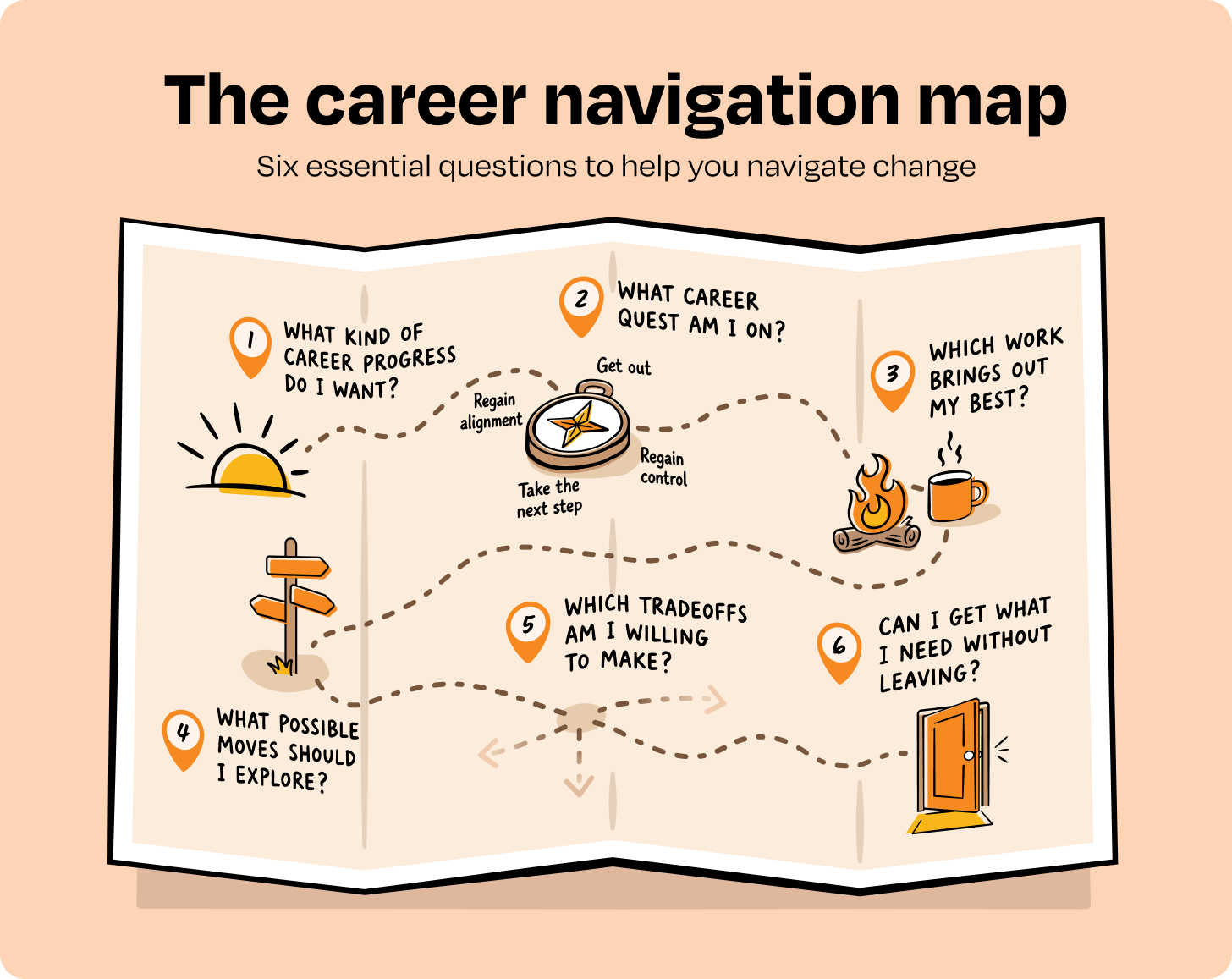
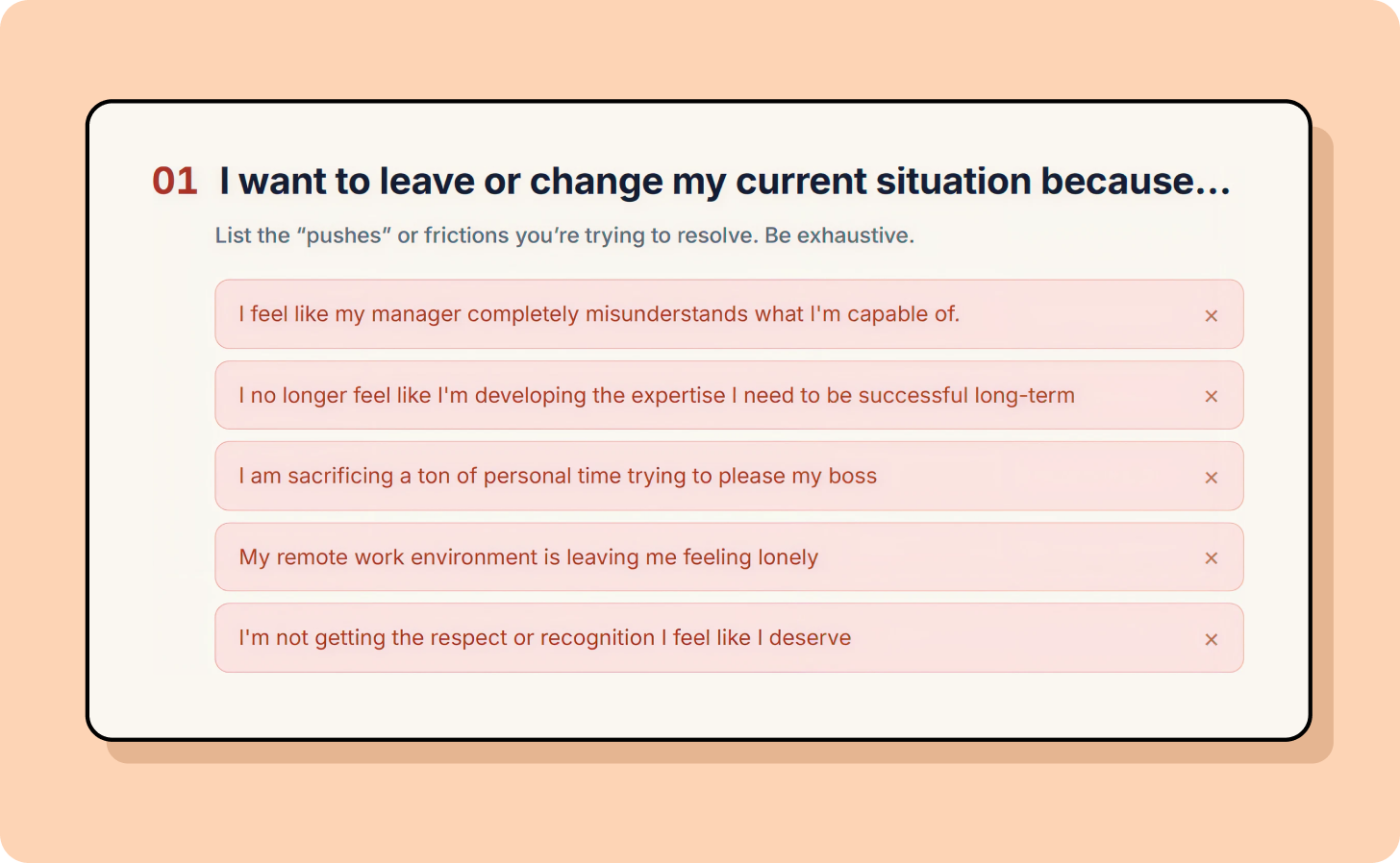
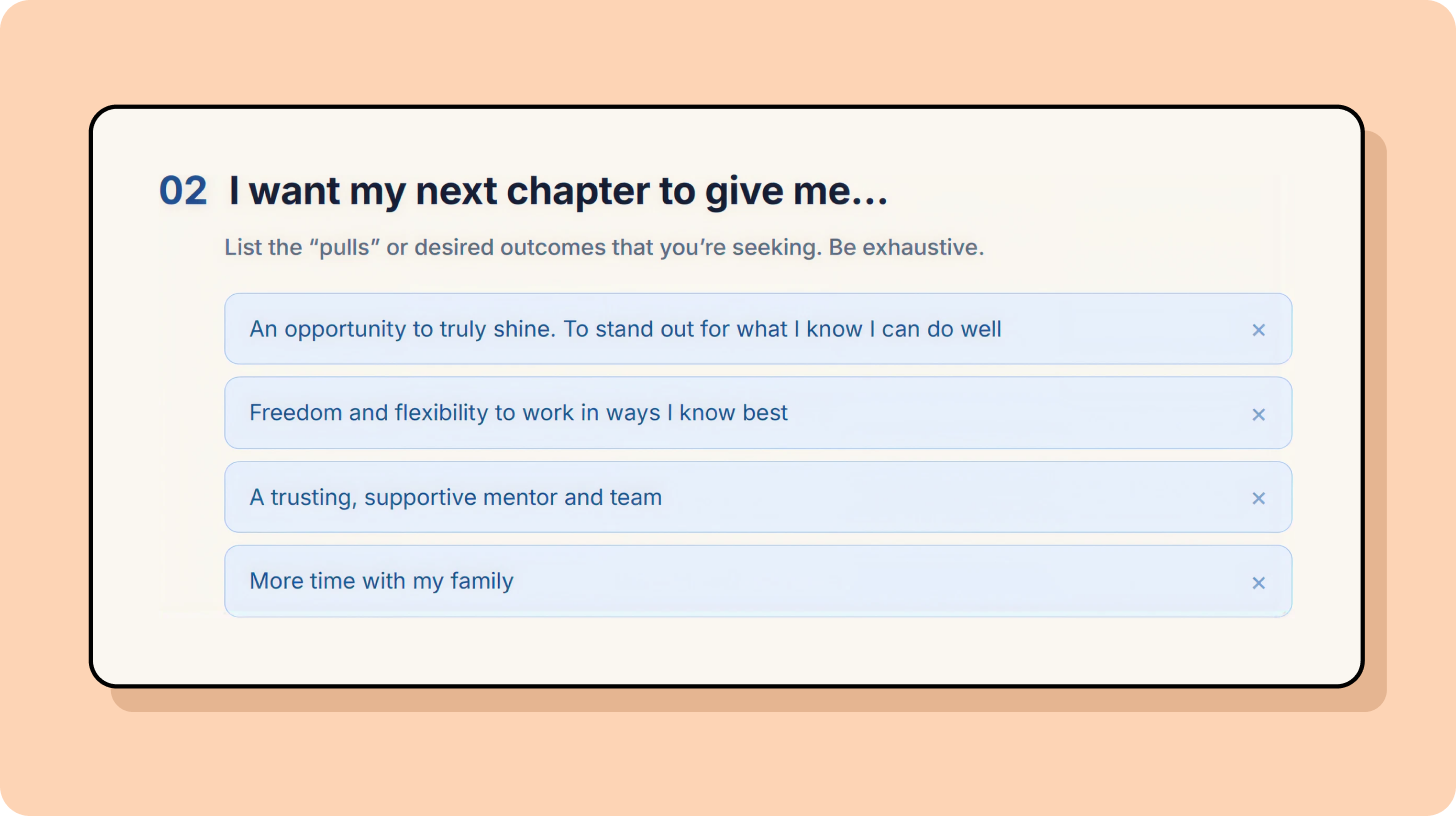
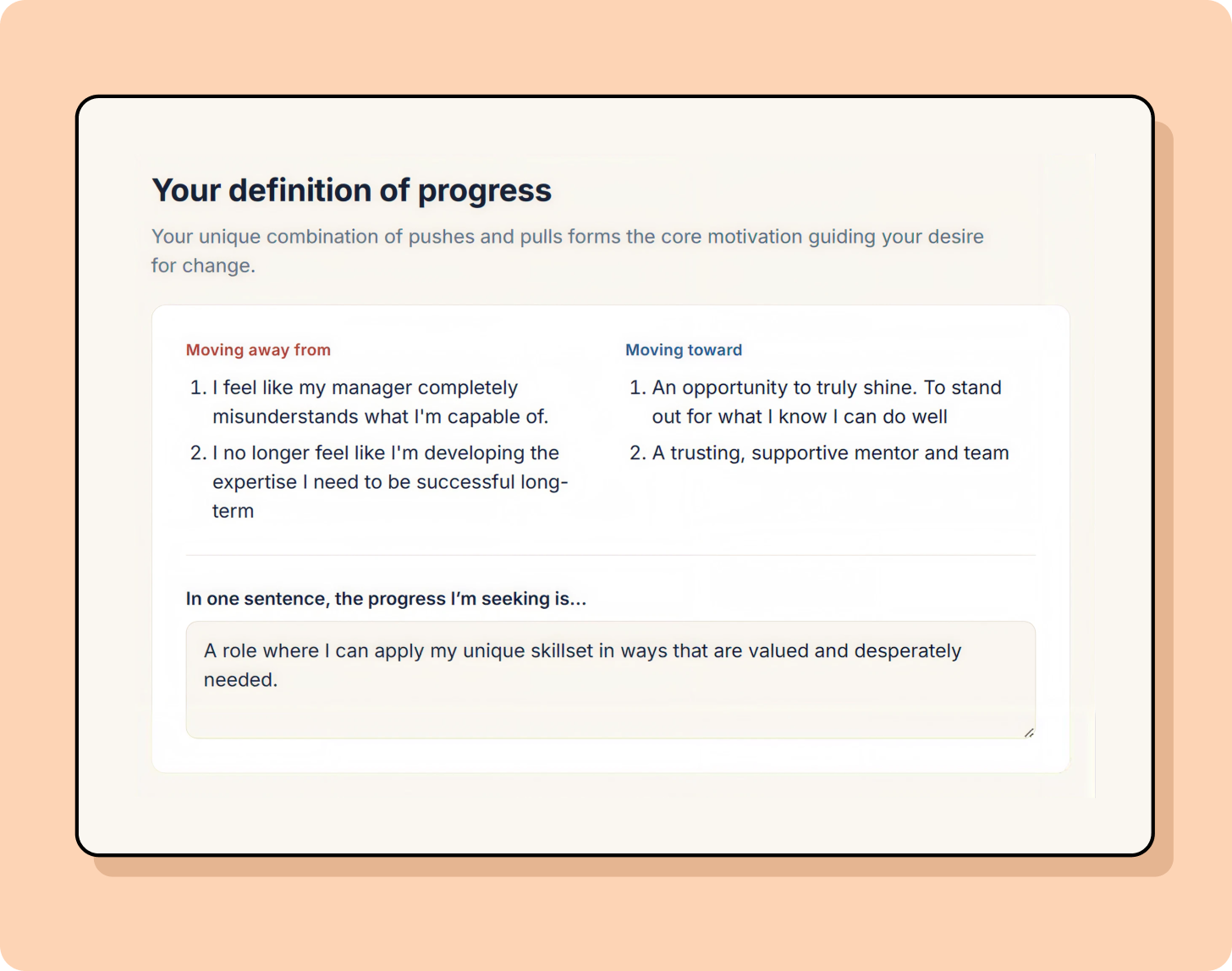
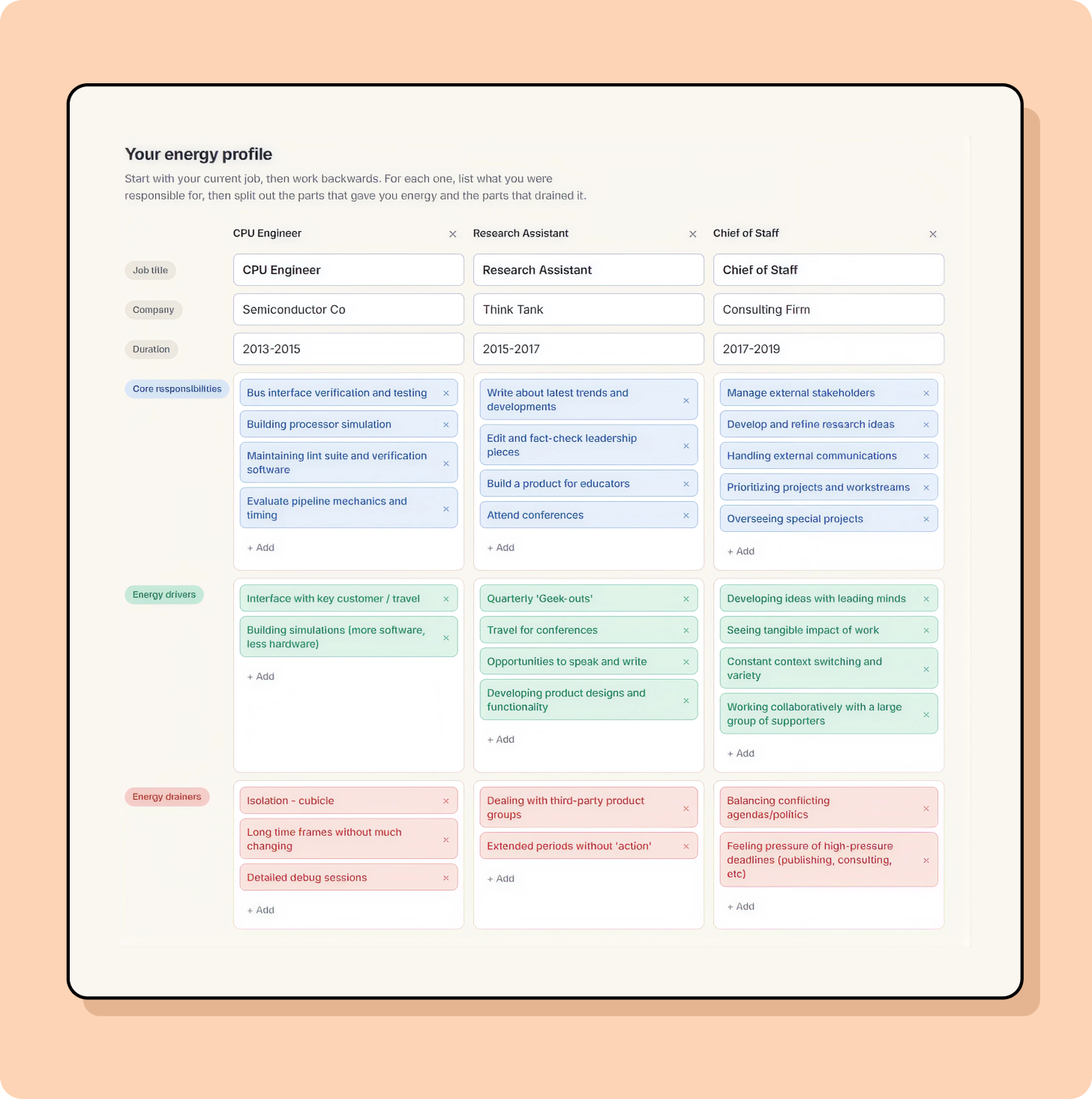
Navigate for progress, not title. A career-change framework treats the worker as the customer and the next move as the product, then asks six questions: desired progress, career quest, best-fit work, possible moves, trade-offs, and whether the need can be met without leaving. Start with a 10-minute diagnosis: write concrete “pushes” driving change, concrete “pulls” you want, and circle the two or three of each with the most emotional weight. For passive search, one note argues that more-senior roles increasingly arrive through outbound-only outreach; keep roughly 1% of your energy open and define a once-in-a-lifetime PM opportunity against a three-year lighthouse goal.
Tools & Resources
Run strategy prompts in multiplayer. A strategy-prompts activity shared in the current feed is meant to create team discussion; its test is that propositions challenge assumptions and the activity works in multiplayer. Try the strategy prompts activity with a cross-functional group and record which assumptions change.
Choose the canvas by discovery mode. In a B2B HR permissions redesign, FigJam worked best when discovery started with design and screen critique; Miro supported broader discovery with interview notes, workflows, voting, and a decision log, but required governance to prevent sprawl, while FigJam fragmented context beyond UI work.


Coverage caveat: no prior-brief text is included, so exclusion against previously covered topics cannot be verified. The ranking below is therefore source-intrinsic.
1. Read first: “Execution Map”
This is the strongest genuinely new PM-practice candidate: it explicitly names a new software primitive, supplies a construction method, links to an immediately usable LLM skill, and demonstrates a PM operating loop.
- Read exactly: L41–L59. The post distinguishes ordinary workflow abstractions from the “meta work” of keeping individual steps moving, then proposes an execution map representing the work a person must do to complete a workflow; it argues that context-aware LLMs can build and maintain these maps.
- Then read: L87–L105. This is the reusable framework: for every workflow node, identify approvers, required proof of completion, communications needed to start the next step, dependencies, and follow-up timing; classify requirements as answers or evidence.
- Tool/action passage: L165–L181. The skill accepts a workflow diagram, summary, or knowledge-base links; asks clarifying questions; produces Graphviz plus a text summary; and can support either personal productivity or a formal product feature.
- Optional PM implementation: L183–L193 shows a concrete loop using maps for up to five initiatives, daily Claude-generated to-dos, end-of-day updates, and manager communication.
2. Read second: generated-learning MVP quality/cost decision
This is a useful product decision under uncertainty, but not a validated framework. The builder weighs expensive frontier-model generation against cheaper models that may feel shallow, and considers a mixed pipeline in which the expensive model plans or reviews—or is reserved for the first experience—while rejecting both premature margin optimization and validation of a weaker product. The supplied passage ends with the author asking others where to draw the line, so frame it as an open decision heuristic rather than a proven prescription. Read exactly: L3–L15.
3. Read third: Miro versus FigJam field decision
This is a compact, actionable discovery-tool comparison. FigJam is reported to work best when discovery starts with design, while Miro supports broader cross-functional discovery through interview notes, affinity mapping, workflows, voting, and a decision log; the tradeoff is Miro sprawl versus FigJam’s fragmented context once work extends beyond screen design. Because the author closes by asking where teams draw the line and reports no final rule or outcome, use it as an evidence-based field note, not a new framework. Read exactly: L5–L13.
4. Optional lightweight tool: strategy prompts activity
The source offers a directly usable team activity and gives its governing test: strategy should contain propositions that challenge assumptions, and the activity should be tested in multiplayer mode. Read exactly: L9–L11. It is actionable but too lightly specified to displace the Execution Map in the core digest.
Adjacent, not core PM practice: career-navigation framework
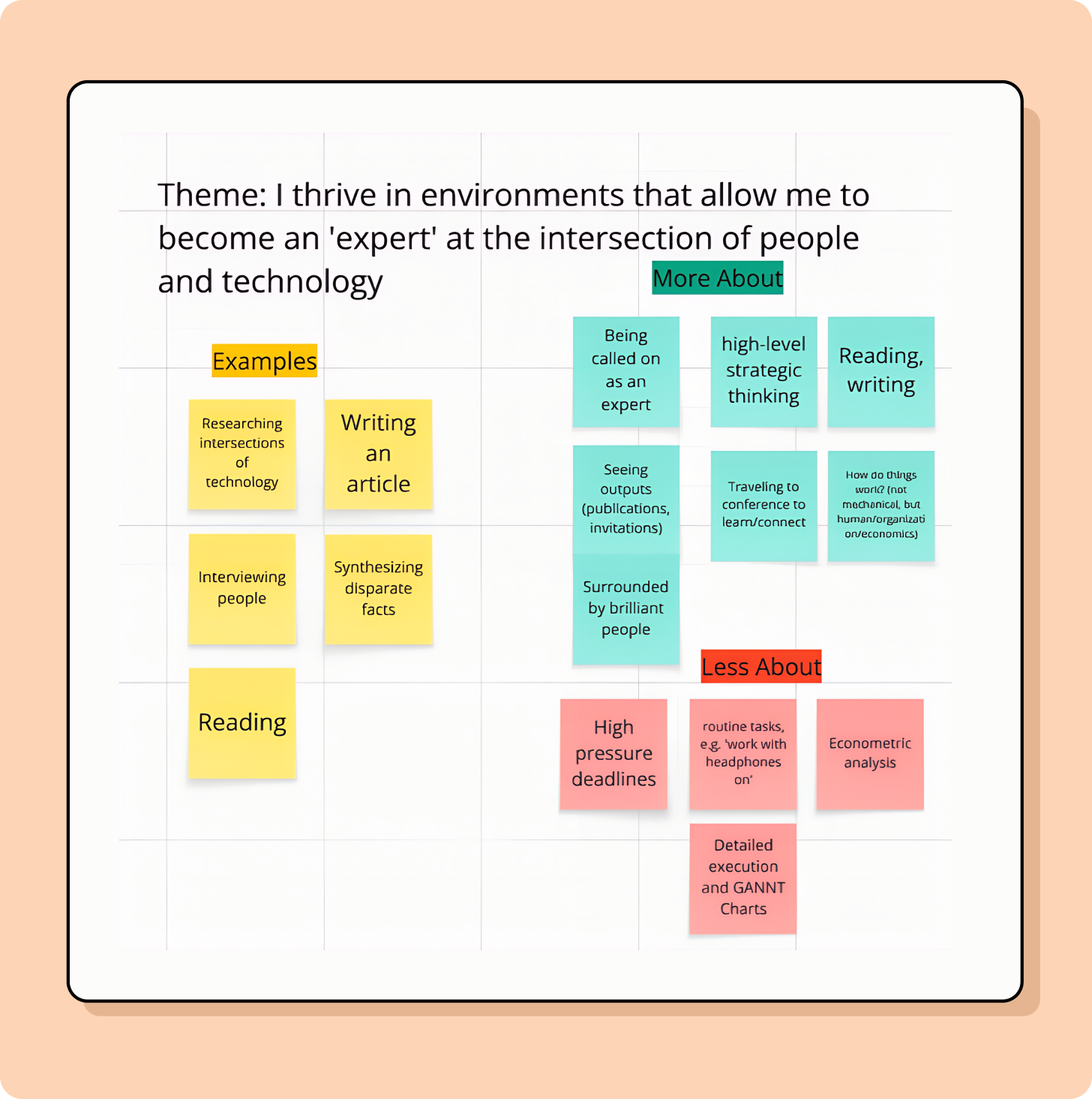
Lenny’s guide presents a substantial repeatable system—six questions plus exercises and tools—but it is career navigation rather than product-management practice. If a PM-career item is wanted, the smallest useful passages are the pushes/pulls progress exercise at L63–L77 and the energy-profile method: calendar audit, energizers/drainers, and theme extraction at L223–L251 and L259–L275. Aakash Gupta’s and Shreyas Doshi’s items are narrower inbound-job-search tactics, so exclude them from the core PM digest unless career advice is explicitly in scope.

Discovery and problem framing: Legora chose the broad space of legal AI rather than a narrowly defined initial problem; the founder contrasts this with a problem-first approach of solving a specific, clearly valuable problem and expanding from there. The non-lawyer founding team learned the domain through cold-emailing and messaging lawyers, offering to pay their hourly rate for lunch, and then working closely from inside one of the largest Nordic law firms. Their first YC rejection exposed weak understanding of lawyer segments; they returned two months later with a new name and platform after doing the necessary market homework. Their takeaway was that formal domain expertise may not be essential when a team is willing to learn deeply from customers, although the suitability depends on the market.
Prioritizing reliability and product focus: Because legal customers effectively give vendors one chance—product failures, excessive lag, or outages could leave the company “toast”—Legora froze sales for six months to improve the product. Early democratic feature voting had created too many features; the team rebuilt for launch and designed the platform to adapt as underlying models and agent frameworks changed. In October 2024, it consolidated the lessons into a simple product manifesto shared with the 25-person team; the founder links this refocus to stronger product competitiveness, momentum for entering the US, and the acceleration from $1 million toward $100 million in ARR.
AI product methodology: Instead of investing primarily in fine-tuning, Legora bet that general models would improve and focused on delivering their value to the market today and one step ahead. For a product supporting multiple models, the team treats use-case evaluation as a core product capability: lawyers create realistic use cases, run evaluations, and use the results to route work according to the trade-off between intelligence and cost. Privacy, hosting, data-processing agreements, and customer policies are product constraints as well: early sales emphasized private conversations and European data hosting, while some banks and law firms reject certain model providers.
Customer-feedback execution loop: The founder describes velocity and the ability to iterate on customer feedback as a critical early-stage skill. Even at larger scale, customer problems from calls are posted directly in the product channel with an expectation of rapid turnaround and customer delight, while the team guards against zigzagging away from the broader product vision.
Proactive-agent roadmap: Legora is moving from reactive agents that execute explicit prompts to proactive agents connected to context and triggers. Examples include automatically routing an incoming contract to an agent, escalating only when lawyer review is needed, or organizing a data room and producing a due-diligence report without a user initiating each step.
Scaling product-team operations: Legora evolved from having no formal goals and maximizing outcomes day by day to giving everyone visibility into monthly goals as the company reached roughly 750 people; the founder identifies communication as the capability that breaks first during scaling. The team reinforces shared accountability by celebrating wins, mourning losses together, and immediately switching to solution mode rather than blame.
Career and leadership skill: The speaker identifies storytelling as an underappreciated leadership skill because founders must sell the product and company narrative to themselves, employees, investors, and customers; he attributes his own development partly to repeated exposure and recommends deliberately building the skill during school or early career.

- Optimize for progress rather than a promotion ladder. AI is redrawing job boundaries and day-to-day responsibilities, making a repeatable process for identifying the problems, people, and environments where you do your best work more durable than following a fixed title path. The career-navigation process applies a product lens—treating the professional as the customer and the next career move as the product—and asks six questions covering desired progress, the motivating quest, best-fit work, possible moves, trade-offs, and whether the need can be met without leaving. Progress is contextual: it may mean autonomy, flexibility, recognition, or stability, and can be a lateral move or apparent step back if it solves the most important problem in the person’s life.
- Diagnose the move with pushes, pulls, and a career quest before evaluating openings. Write the concrete frictions driving a change, ask “why” until reaching root causes, list specific desired outcomes, then circle the two or three most emotionally significant pushes and pulls; their combination defines the career quest. The four recurring quests are get out of a damaging environment, regain control over time and workload, regain alignment with strengths and values, and take the next step toward challenge and growth. Completing “More than anything, I need my next move to…” helps identify the dominant quest and clarify which opportunities to avoid.
- Build an energy profile before switching roles. Map prior roles, audit the past month of calendar activity hour by hour, and describe actual work rather than job-description labels; an AI agent can help interview the worker about calendar blocks and produce the 8–10 core activities. Classify activities as energizers or drainers, repeat the exercise across earlier jobs, and turn patterns into specific conditions—for example, who you work with, what you work on, and which decision-making dynamics are present—rather than vague labels such as “working with others.” The resulting profile provides a basis for evaluating opportunities and questioning hiring managers or peers before accepting a role.
- A product-career example shows why title and scope are insufficient filters. A product professional at a large technology company pursued a startup role leading analytics to solve an apparent lack of leadership opportunity, but the deeper diagnosis showed that he liked product, wanted more time with his young children during a home renovation, and was not excited about leaving product; the new role solved the immediate problem without providing the progress he needed personally or professionally.

Claire Vo announced cxo.dev, a new AI transformation consulting offering for “AI-pilled leaders,” explicitly positioning it as built by builders rather than consultants. She says she is starting it because she is having “the most fun” building with AI and believes every company should do so.
- Sales-to-PM candidates should turn customer exposure into product evidence. Sales experience provides customer context and firsthand buyer pushback; candidates should frame that experience as customer discovery, then prepare for APM interviews by practicing product-design answers aloud with a clear user → need → solution structure.
- Build a portfolio around a real problem from the current job: write a one-pager, create scrappy Figma or PowerPoint mockups, publish detailed case studies that emphasize outcomes rather than tasks, and pursue internal product work or PM shadowing. A practical case study is a teardown of a product the candidate sold: map its funnel, identify a leak, and explain proposed changes. One commenter cautions that landing the first APM move is currently very difficult.

April Underwood highlights Claire Vo’s AI-readiness assessment as a way for companies to evaluate their own AI readiness, with Vo’s team positioned to help accelerate it.
- Use a 1% career-search rule: Even during a demanding PM role, reserve roughly 1% of your time and energy for staying open to inbound opportunities rather than shutting down completely.
- Set boundaries while remaining discoverable: Tell recruiters, “I’m not looking right now,” but invite contact for a “once-in-a-lifetime PM leadership opportunity”; define that opportunity using a three-year “lighthouse goal.”
- Treat job searching as a spectrum, not a binary state: Move among being uninterested, open to connections, open to the right opportunities, exploring, and actively interviewing; more-senior PMs should generally expect to stay in the market longer and remain passive for longer before choosing a role.

- Electric’s pivot illustrates when PM and company leadership should abandon a legacy model: despite reaching $50M ARR and raising $200M, the managed-services-plus-software combination delivered neither the profitability and stickiness of services nor the margins and scalability of software. The company chose to rebuild around native AI and SaaS products, spin off and sell its services division, and pursue major distribution partnerships.
- The rebuilt product targets high-friction IT operations: tasks such as creating accounts, ordering and provisioning laptops, securing data, and answering support tickets are compressed from multiple hours to about 60 seconds. Electric distributes the product inside payroll and HCM systems used by customers of ADP, Paychex, UKG, Justworks, TriNet, and iSolved, making existing workflows the discovery and adoption channel.
- Its execution model combines continuous customer contact with rapid shipping: the founder joins customer calls weekly, while product and engineering teams ship features quickly. The stated roadmap extends from organization-wide AI using existing HR/IT data, access, and governance to automatically generated automation recommendations and technology/AI-spend optimization.
- The strategic takeaway for PMs is to avoid protecting revenue that belongs to a weakening product model; Hiten Shah frames Electric’s experience as evidence that companies may need to “kill your old business before the market does.”
- A Bangalore PM candidate with 10+ years of industry experience and six years in product management highlights product strategy, discovery, roadmapping, prioritization, 0→1 and modernization work, AI/GenAI and data products, and cross-functional customer problem-solving across complex B2B/B2B2C products.
- The candidate’s career-positioning thesis is that PM hiring should assess problem understanding, critical thinking, customer collaboration, stakeholder management, and the ability to turn ambiguity into value—not only exact resume-to-job-description matching.
- One commenter recommends tailoring the resume to every posting and actively seeking LinkedIn referrals, claiming this works better than generic applications in Bangalore’s difficult hiring market. Another commenter, who says they recently hired two PMs in the region, reports that AI-generated application material was an automatic disqualifier in their process.

- SaaS changes the PM operating model: After moving from B2C consumer roles centered on data, experimentation, and product-led growth into two hospitality-tech SaaS jobs, the author observed more platform incidents, less PM influence, sales-led roadmaps, and much higher stress—“at least 4 fires a week.”
- Discovery is more front-loaded when experimentation is weaker: A SaaS practitioner cites lower tolerance for technical failure and too few users for statistically significant experiments, requiring teams to establish that a proposed product will improve growth, engagement, or retention before building. The same practitioner says platform investment makes SaaS slower and more deliberate than an MVP-heavy “see what sticks” approach.
- Reliability becomes a core product and commercial responsibility in enterprise SaaS: One B2B SaaS practitioner reports almost daily P1/P2 incidents in a complex product, with some failures affecting only narrow customer subsets. Their product has contractual five-nines uptime commitments for customers including nearly half of the Fortune 100; exceeding roughly five minutes of downtime per year can trigger SLA credits, while outages can also cause customer revenue loss, reputational damage, and intense executive, legal, and finance scrutiny.

Andrew Chen distinguishes daily active users (DAU) from hourly active users (HAU) and argues that products with high-retention HAU usage can reach trillion-dollar scale. This suggests PMs should evaluate usage frequency and retention—not DAU alone—when assessing product health.
- Large-company PM roles can expand well beyond core product work into demos, sales, marketing, project management, implementation, and support; one PM reports spending much of their time chasing other departments to complete those responsibilities rather than focusing on core product work.
- A practical boundary-setting model is to decline routine ownership of adjacent functions while preserving targeted collaboration: one senior IC accepts roughly 3–5 demos for a new launch to learn what works and develop the script, then avoids becoming ongoing demo support for sales; they decline implementation and most documentation work, reserving PM time for customer problems tied to revenue or growth, longer-term strategy, and cross-functional facilitation.
- When evaluating PM roles, candidates should ask explicitly whether PMs are expected to handle activities such as demos or other adjacent responsibilities, probe the level of organizational support, and read between the lines of the answers. A transition tactic is to provide demo guides and join early calls as backup while teaching partner teams to take ownership.
- Cross-functional overload is also a burnout and role-design signal: after a difficult launch involving tasks such as documentation and marketing materials, one Fortune 500 PM attempted to resign, received a sabbatical and role change, and subsequently limited their work to internal tooling and execution-focused responsibilities.
- Execution Map framework: Extend a conventional workflow—which captures general business steps—into a personal map of the “meta work” required to move each instance forward, including preparation, follow-ups, communication, answers, and evidence. It is especially useful for complex B2B processes where the participant’s actual work is much messier than the formal workflow.
- How to build one: After each workflow node, identify the reviewer or approver and what proves completion; determine whom to contact to start the next step and what they need; and set a follow-up wait period. Classify completion requirements primarily as answers or evidence.
- LLM-enabled PM workflow: Feed an LLM a process diagram, text summary, or internal knowledge-base links; answer its clarifying questions; then use its Graphviz diagram and linked text summary as the execution map. One PM implementation limits work to five open initiatives, maps each from a concrete goal to a desired outcome, asks Claude for daily next actions, updates the maps from end-of-day progress, and uses the relevant map section for manager updates.
- Design caveat: Execution maps cannot be meaningfully compressed without losing fidelity, so the product should surface the next action rather than require users to understand the entire map; unlike multi-person workflows, maps should be extensible and customizable for their primary user.
- Adoption and product trust build progressively: evaluate whether a product moves people from trying it, to trusting it with something small, to making it part of their work or life. This progression can be more informative than launch metrics when judging durable product success.
- “Product thinking” is described as a vague, broad term rather than a well-defined, step-by-step framework. A more useful learning approach is to specify the product topics or skills sought and build a tailored 101 from books, blogs, videos, and LLM-assisted resource synthesis.
- Distinguish the newer, less-settled “product sense” terminology from design thinking: commenters characterize design thinking as having established steps and academic roots, while product sense may be a newer term shaped partly by commercial hiring and growth. Treat it as a developing concept rather than a canonical methodology.
- A practical PM research tactic is to formulate specific resource questions instead of broad requests; research is identified as an important PM skill.
- Conflicting customer feedback can come from support, sales, and customer conversations; raw request counts may mislead because many smaller accounts may matter less than a few customers tied to a major renewal.
- The discussion recommends starting with product strategy and its goal, then evaluating each signal by how strongly it supports that goal and how difficult it would be to build, rather than reacting to the loudest stakeholder.
- A practical discovery approach is to ask customers and internal stakeholders specific questions linked to the strategic goal, use discovery frameworks for structure, and prioritize the opportunities that emerge.
- The thread identifies an unresolved process question: whether teams maintain a system that consolidates evidence from calls, support, sales, and research and links it to opportunities or decisions, or whether PMs handle that work manually.
- Use Cutler’s strategy prompts activity to get teams into strategy conversations; run the activity in “multiplayer mode,” which he identifies as the real test, and evaluate how it worked with the team.
- A real strategy should contain propositions that challenge assumptions the team would otherwise take for granted.

- Validate AI capabilities against economic utility, not benchmarks alone. The speakers argue that mathematical breakthroughs are not yet evidence of product-market value because many such problems had little market incentive; PMs should ask whether a capability removes a real roadblock to an economically useful task and translate platform advances into concrete applications.
- AI is changing company and product-building constraints from engineering-bound to capital-bound. The discussion suggests that a 20-person team could deploy $1 billion productively, enabling small teams to pursue much larger product scopes and requiring a reassessment of assumptions about capital, competition, productivity, and defensibility.
- Domain expertise can become a stronger starting point for software products. AI and no-code tools may let people with deep operational knowledge build software without spending years implementing it; the doctor-scheduling example shows why discovery must capture workflow complexity such as appointment duration, required equipment, blood draws, and parallel scheduling—not reduce the problem to a generic calendar.
- AI is lowering some startup barriers while incumbent inertia remains a competitive moat. Access to capital plus effectively unlimited demand for tokens and GPUs can make distribution and top-of-funnel growth easier for AI startups, while incumbents remain constrained by established sales channels, compensation, organizational structures, legacy systems, and customer commitments.
- AI product claims need explicit capability and risk boundaries. The speakers describe current models as strongly tied to their training distribution and remain uncertain about out-of-distribution performance, transfer learning, guarantees, and productivity impact; in biomedicine, AI can surface patterns and research directions across large paper collections, but efficacy, safety, and human-patient testing remain the difficult bottlenecks.
- For a B2B HR permissions redesign involving product, design, engineering, research, sales, compliance, and customer success, FigJam worked best when discovery started with design: Figma screens could be pulled in quickly, critiques stayed close to the interface, and participants found the tool easy to pick up.
- Miro worked better for broader cross-functional discovery because one board could combine interview notes, affinity mapping, competitor screenshots, permission models, rough workflows, voting, and a decision log; non-design stakeholders contributed more because the workspace was not centered on UI files.
- The trade-off was governance versus fragmentation: Miro required clear frames, archiving rejected directions, and labels for final decisions to prevent board sprawl, while FigJam remained lighter but split research notes, service flows, and decisions across separate files.
A product reaches a higher bar than momentary delight when it disappears into the user’s behavior: users stop thinking about the product itself and depend on what it enables them to do.