We can't find the internet
Attempting to reconnect
Something went wrong!
Hang in there while we get back on track


The strongest picks here are the ones where the recommender supplies either an unusually strong personal verdict or a concrete way to use the resource. The standout is the paper below; the rest are ordered by the specificity of the endorsement and the usefulness of the accompanying lens.
Start with the paper that has a real thesis
Ingressing Minds
- Type / creator: Revised, peer-reviewed paper by Michael Levin.
- Recommended by: Packy McCormick in Weekly Dose of Optimism.
- Key takeaway: Levin proposes that minds are patterns in a structured, nonphysical space, with biological or engineered bodies—including computers—acting as interfaces through which those patterns become embodied. Packy calls it potentially Levin’s most important paper and the most compelling argument he has heard that AI might become “conscious” or “alive,” closing with: “Worth a read.”
- Why it matters: This gives the AI-consciousness question a specific conceptual frame—patterns, agency, and embodiment—to examine instead of another broad forecast.
Strong personal endorsements
Walking the World
- Type / creator: Blog; Chris Arnade.
- Recommended by: Patrick Collison, who says the blog “continues to be one of the very best.”
- Key takeaway: Collison does not point to a particular post or argument, so this is an author-level quality signal rather than a recommendation of one essay.
- Why it matters: It is a clean addition to a trusted independent-reading queue, with unusually strong endorsement and no commercial framing.
Lost and Found
- Type / creator: Essay; Colston Whitehead.
- Recommended by: Packy McCormick, who says he reads it every September 11 and calls it “the best thing I’ve read on what it means to be a New Yorker.”
- Key takeaway: The recommendation is less about a new argument than about a durable piece of writing that Packy returns to annually for its account of New York after the attacks.
- Why it matters: The repeat-reading signal is stronger than a passing link: it identifies a specific essay as a lasting interpretive resource.
Short ESPN documentary on Welles Crowther
- Type / creator: Short documentary; ESPN. The captured source does not supply an official title; the video is embedded here.
- Recommended by: Packy McCormick.
- Key takeaway: He describes it as “a sober reminder of the real people who died in, and survived, the attack.”
- Why it matters: It complements Whitehead’s essay with a documentary account centered on individual lives rather than abstraction.
Technical and practical lenses
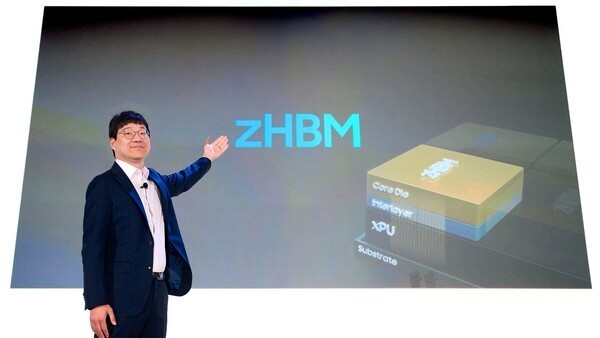
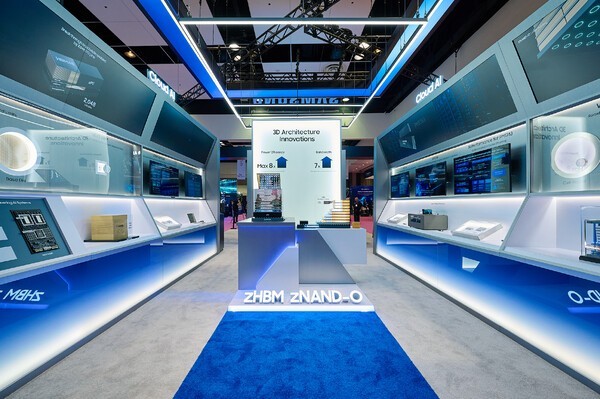
The Elec’s report on Samsung’s zHBM and zNAND-O
- Type / creator: Technical news article by JEONG IL JOO, published by The Elec.
- Recommended by: Tim Sweeney, who calls the development “very exciting” and highlights a wide data bus for high bandwidth and on-package design for low latency.
- Key takeaway: The article explains Samsung’s zHBM architecture, which vertically stacks HBM on top of AI accelerators to shorten the data path. Samsung says the design can deliver up to eight times the data-processing performance of HBM5, three times the performance per watt, and more than half the thermal resistance; those figures are company claims, not independently established results in the article.
- Why it matters: It is a concrete hardware-design read for understanding how memory packaging is being reshaped around AI processors.
The Book of Five Rings
- Type / creator: Book; Miyamoto Musashi, in a translation not specified by the recommender. No edition link was supplied.
- Recommended by: John Carmack, who says he recently worked through a translation.
- Key takeaway: Carmack found the introduction’s account of martial arts moving from battlefield necessity to sport, historical curiosity, and hobby useful as a parallel for programming. He argues that AI is making more hand-written coding skills less critical, while older skills can remain worthwhile as deliberate practice rather than as the center of the profession.
- Why it matters: The book becomes a framework for deciding which technical skills to preserve for craft and which to abandon as default production methods change.
Alec Baldwin’s Glengarry Glen Ross sequence
- Type / creator: Film sequence; the transcript identifies the Alec Baldwin scene but does not provide film credits or a direct clip URL.
- Recommended by: Tim Ferriss, in a live founder-coaching session.
- Key takeaway: Ferriss says viewers should watch the short sequence and uses it to explain AIDA—attention, interest, decision, action—while arguing that a startup should lead with a customer testimonial rather than a generic description of the product.
- Why it matters: It turns a familiar sales scene into a concrete messaging test: put the proof first, then structure the path from attention to action.
Exact title:Samsung Debuts zHBM Prototype, Stacking Memory Directly on AI Accelerators. The article covers Samsung’s zHBM and related memory announcements at FMS 2026.
Author/publisher: The byline is JEONG IL JOO; the copyright notice identifies The Elec Inc. as the publisher.
Publication date: No publication date is stated in the supplied text. The dates given—Aug. 4 and Aug. 5—refer to Samsung’s keynote and showcase, not necessarily publication.
Hardware change: Samsung’s zHBM vertically stacks HBM directly on top of an AI accelerator or xPU along the z-axis, shortening the data path. This contrasts with conventional designs that place HBM around the accelerator; Samsung claims the architecture can deliver up to eight times the data-processing performance of HBM5, three times the performance per watt, and more than half the thermal resistance.
Substantiveness check: Yes—the linked resource points to a substantive technical article, not merely a headline, because it explains the architecture, its contrast with conventional packaging, claimed performance characteristics, and customization model.


Newsletter
Lost and Found — type: essay; creator/author: Colston Whitehead; URL:https://www.nytimes.com/2001/11/11/magazine/the-way-we-live-now-11-11-01-lost-and-found.html;recommender: Packy McCormick, the newsletter narrator. He says he reads it every September 11 and calls it “the best thing I’ve read on what it means to be a New Yorker.”
Title not stated — described as a short ESPN documentary about Welles Crowther; type: documentary/video; creator/author: ESPN (no individual creator supplied); URL:https://www.youtube-nocookie.com/embed/S77KYbkmjwc?rel=0&autoplay=0&showinfo=0&enablejsapi=0;recommender: the newsletter narrator. The reason given is that it is “a sober reminder of the real people who died in, and survived, the attack.”
Title not stated — described only as the “166-page proof”; type: mathematical proof; creator/author: OpenAI; URL:https://cdn.openai.com/pdf/32d9f210-8b73-45e0-91bc-82a30aef8a9a/navier-stokes.pdf;recommender: the newsletter narrator. Readers are explicitly told they can read it, humorously framed as something to do “if you are incredibly bored this weekend”; no deeper lesson is attached to this recommendation.
NavierStokesAndEuler — type: Lean code repository/source code; creator/author: OpenAI; URL:https://github.com/openai/NavierStokesAndEuler;recommender: the newsletter narrator. The explicit reason is to inspect the code “yourself,” under the same humorous “incredibly bored this weekend” framing.
Ingressing Minds — type: revised, peer-reviewed paper; creator/author: Michael Levin; URL:https://www.mdpi.com/2409-9287/11/5/161;recommender: the newsletter narrator. He calls it potentially Levin’s most important paper, says it offers his most compelling argument that AI could become conscious or alive, and concludes: “Worth a read.”
Incomplete explicit prompt: Google DeepMind’s complete map of fruit fly neurons — type: neuronal map/resource; creator/author: Google DeepMind; exact title: not stated; URL: not provided; recommender: the newsletter narrator. The call is to “check out” what people have been doing with the map, but the supplied text gives no specific lesson beyond that invitation.
Video transcript: borderline item
- The Insider — type: movie; creator/author: not stated; URL: not supplied; recommender: an unidentified panelist tells producer Nick to find the relevant video, while the exchange identifies it as the movie The Insider. The associated lesson is the tobacco executives’ repeated denial that nicotine was addictive despite having prior research. Because it is a production-side request and not clearly a viewer-directed recommendation, this is borderline rather than a clear recommendation.


Confirmed recommendations
Documentary — Waiting for Superman. Niels Hoven recommends watching the documentary “if they want to see ... the sorry state of things” in education. The creator and a direct link are not provided.
Video/film clip — the Alec Baldwin sequence from Glengarry Glenn Ross (title spelling as transcribed). Tim Ferriss says the sequence is short, tells listeners “You should watch it,” and says he will link it in the show notes; he uses it to illustrate starting with a testimonial and the AIDA framework. No direct resource link or creator is supplied.
Book — title and creator not stated. Chris Dixon refers to “that great book” and explicitly says, “I recommend it to all of our employees.” The noisy passage does not establish the book’s title, creator, link, or precise antecedent.
Borderline pointer with insufficient resource details
- Unspecified content by “Lenny Richitzky” (transcript spelling). Tim Ferriss gives a positive “shout out” to Lenny for “really good tips” on using LLMs/AI for design, but no title, format, or link is named; therefore this is a pointer rather than a confidently identifiable book, article, blog, podcast, documentary, paper, or video recommendation.
- “Waiting for Superman” — documentary: Tim Ferriss recommended the film as a way to see the “sorry state” of education, in a discussion about whether educational efficacy should be a goal.
- Alec Baldwin’s short sequence from “Glengarry Glenn Ross” — video/film clip: Ferriss said listeners should watch it and cited its AIDA structure—attention, interest, decision, and action—as a useful model for leading startup marketing with a testimonial.
- Lenny Richitzky’s tips on using LLMs for design — format unspecified: Ferriss gave the tips a positive shout-out during the website redesign discussion, highlighting their usefulness for turning an LLM or AI into a “world-class designer.”
- Colston Whitehead, “Lost and Found” — essay: Packy McCormick says he reads it every September 11 and calls it “the best thing I’ve read on what it means to be a New Yorker.”
- ESPN documentary on Welles Crowther — video: McCormick recommends the short documentary as a “sober reminder” of the people who died in and survived the September 11 attacks.
- Michael Levin, Ingressing Minds — peer-reviewed paper: McCormick calls it potentially Levin’s most important paper and says it is “Worth a read.” The paper proposes that minds are patterns in a structured, nonphysical “Platonic space,” with biological or engineered systems—including computers—serving as interfaces through which those patterns become embodied; McCormick presents this as an argument that AI could become conscious or alive.

- Article/review — Robert Kwolek’s “definitive review of architectural visual preference surveying” (link) was surfaced by Patrick Collison through a quote-post of the recommendation. The shared summary says surveys found 60–95% preference for traditional architecture across demographic and political groups, while design professionals were much more favorable toward modern styles than laypeople. It also notes that the research remains early and leaves open how the public would respond to richer, nontraditional architecture.

- Musashi’s Book of Five Rings (book; translation) — John Carmack described reading a translation and found its account of martial arts evolving from battlefield necessity into sport and hobby interesting. He connected that transition to programming, arguing that AI is making some coding skills less critical and that practitioners should adapt rather than cling to traditional hand-written coding. Discussion: https://x.com/ID_AA_Carmack/status/2098443262214230095
- Patrick Collison recommends Chris Arnade’s blog, Walking the World, calling it “one of the very best.” Read it at https://walkingtheworld.substack.com.

Tim Sweeney highlighted and positively endorsed a The Elec article about Samsung evolving Flash memory toward HBM, specifically noting the wide data bus for high bandwidth and on-package design for low latency.