We can't find the internet
Attempting to reconnect
Something went wrong!
Hang in there while we get back on track


Patrick Collison: The Winged Gospel
At Startup School, an interviewer asked Patrick Collison about the student meme that anyone who doesn't drop out and start a company now will be "trapped in the permanent underclass" . Collison answered that humanity has "always had... an affinity for these millinarian sort of models" in which society is about to be permanently transformed . He then recommended a book: "there's a great book, The Winged Gospel." His summary of it: after aviation was invented, people believed humanity was entering a new era. Aviation turned out to be "a pretty big deal," he said, but not the "sociological rewriting" its excitable backers expected . His conclusion: "I would take the under on this being the last couple of years... to create a company" . Video
Garry Tan: @polydao on cutting agent costs
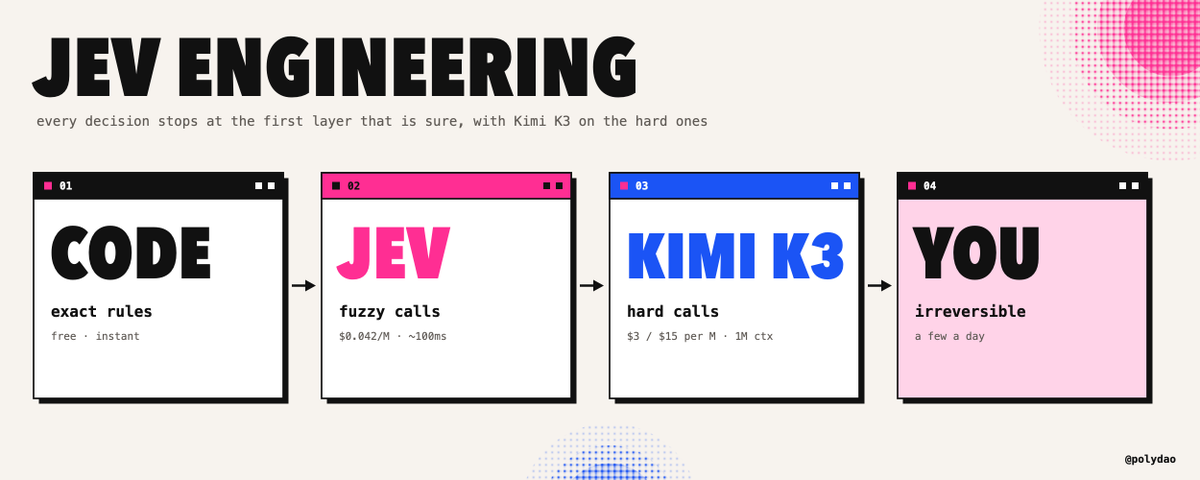
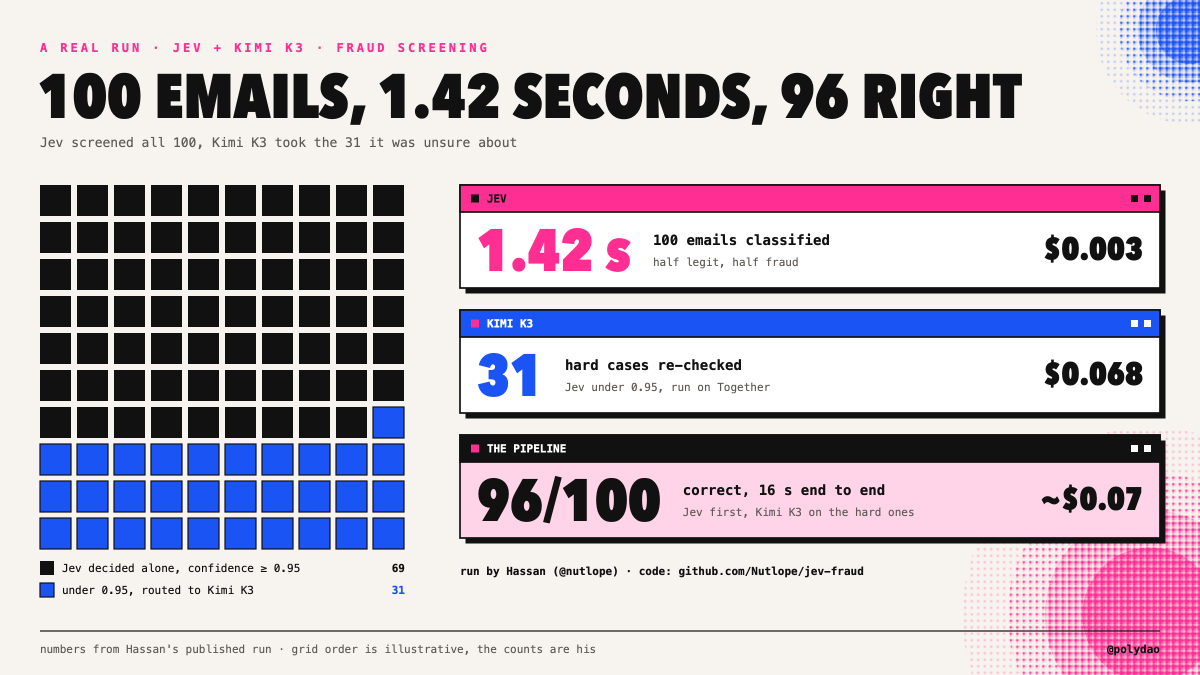
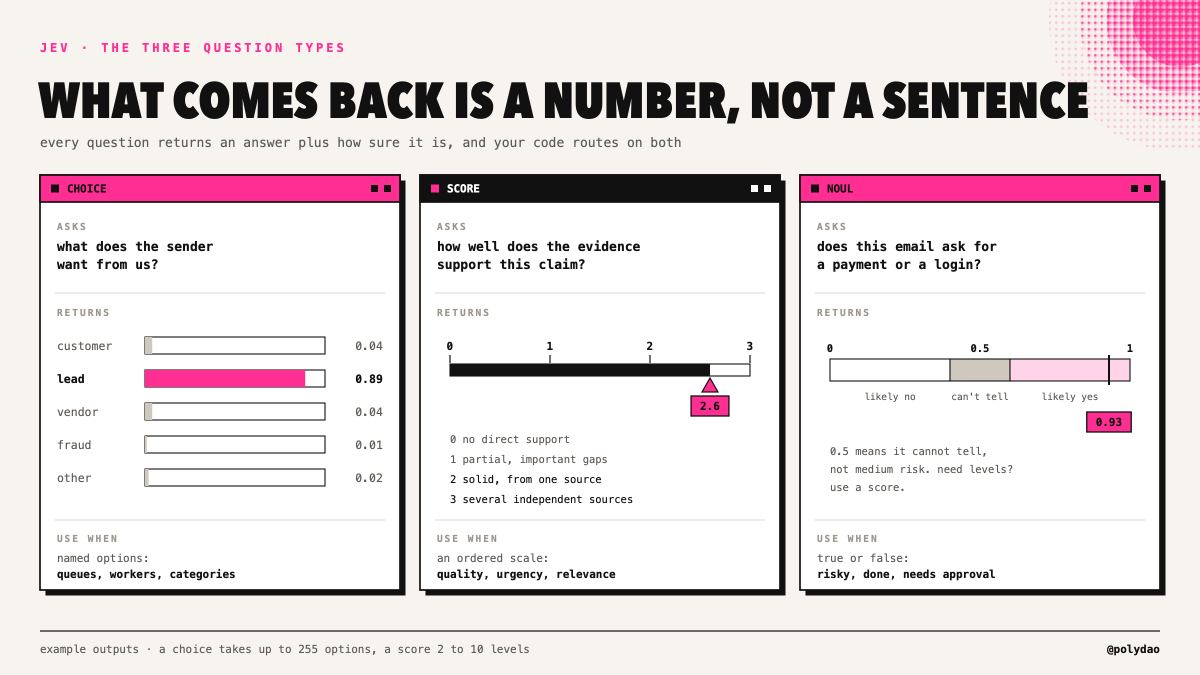
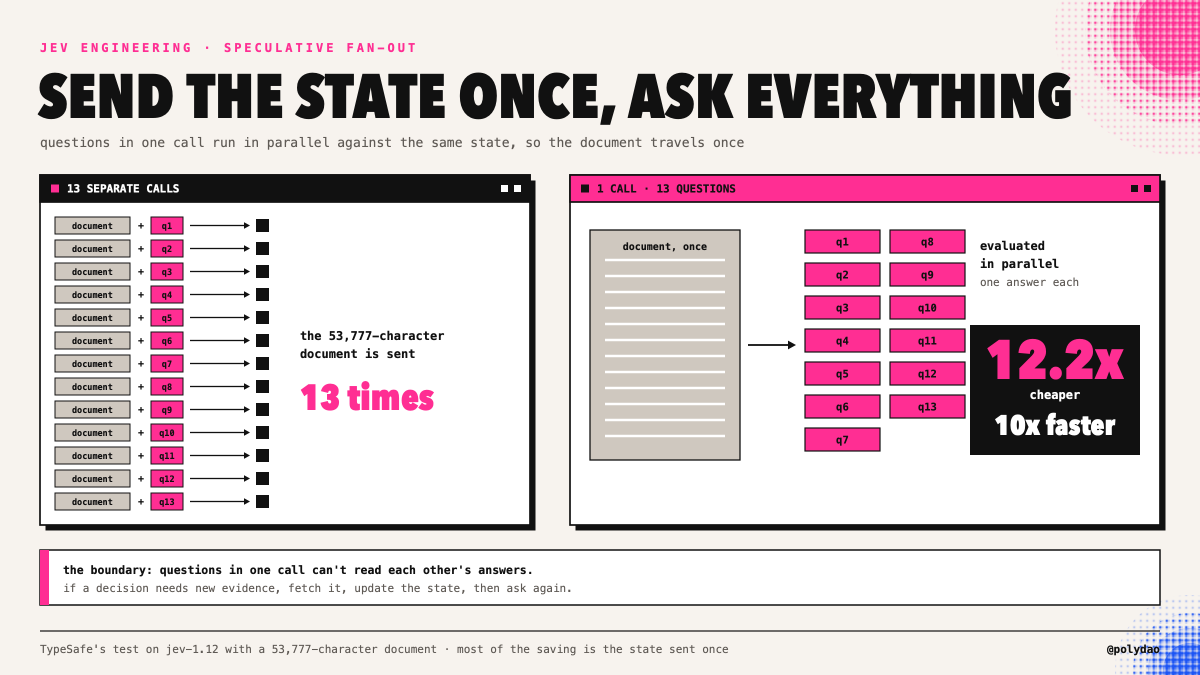
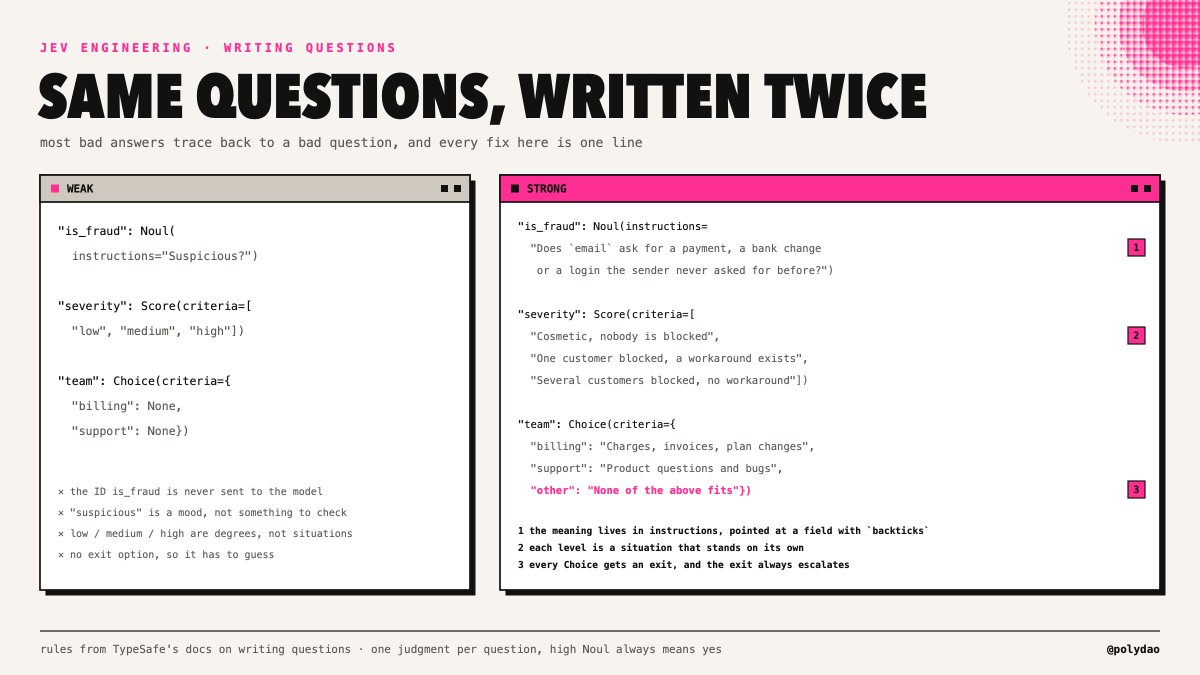
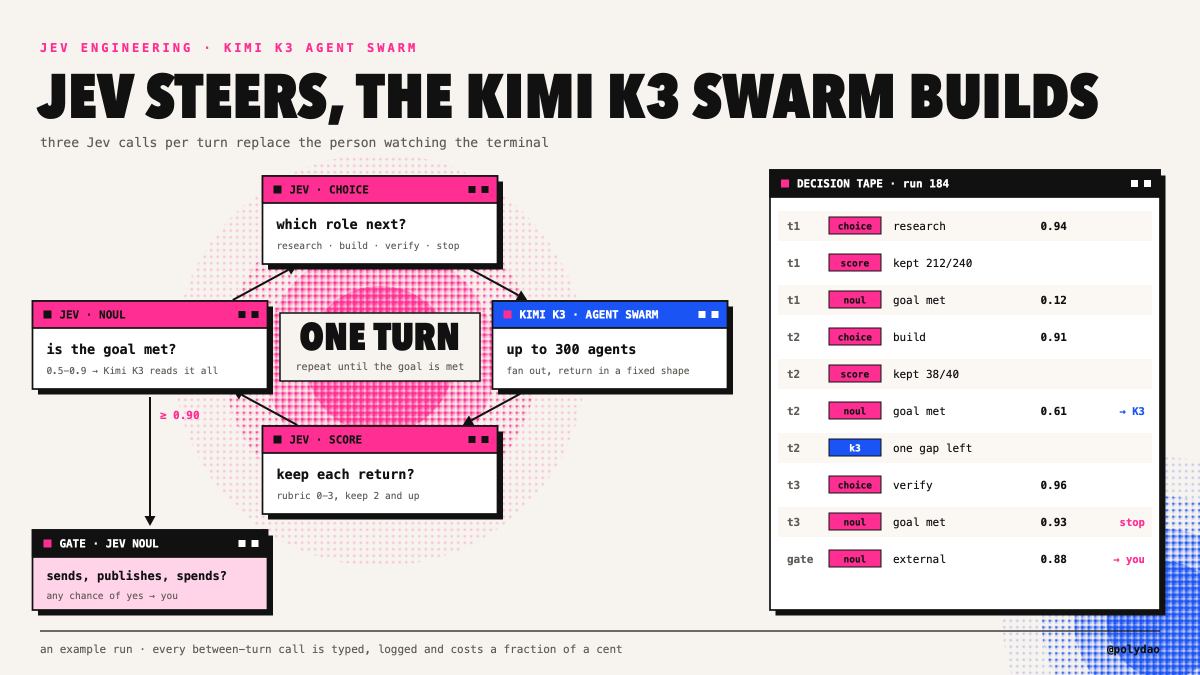
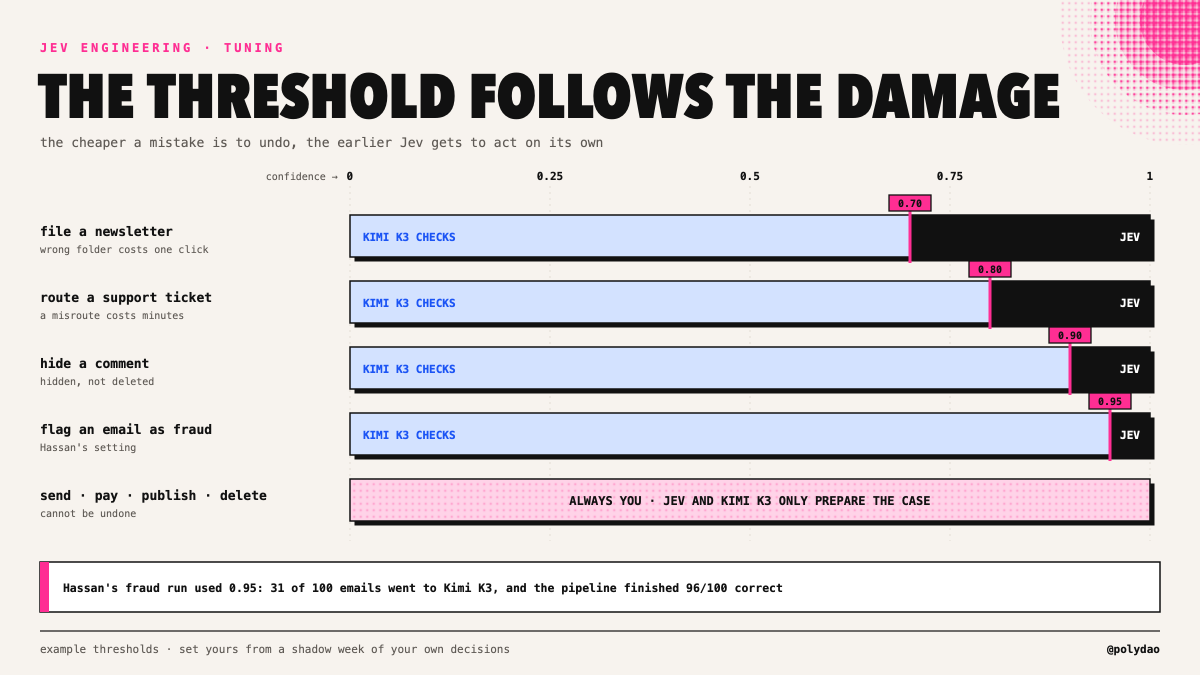
Garry Tan tested an article instead of just endorsing it. His gstack-evals project tried to reproduce @polydao's "How to Cut Your Agent Bill by 90% With Jev Engineering and Kimi K3." He reports that "this article replicates," and that a model he also had it try, particle-1, did "even better" . The article's starting point is that most calls in an agent loop are small decisions: which tool to use next, whether a source is relevant, whether the task is done. Each one is billed as a full frontier-model generation . Its fix is to send those decisions to a cheaper model based on calibrated confidence, and pass only the hard cases to Kimi K3 . Article
Patrick O'Shaughnessy: Colossus's Zuckerberg profile
Patrick O'Shaughnessy re-shared Colossus's "Mark," by @colossusjeremy, as "Worth a revisit" . Colossus describes Zuckerberg as the head of "history's largest nonterritorial empire" who "nonetheless remains a prisoner of his rivals." The profile took nearly a year. Stern interviewed three dozen people, among them Zuckerberg himself and his critics and competitors at frontier AI labs . Article
Paul Graham: Andrew McCarthy on the midterms
Paul Graham shared Andrew McCarthy's National Review piece "on what caused the Republicans to lose so badly in the midterms." He added no comment of his own .
Shorter picks
- Martin Casado called a demo video "beautiful" . It shows an open-world game built with Opus 5.5, gpt-Astra, Three.js, Anatomy and Suno, with art direction in the style of Moebius and Roger Dean . Post
- Tobi Lütke said "Love this" about John Fewell's isometric map of Toronto . The map covers all 630 km² from four angles, and you can rotate it to explore . Map
- Jason Lemkin promoted his own SaaStr piece on this week's 20VC episode. The headline takeaway: SaaStr cut the costs of its Connect app by 72% just by switching models, so "Re-benchmark every time a new small model ships" . Article

@zebulgar shared a video alongside the text “W-8 coming in hot at Mach-25” and praised the re-entry plasma views as “never get old,” endorsing the footage for its spectacle.

Patrick Collison called The Winged Gospel a “great book,” invoking expectations that aviation would usher in a wholly new era; his takeaway was that aviation mattered but did not remake society as dramatically as its proponents imagined.

Elon Musk endorsed Larry Page’s reported prediction that 99.999% of computing will eventually be orbital, saying Page has made many accurate predictions and this is one; Musk linked a video post attributed to Invest Like Best. The post says Patrick O’Shaughnessy heard the prediction secondhand.

Patrick O’Shaughnessy called Colossus’s “Mark” “Worth a revisit”; the profile is credited to @colossusjeremy and is about Mark Zuckerberg. The linked article is https://colossus.com/article/mark-zuckerberg-profile/; Patrick gave no further reason for the recommendation.

Paul Graham shared Andrew McCarthy’s National Review article about why Republicans lost badly in the midterms; the post gives no separate reason for recommending it or takeaway from the piece.

Garry Tan gave a positive, hands-on assessment of @polydao’s article “How to Cut Your Agent Bill by 90% With Jev Engineering and Kimi K3”: his gstack-evals project tried to replicate it, and he said the article was replicable and particle-1 was “even better.”

@tobi endorsed the interactive isometric map of Toronto featured in @johnfewell’s post: it depicts the city’s 630 km² from four angles and lets users rotate and explore it. Tobi’s stated reaction was “Love this,” without a more specific reason.

Guillermo Rauch (@rauchg) shared a record-player simulation he built with WebGL2 and Web Audio, calling it “shockingly” accurate and linking the demo. It converts songs into simulated groove shapes and models a stylus riding them 384,000 times per second to produce the voltage motion would induce in a cartridge; crackle, pops, wow/flutter, and dull inner grooves emerge from the simulation.

Martin Casado called @bei351009016’s post/video “beautiful” . The post presents an open-world game made with Opus 5.5, gpt-Astra, Three.js, Anatomy, and Suno , and describes its art direction as Moebius + Roger Dean ; Casado’s stated reason is simply that it is beautiful .

Jason Lemkin shared his new article, “Jason’s Takes on This Week’s 20VC: A 72% Cost Drop on Our Own App, the $100M Acquisition Bar, and DoorDash’s Third Competitor”. He highlights that changing models cut costs on SaaStr’s Connect app by 72% and advises re-benchmarking whenever a new small model ships.