We can't find the internet
Attempting to reconnect
Something went wrong!
Hang in there while we get back on track

Pete Florence: two coaches on leadership
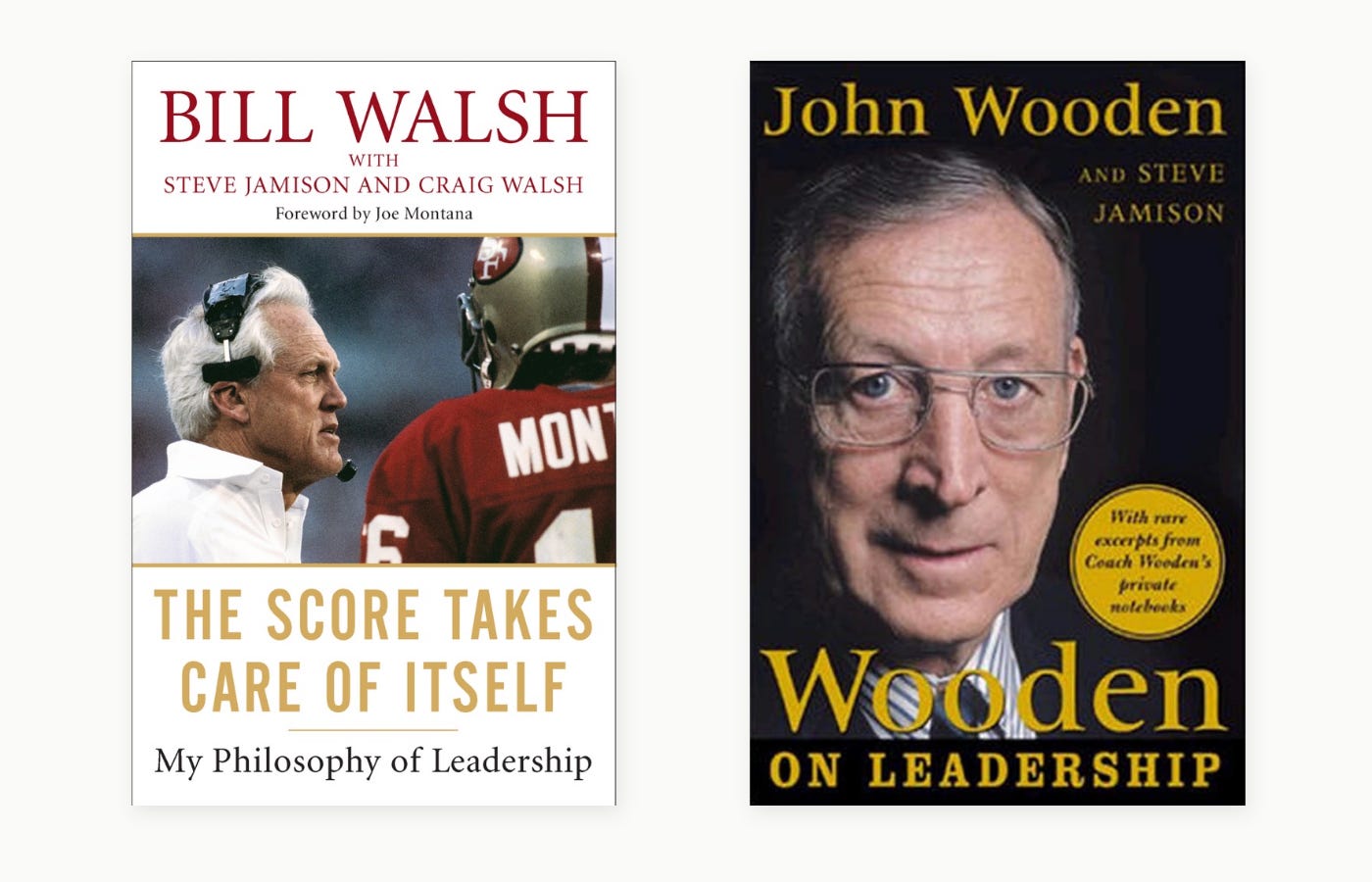
Asked for a book recommendation on The Generalist, robotics founder Pete Florence named two coaches: Bill Walsh of the San Francisco 49ers and John Wooden of UCLA. His answer brought the conversation back to teaching and coaching, which interviewer says have both been big parts of his life. The episode's reading list gives the books as:
- The Score Takes Care of Itself: My Philosophy of Leadership by Walsh (link)
- Wooden on Leadership: How to Create a Winning Organization by Wooden (link)
Paul Graham and Garry Tan: NBER paper on California's billionaire tax
Both quoted an NBER paper by Benjamin Jaros and Joshua Rauh (paper). It estimates that California's Billionaire Tax Act would collect about $30 billion. Once income taxes lost to people leaving the state are counted, the mean net present value is negative $39 billion. Graham's summary: the tax "would actually lose the state money." Tan read the paper as evidence that California keeps trying to "eat the Golden Goose."
Matt Mullenweg: two pieces on why AI still needs WordPress
- Jono Alderson, "Your website needs a brain." Alderson's argument: if you replace your CMS with AI-generated pages, you inherit "a thousand publishing problems." Mullenweg posted his own 134-word condensed version (he says he cut it from 2,910 words using Fable). The key point is that AI can regenerate pages but not the shared records and dependency tracking that connect them. His takeaway: "Use AI on top of it, not instead of it." In the same post he plugged his own new product, Spacefast.
- Elementor, "WordPress: born ready." Shared by Miriam Schwab, the post argues that WordPress's REST API, which has existed since 2016, makes it ready for AI agents. Every object has a JSON endpoint, and agents can find routes on their own through /wp-json/. Mullenweg's endorsement: "Real ones know."
Sarah Guo: Ars Technica on compromised TLS certificates
Guo pointed to Ars Technica's "The Internet goes on high alert after discovery of 8 compromised TLS certs" as "today's example of why ai people are legitimately stressed about internet resilience in the face of agentic cyber attacks." She writes that eMudhra's intermediate CA private keys turned out to be tiny numbers like 4 and 56. That meant anyone could recover them in seconds and mint a trusted certificate for any site. Browsers have blocked the bad certificates, but "the long tail of servers, containers, and devices" still trusts them. She credits the term "vulnpocalypse" to @dok2001.
Shorter mentions
- Vinod Khosla shared a conversation between Brad Porter and John Giannandrea. It covers why one research paper could make models ten times faster, and what it takes to move AI from research to deployment.
- Elon Musk said in an interview that a book on "suicidal empathy" is "well written" and "points out some good good things." In his telling, the book argues that high-trust, high-empathy societies help explain the West's prosperity. Musk added that empathy goes wrong when people assume everyone thinks like they do. The transcript gives no title and renders the author's name as "God's," which is probably the psychologist Gad Saad. That attribution is our inference.

Paul Graham cited an NBER analysis by Benjamin Jaros and Joshua Rauh on California’s proposed wealth tax, saying it indicates the tax would lose the state money. The NBER post reports that the act would collect roughly $30 billion, but that accounting for lost income taxes from departures yields a mean net present value of negative $39 billion.

Elon Musk praised a book about “suicidal empathy” as well written and said it makes good points; the transcript does not provide its title or clearly identify the author. Musk said the book points to a contribution of high trust and high empathy to Western prosperity, while cautioning that empathy can misfire when people assume others think as they do.

Patrick O’Shaughnessy promotes a video conversation with Christina Cacioppo, Vanta’s cofounder and CEO, and links to the full conversation . In a clip, Cacioppo says French software companies shifted predominantly to Chinese models because they saw relying on American models as a business-continuity risk if access became unavailable .

Sarah Guo (@saranormous) highlighted Ars Technica’s “The Internet goes on high alert after discovery of 8 compromised TLS certs” as an example of why AI people are concerned about internet resilience amid agentic cyberattacks. She noted that eMudhra’s intermediate CA private keys were recoverable in seconds, while some servers, containers, and devices may still trust the affected certificates despite browser blocks.
Patrick O'Shaughnessy recommends his second conversation with Vanta cofounder and CEO Christina Cacioppo (“Enjoy!”), which covers Vanta’s AI rebuild and changes in software and security. He frames Vanta with Charlie Songhurst’s view that highly boring, highly complex companies may offer the best returns, calling Vanta one such company. Episode post.
Patrick O’Shaughnessy recommends his second conversation with Christina Cacioppo, Vanta’s cofounder and CEO, highlighting discussions of AI pricing and rebuilding software, AI-driven security, talent, and trust; he closes with “Enjoy!” . The post links to the conversation here: original post .
Patrick O’Shaughnessy recommends his conversation with Christina Cacioppo, Vanta’s cofounder and CEO, inviting viewers to “Enjoy!”; the discussion covers Vanta’s AI strategy, security, and building trust in technology . In a clip from the conversation, Cacioppo says Vanta is absorbing AI token costs and taking lower margins to prioritize usage and deployment before working out commercialization . Conversation post .

Pete Florence recommended Bill Walsh’s The Score Takes Care of Itself: My Philosophy of Leadership and John Wooden’s Wooden on Leadership: How to Create a Winning Organization . His recommendations brought the conversation back to teaching and coaching, both significant parts of his life.
Patrick O’Shaughnessy recommended his second conversation with Vanta cofounder and CEO Christina Cacioppo (“Enjoy!”), covering AI pricing and software rebuilding, talent, AI security, and trust. Watch the video.

Jason Lemkin shared a new YouTube video (link) arguing that agents will choose software vendors differently from people asking ChatGPT or Claude; he distinguishes this from GEO/AEO, which he says mattered over the prior 12–18 months for human-facing recommendations.
Jason Lemkin pointed readers to a SaaStr article on five Braze takeaways, including its revenue, Salesforce sale, growth, and operating expenses, saying “More here.” This was additional reading after his post that Salesforce was buying Braze for $5.7B, or 6.8× revenue. Article

Elon Musk endorsed @EndWokeness’s X post, which lists 1955 and 2025 native-background percentages for Brussels, London, Amsterdam, Berlin, Vienna, and Stockholm . He added, “Objectively, the ‘Great Replacement’ has already occurred.”

Matt Mullenweg amplified Jono Alderson’s article on why websites need a brain, endorsing its argument that AI-generated pages cannot replace a CMS’s connected content records and dependency tracking. His takeaway: WordPress has 20 years of answers to these problems, so use AI on top of WordPress, not instead of it.

Garry Tan recommended HappenstanceAI’s post/video, calling it the “greatest unlock” for startup founders and anyone who needs to reach the right people. The post features Ruben Hassid describing Happenstance as “if LinkedIn and Claude and ChatGPT had a baby” and showing how he finds warm paths to people across a network of 800,000+.
Garry Tan shared an NBER analysis by Benjamin Jaros and Joshua Rauh on California’s Billionaire Tax Act, which estimates roughly $30 billion in collections but a mean net present value of -$39 billion after accounting for income taxes lost when people leave the state (paper). Tan used the analysis to argue that the tax would damage California, likening it to “eat[ing] the Golden Goose.”

Brian Armstrong shared a new Coinbase blog post about working together on Bitcoin post-quantum readiness, saying the issue requires preparation and collaboration across the industry and that Coinbase is contributing alongside others. Coinbase blog post

Vinod Khosla shared a YouTube video featuring Brad Porter and John Giannandrea, discussing how one research paper could make models ten times faster and what it takes to move AI from research to deployment.
Matt Mullenweg signal-boosted @miriamschwab’s post with the approving remark “Real ones know”; the post links to an Elementor article. The post argues that WordPress’s REST API, available since 2016, makes the platform ready for AI agents through clean JSON endpoints and discoverable routes and endpoint arguments.
Jason Lemkin promoted the SaaStr article “5 Learnings from Braze's $5.66B Sale to Salesforce” (link). He highlighted its comparison of Salesforce’s 6.8× revenue purchase price with the public market’s 3.7× valuation, and its takeaway that strategic buyers pay for distribution and data while markets price AI risk.

Satya Nadella pointed readers to a Microsoft News feature, “A concrete vision: Saint-Gobain and Microsoft Discovery build for the future,” with the prompt “Read more”: article. He framed it around Saint-Gobain using Microsoft Discovery to accelerate development of more-efficient construction materials.