We can't find the internet
Attempting to reconnect
Something went wrong!
Hang in there while we get back on track

Most compelling: a case study in complementary technical pairs
The Friendship That Made Google Huge — article · Author/creator: byline not surfaced; published by The New Yorker · Recommended by: Vinod Khosla. Khosla’s post points readers to the article and frames Jeff Dean and Sanjay Ghemawat’s side-by-side coding as a force that changed Google and the internet.
The article makes the recommendation useful rather than merely inspirational: Dean and Ghemawat took charge of making a fleet of unreliable machines behave as a resilient system, using checkpoints, encoding, compression, and low-level optimization; its explicit engineering lesson is that solving problems at scale requires knowing the smallest details. They later generalized that work into MapReduce, which let Google programmers use distributed machines as one computer and became the basis for Hadoop.
Key takeaway: find a technically compatible partner whose thinking is complementary—Dean says the right pair becomes a “complementary force.” Why it matters: this is a concrete case study in collaboration compounding into infrastructure, not just a founder anecdote.
The technical bottleneck: The Verifier Bottleneck
The Verifier Bottleneck — article · Author/creator: Vishal Misra · Recommended by: Martin Casado. Casado calls Misra’s post “another fantastic post” and says it uses recent math results to show the limitations of recursive self-improvement without new information. Misra’s post supplies the link to the full article and states its thesis directly: AI progress is limited by verification rather than computation.
The article’s central distinction is that recursive self-improvement can make proposals better and search cheaper, but only a verifier adds information about reality: “Compute buys proposals; verifiers buy knowledge.” In science, the verifier moves outside computation—a drug must survive a trial, a material must be synthesized, and an aircraft must fly—and AlphaFold illustrates how solving one search problem can expose verification as the next bottleneck.
Key takeaway: when assessing claims about self-improving AI, ask where the new information enters. Why it matters: Misra supplies a sharper test than model size or raw compute: distinguish cheaper recombination of existing knowledge from contact with an external verifier that expands what is known.
An infrastructure recommendation with a concrete political bargain
AI data centres are the future. Canada must overcome the backlash — opinion article · Author/creator: Kevin Yin · Recommended by: Tobi Lutke. Tobi shared the article and added his own blunt endorsement: Canada needs more data centres because they fit its technology and energy strengths, while calling the backlash “nonsensical.” The article identifies Yin as a Globe and Mail contributing columnist and Berkeley economics doctoral candidate.
Yin’s argument is more nuanced than a generic pro-build position. AI and its supporting hardware are becoming general-purpose inputs to science, business, defence, and health care; Canada therefore needs dependable computing infrastructure, data jurisdiction, and domestic capability to build and operate data centres. The article also acknowledges the local costs—higher energy prices, noise, relatively few permanent jobs, and difficult-to-tax profits—and notes that more than two-thirds of surveyed Canadians oppose data centres near their communities even while seeing a need for domestic AI infrastructure.
Key takeaway: treat compute as strategic infrastructure, but make the bargain visible: the article proposes favouring Canadian ownership or joint ventures, commitments to serve Canadian researchers and startups, and requirements that operators provide or finance equivalent power and grid capacity. Why it matters: it gives readers a concrete way to evaluate data-centre policy—who gets access to the compute, who pays for the power, and whether host communities actually share in the upside.
Ambition with feedback loops: Seeing Like a State
Seeing Like a State — book · Author/creator: not named in Tan’s post · Link: none supplied · Recommended by: Garry Tan. Tan uses the book to describe high modernism as faith in linear progress, technical mastery, rational production, and the ability to redesign nature and human nature for greater welfare; he also notes that it promised freedom from scarcity and natural calamity.
Tan accepts the book’s warning that ambition becomes catastrophic when “the map can no longer be corrected by the territory,” but argues that the warning was overlearned. His proposed synthesis is explicit: “Bring back high-modernist ambition, and add feedback loops,” with superintelligence-driven abundance potentially making those loops real.
Key takeaway: retain correction mechanisms without treating ambition itself as the error. Why it matters: this is the strongest conceptual reading lead in the set for thinking about AI deployment: build boldly, but keep reality able to revise the plan.
Direct answer. Vishal Misra's article, “The Verifier Bottleneck,” argues that recursive self-improvement is limited by verification, not computation: no amount of processing one's own outputs gives more bits about reality than the verifier contributes, so recursive self-improvement makes proposals better, not truer .
Findings:
The article responds to OpenAI's recent mathematical results. “After the Proof” addressed whether successful searches leave reusable intuition; this post asks the complementary question: what ultimately limits recursive self-improvement? The source does not name or detail the math results themselves .
Misra's “Matrix” is a conceptual object of every possible prompt × every possible next-token distribution; even something like ChatGPT 3.5's complete matrix would contain vastly more rows than electrons in the observable universe, and models store only a compressed approximation. Chain of thought unfolds latent algorithms, generating new rows that were never memorized .
Proof search is expensive in tokens and trajectories rather than dollars, and recursive self-improvement can make that unfolding dramatically cheaper, but cannot make The Matrix larger: it is “epistemically closed” .
The core thesis is that the only thing that increases information content is a verifier, presented as the data-processing inequality applied to reasoning. Compute buys proposals; verifiers buy knowledge .
This explains why mathematics was the first discipline where AI made frontier discoveries: both halves of the loop live inside computation — the proposal comes from the model and the verifier is another computation, such as a proof checker or symbolic algebra, so the loop closes inside silicon .
In science, the verifier moves outside computation: a drug must survive a clinical trial, a material must be synthesized, an aircraft must fly; nature answers the question the model cannot answer for itself .
AlphaFold qualifies the thesis: it compressed the search over protein structures enormously but “has not solved biology”; it solved one expensive part of biological search and exposed the next bottleneck — scientists still have to decide which structures matter, what mechanisms they suggest, and which experiments are worth running. Every genuinely new bit still comes from an experiment, and the bottleneck moved from search to verification .
Implication: in mathematics the search-to-path ratio can keep falling because the verifier is almost free, while in science every shortcut matters even more because every wrong path is purchased from nature. The limit will not be how quickly models can think; it will be how efficiently each verifier bit becomes the next shortcut .
Conclusion: shortcuts make search cheaper, but only verifiers make knowledge larger; the future depends on how fast a verifier hands the model a new bit and how much intuition each one leaves behind. “The bottleneck was never compute. It was always the verifier” .
Direct answer. The bundle's metadata title is Opinion: AI data centres are the future. Canada must overcome the backlash (metadata, not a line in the text). The piece is signed by Kevin Yin, 'a contributing columnist for The Globe and Mail and an economics doctoral candidate at the University of California, Berkeley' (), and is part of the Prosperity's Path opinion series (). Yin's central argument is that Canada should not block AI data-centre projects despite the backlash; since AI computing capacity has become strategic infrastructure, the answer is to 'design a better bargain' that aligns local costs with diffuse national benefits ().
- Why AI infrastructure matters: AI and the hardware behind it are rapidly becoming general-purpose inputs to science, business, national defence and health care, with productivity gains already seen in health-risk detection, faster software development and lower barriers to complex research (). More than attracting investment, Canada needs reliable access to computing power, greater jurisdiction over data, and stronger domestic capabilities in building and operating data centres (). Data centres differ from factories because computational services can be supplied from abroad while the key benefit is an 'innovation spillover', and they are becoming a strategic chokepoint, like oil ().
- Geopolitical evidence: A recent Trump-administration decision restricting access to Anthropic's frontier AI models shows the U.S. is willing and able to cut off AI tools when its interests dictate, just as Iran can disrupt energy markets by blocking the Strait of Hormuz (). Canada must reduce dependence on foreign-government decisions for essential services and domestic innovation ().
- The backlash and its grounds: Data centres raise energy prices for local residents, create noise, provide far fewer permanent jobs than many large capital projects, and generate profits that are hard to tax when tied to IP held elsewhere; the broader innovation/sovereignty benefits have not been adequately realized (). Angus Reid Institute polling this year shows Canadians broadly see the need for domestic AI infrastructure, but more than two-thirds oppose having it built near their own communities; costs are local while benefits are diffuse and only partially captured (). Visible backlash includes hundreds protesting in Vancouver after Telus announced multiple large-scale B.C. data-centre projects, citing energy/water demands, consultation gaps and AI's impact on art and culture ().
- Proposed 'better bargain': Policy must ensure Canadians receive the strategic/innovative benefits that justify construction; because these are externalities, active industrial policy is justified, with federal tax credits and subsidies favouring Canadian-headquartered ownership, joint ventures with Canadian firms, or enforceable commitments to allocate priority compute to Canadian researchers, startups and public institutions (). Objections that conditions deter investment are weaker than in other sectors because, unlike factories, domestic participation is itself the point (). Owners should be required to provide their own power or finance equivalent new supply and grid capacity, matched at all times (including peak demand), with strict approval to prevent accounting avoidance (); 'bring-your-own-power' does not eliminate all opposition, as Manitoba's rejection shows, but it changes the bargain so communities are not subsidizing distant users (). Municipalities should not be forced into bidding wars with local tax breaks; national federal subsidies, preserved property taxes and conditional transfers can make host communities fiscal winners (). On profit-shifting, Alberta's 2% hardware levy is easy to administer but taxes an intermediate input and singles out one industry; formula-based apportionment could better divide IP-based tax revenue if carefully designed with international co-operation ().
Caveats: This is an advocacy/opinion essay rather than a neutral or empirical report, and the bundle contains no conflicting evidence. Some supporting details are intentionally approximate in the source ('this year', 'far fewer', 'more than two-thirds'), so they should retain that hedging. The article title comes from bundle metadata rather than line text.
Title and author
-
The bundle's
titlefield is "The Friendship That Made Google Huge" (bundle metadata; not a line in the markdown). The top line of the article reads: "Coding together at the same computer, Jeff Dean and Sanjay Ghemawat changed the course of the company—and the Internet." -
The supplied markdown contains no byline; the bundle's
authorfield isnil, so the author cannot be extracted from this source.
Core account of the collaboration
- In March 2000, Google's index was broken and results were five months stale, endangering a Yahoo deal that required a ten-times-bigger index. After four days of failed debugging by other engineers, Jeff and Sanjay converted the index to binary, found corrupted memory bits, identified hardware failures as inevitable at Google's cluster size, and wrote compensating code; the new index was completed and the war room disbanded.
- Side by side at one computer, they became the leaders of making Google's 1,500 commodity machines behave as one resilient system, adding checkpoints, compression, and speed optimizations. Today they are Google's first and only Level 11 Senior Fellows.
- From the third rewrite of Google's crawler and indexer, they generalized MapReduce, letting any Google engineer wield data-center machines as one computer; it was published in 2004 and later became the model for Hadoop.
- Their working style predates Google: paired coding since D.E.C. ("I would walk from my D.E.C. research lab two blocks away"), with Jeff as accelerator and Sanjay as brake, finishing each other's sentences, described as "two halves of a single mind."
Concrete lesson in the article
- The article's most explicit lesson is that a compatible, complementary pair is a creative force: "You need to find someone that you're gonna pair-program with who's compatible with your way of thinking, so that the two of you together are a complementary force." It generalizes: "Everyone falls into creative ruts, but two people rarely do so at the same time."
- It also ties this to depth: "To solve problems at scale, paradoxically, you have to know the smallest details."
- Gap: The source never mentions Vinod Khosla; any claim that this is why Khosla recommended the article is an inference from the article's lessons, not a fact in the supplied material.

- Reid Hoffman (LinkedIn co-founder, Possible host) recommended a book by Douglas Hofstadter — the transcript renders it "Girdleerbach"/"Huffsetter" — calling it a "genius book" about human existence and consciousness, and noted its parallels between music, visual art, and computer programming; Sougwen Chung said she had tried reading it .
- Sougwen Chung (artist, researcher, founder of Scilicet) credited an article she read in 2015 about Lee Sedol's AlphaGo defeat as catalytic to her work: Sedol said even in defeat he was inspired by "the beauty of the nonhuman move," which led her to explore the beauty of nonhuman moves in drawing .
- Chung recommended a book "by Emanuel Kochia" about metamorphosis that extends metamorphosis beyond the caterpillar to all creatures, arguing humans are part of a larger metamorphic cycle grounded in science and philosophically exciting; she offered to send Hoffman a copy .
- Chung recommended the film Arrival, based on Ted Chiang's short story "Story of Your Life", because learning the aliens' language expands the protagonist's conception of time and awareness .

DHH credits Kathy Sierra's playbook — "You can either out teach or outspend your competition" — as the framework behind 37signals' weekly live Basecamp demo sessions, choosing to out-teach rather than outspend on ads .

Martin Casado recommended Vishal Misra's X post on the verifier bottleneck (linked to a Medium article with URL slug 'the-verifier-bottleneck'), calling it 'another fantastic post' that uses recent math results to show the limitations of recursive self-improvement (RSI) without new information . Misra's post argues the bottleneck for AI progress was never compute, it was always the verifier: RSI is limited by verification, not computation, and 'compute buys proposals - verifiers buy knowledge'; he calls it his second post on recent OpenAI math results . Links: X post and Medium article.

Vinod Khosla recommended a podcast episode ("Loved this podcast from a while back"), linking to @vm_vj_kumar's post that highlights a particular conversation from an interview and includes a video clip of it . The linked post is https://x.com/vm_vj_kumar/status/2084868829021388808, and the video is at https://video.twimg.com/amplify_video/2084867854575513600/vid/avc1/640x338/MnxmYRE5CJG_Y3dV.mp4?tag=29.

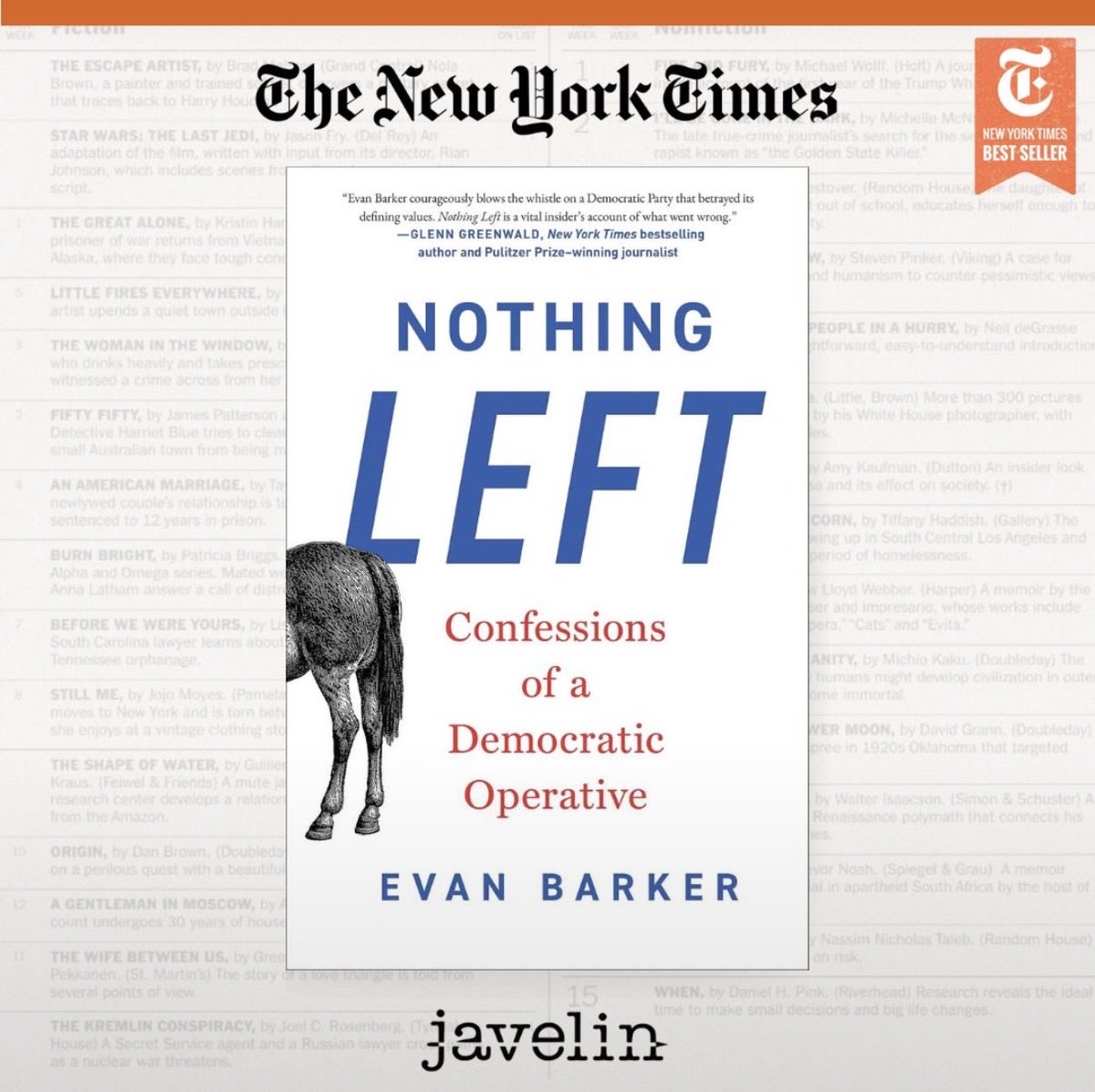
YC President/CEO Garry Tan endorsed Nothing Left: Confessions Of A Democratic Operative by @evanwch, calling it “one of the most important books of the year” and linking to the author's announcement . The linked announcement states the book is Chan's first book and a New York Times best seller .

Shopify CEO tobi publicly endorsed the Globe and Mail opinion piece "AI data centres are the future. Canada must overcome the backlash" (link), saying Canada needs many more data centers, which uniquely play to its high-tech and energy strengths, and calling the backlash "nonsensical" .

Keith Rabois (@rabois) recommended a Spotify podcast episode, writing "Check out theee topics:" with the episode link .
Garry Tan (President & CEO of Y Combinator) recommended the book Seeing Like A State, describing high modernism as presented in it — the 19th/early-20th-century faith in linear progress, scientific law, technical mastery, rational production, and the ability to redesign nature and human nature for greater welfare . He noted the book promised "freedom from scarcity, want and the arbitrariness of natural calamity" . He agrees with the author's warning that high modernism becomes catastrophe when "the map can no longer be corrected by the territory," but argues the warning was overlearned . His takeaway: "Bring back high-modernist ambition, and add feedback loops," with superintelligence-driven abundance making feedback real , and "We must dream and build again" .
Vinod Khosla recommended The New Yorker article "The Friendship That Made Google Huge" (https://www.newyorker.com/magazine/2018/12/10/the-friendship-that-made-google-huge), about Jeff Dean and Sanjay Ghemawat coding together and changing the course of Google and the Internet .