We can't find the internet
Attempting to reconnect
Something went wrong!
Hang in there while we get back on track

Two separate recommendations make Ben Thompson the clearest signal in this set: Bill Gurley calls a Thompson conversation “very good,” while Not Boring calls his AI-router breakdown “characteristically good.”
Standout: My conversation with Ben Thompson
- Content type / creator: Video conversation hosted by Patrick O’Shaughnessy with Ben Thompson, who has written Stratechery for more than a decade and is described by O’Shaughnessy as one of his favorite business thinkers. Watch the conversation.
- Recommended by: Bill Gurley, who calls it “very good” and says Thompson brings a career of thinking to current events. Gurley’s favorite part is the opening argument that there is no reasonable path for the United States to achieve AI dominance over the rest of the world.
- Key takeaway: The conversation connects that geopolitical claim to questions about AI funding, model capabilities, compute and chip suppliers, advertising, Nvidia’s competitive position, and the major platform companies.
- Why it matters: It is the strongest single resource here for pressure-testing AI “race” narratives against the underlying economics of funding, infrastructure, distribution, and business models.
Companion AI-infrastructure read: Stripe Acquiring OpenRouter, Aggregating AI?, Flipping the Business Model
- Content type / creator: Stratechery analysis by Ben Thompson. Packy’s link points to Stratechery generally; the current Stratechery listing identifies the relevant OpenRouter analysis by this title and supplies the direct link.
- Recommended by: Packy McCormick, who calls Thompson’s breakdown “characteristically good” in a discussion of AI model routers.
- Key takeaway: Routers send each task to the model that fits its needs: frontier capability when it is worth paying for, or a cheaper and faster model when it is sufficient. Packy ties that choice to “Return on Tokens”; Stratechery’s accessible teaser frames Stripe’s reported OpenRouter acquisition as a bet on a future market of models and aggregation.
- Why it matters: The useful lens is operational rather than tribal: model choice becomes a routing problem governed by capability, speed, and cost. The direct article page exposed only a teaser in the source capture, so this recommendation is best treated as a pointer to that thesis rather than a full article summary.
Research pick: Voluntary attention regulates acute immune responses in humans
- Content type / creators: Research paper by Nofar Mizrachi, Menachem Rottem, and Liron Rozenkrantz in Nature Human Behaviour. Read the paper.
- Recommended by: Packy McCormick in Weekly Dose of Optimism, who connects the result to his argument that deliberate attention creates meaning and concludes, “Attention really is all you need.”
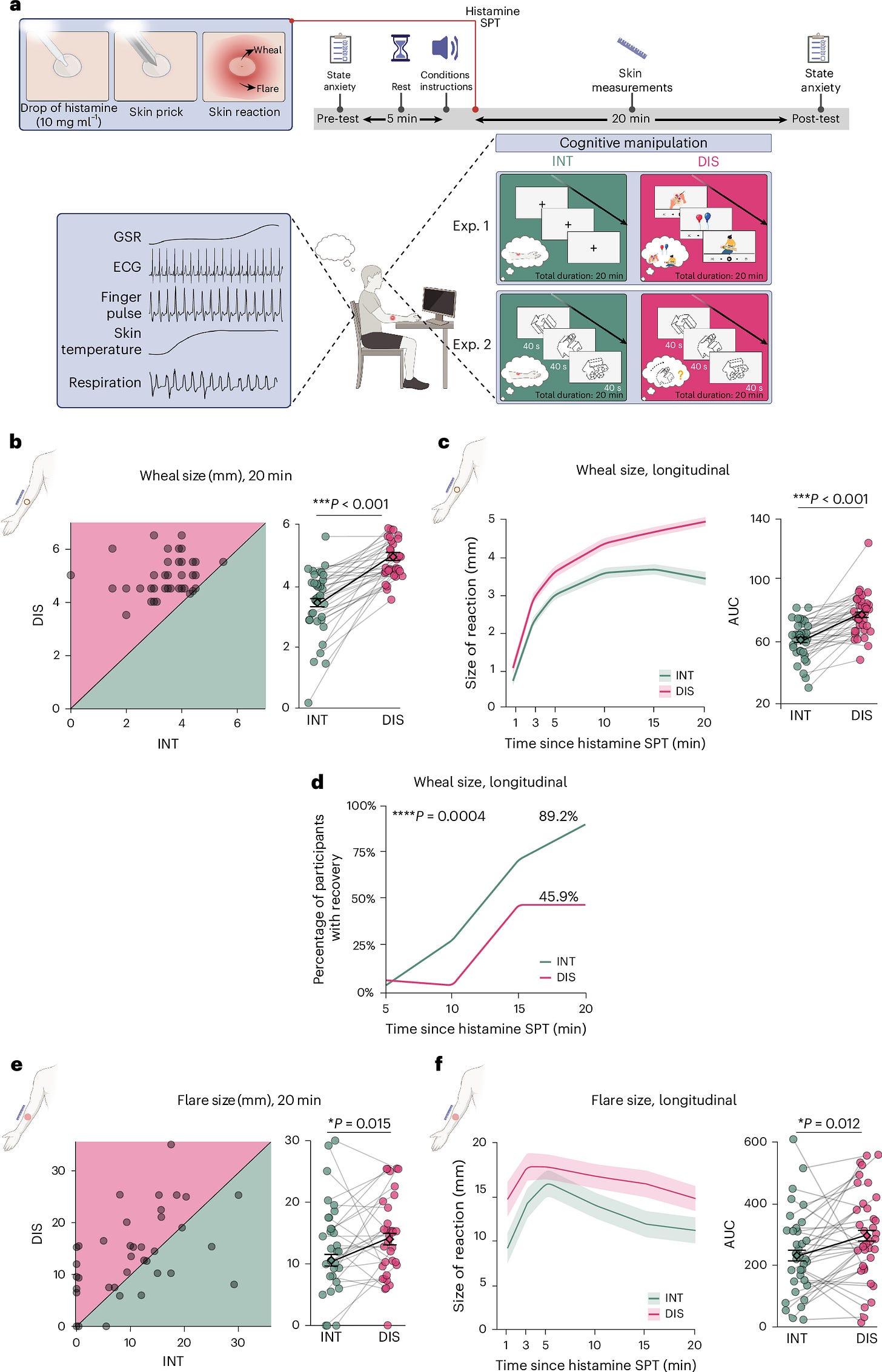
- Key takeaway: Across three pre-registered within-subject experiments, directing attention toward bodily sensations rather than distraction produced roughly 1.5-fold smaller acute inflammatory responses, with the effect appearing in about 90% of participants across two cohorts.
- Why it matters: This is a concrete, checkable finding—not a general claim that attention treats disease. The authors stress that the model involved localized, acute, histamine-induced inflammation in healthy participants, and that its relevance to infectious, chronic, or autoimmune conditions remains unclear.
Personal practice: Radical Acceptance: Embracing Your Life with the Heart of a Buddha
- Content type / creator: Book by Tara Brach, Ph.D. The post text does not name the book; the attached cover identifies the title and author. Ferriss’s recommendation post.
- Recommended by: Tim Ferriss, who calls it a “godsend” for people who beat themselves up and says it was recommended to him by a neuroscience PhD and then a cynical friend, both of whom said it changed their lives.
- Key takeaway: Ferriss describes it as one of the most useful books he has read, says it is easy to digest, and recommends one short chapter before bed each night.
- Why it matters: The recommendation comes with a clear, low-friction way to test the book rather than a generic endorsement.
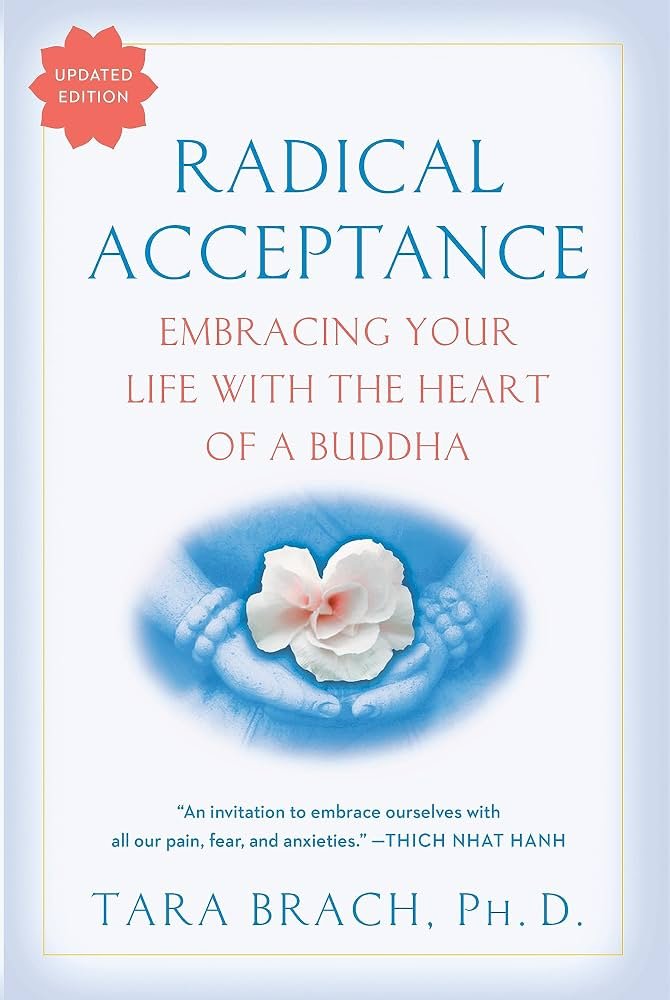
Cover image from Tim Ferriss’s post.
Direct answer: the bundle verifies only the subject, not the full article: the first line says "Stripe is reportedly acquiring OpenRouter, an implicit bet on a future market of models and the chance at Aggregation" , and the exact title is available only in bundle metadata ("Stripe Acquiring OpenRouter, Aggregating AI?, Flipping the Business Model"). The rest of the document is a paywall/subscription block, so the author and the concrete argument about model routing, aggregation, and the flipped business model are not extractable here.
Findings:
- L1 is the only substantive article line and contains the teaser claim about Stripe acquiring OpenRouter as a bet on a future market of models and Aggregation.
- The document goes paywalled at L5 ("Subscribe to Stratechery Plus for full access.") and L5-L99 are subscription/FAQ/marketing content, with no further article text.
- The author is not identified in any supplied line; the title is only in metadata. Flag these as verification gaps before recommending this resource.
Direct answer: Yes — the supplied Stratechery page identifies an article title and gives a one-line takeaway relevant to the AI-model-router topic.
- The page is a weekly overview of the Stratechery bundle , and it lists the article “Stripe Acquiring OpenRouter, Aggregating AI?, Flipping the Business Model”.
- Its listed description frames Stripe's reported acquisition of OpenRouter as “an implicit bet on a future market of models and the chance at Aggregation” .
Caveats/gaps:
- The supplied bundle contains no mention of Packy McCormick, so it cannot confirm that this is the Stratechery resource he referenced .
- Only the roundup listing and one-sentence publisher description are present; the full linked Stratechery article is not included, so the takeaway is limited to that summary .
Direct answer. The bundle contains the full text of the Nature Human Behaviour article "Voluntary attention regulates acute immune responses in humans" (journal name confirmed in-text; title itself present only in the bundle metadata, not as a numbered line). It reports that voluntarily directing attention toward bodily sensations during histamine-induced acute skin inflammation produced markedly smaller, more rapidly resolving inflammatory responses than attentional distraction, across three pre-registered within-subjects experiments . Packy McCormick is not mentioned anywhere in this bundle, so his specific recommendation cannot be verified from this source; the connection is by subject matter only.
Findings
- Journal. Nature Human Behaviour is named in the peer-review information and the publisher's note . The article's exact title does not appear as a numbered line in the extracted text, so it cannot be line-cited.
- Authors (gap). The extracted text begins at the Abstract heading with no author byline , and the bundle metadata lists author as nil; authorship cannot be verified from this extraction.
- Study design. Three pre-registered within-subjects experiments using the standardized histamine skin prick test to induce acute cutaneous inflammation; conditions were completed within each individual in counterbalanced order, with participants serving as their own control; Exp. 1 (n=37) contrasted internal attention with video-based distraction, Exp. 2 (n=20) equated visual input and task structure to isolate attention itself, Exp. 3 (n=17) attenuated sensory signalling with lidocaine . Participants attended two laboratory sessions at the same hour, 3–5 days apart ; a trained experimenter was blinded to experimental conditions and participants were blinded to the study's aim and conditions ; 57 participants were included in the final analyses .
- Core finding. Internal attention produced a substantially smaller and more regulated inflammatory response than distraction, with reduced wheal and flare at the 20-min peak (wheal, 3.5 ± 1.1 versus 5.0 ± 0.7 mm; flare, 10.6 ± 8.3 versus 14.0 ± 8.0 mm); the effect was consistent in ~90% of participants, with wheal and flare increasing by ~1.5-fold on average under distraction . Exp. 2 replicated this with ~1.6-fold reduced magnitudes under internal attention and 90% of participants again showing larger responses under distraction .
- Temporal dynamics. Condition differences emerged within 3 min and increased over time, peaking at 20 min; ~90% of internal-attention participants showed wheal stabilization or decline after 20 min versus 46% under distraction .
- Mechanisms. Two complementary pathways: a sensory-dependent route — lidocaine attenuation of sensory signalling weakened but did not abolish the regulatory effect of attention — and a top-down route engaging parasympathetic vagal activity, with heart rate variability (HRV) significantly higher during internal attention than distraction (t(48)=2.4, P=0.023, d=0.34) ; HRV increases persisted when sensory signalling was attenuated and were indistinguishable from intact-signal internal attention .
- Relevance to the recommendation context. The authors suggest that turning attention away from unpleasant sensations "may come at a physiological cost, impairing the body's ability to regulate inflammation," and connect the effect to attention-based interventions such as mindfulness that involve sustained engagement with bodily sensations ; the conclusion states that "voluntary attentional engagement alone is sufficient to regulate acute immune responses" .
- Caveats. The model is a localized, acute, histamine-induced response in healthy participants; generalization to infectious, chronic inflammatory, or autoimmune conditions is unclear; reduced inflammatory magnitude may not universally reflect beneficial regulation; and HRV is an indirect index of vagal activity .
The book pictured is titled Radical Acceptance: Embracing Your Life with the Heart of a Buddha by Tara Brach, Ph.D. It is noted as an "Updated Edition." The cover also features a quote attributed to Thich Nhat Hanh: "An invitation to embrace ourselves with all our pain, fear, and anxieties." The provided image does not contain any text, blurbs, or references identifying it as a recommendation by Tim Ferriss.


Recommendations found (all cited):
1. Tim Ferriss — unnamed book (title/creator/link missing) Tim Ferriss (@tferriss) explicitly recommends a book: “For those of us who beat ourselves up, this book is a godsend”; it was recommended to him by a neuroscience PhD and then a cynical friend, both saying it changed their lives; he calls it “one of the most useful books I’ve read,” easy to digest, and suggests one short chapter before bed each night . The post text names no title, creator, or book link; the only linked asset is an image URL (https://pbs.twimg.com/media/HQQdHoNW0AA5Xhg.jpg), so no visual claim about a cover can be made from the supplied text .
2. Packy McCormick / Not Boring — “some of my favorites…” and Stratechery In Weekly Dose of Optimism #207, Packy McCormick runs an explicit “some of my favorites…” roundup :
- Matic Robots — maticrobots.com; “a home cleaning robot you can talk to” .
- Quince — quince.com; “high quality … everything at affordable prices. half my wardrobe” .
- Notion — notion.com; “not boring’s everything hub” .
- Ramp — ramp.com; “Time is money. Save both.” .
- Create — trycreate.co (30% off code notboring30); “you should be taking creatine (and supporting Dan)” .
Caveat: Ramp is later named as one of “our not boring capital portfolio companies” , and Create’s blurb includes “supporting Dan” , so those two favorites carry a possible affiliation/self-interest signal; full creator identities are otherwise not named in the post.
Separately, he calls Ben Thompson’s Stratechery breakdown “characteristically good” and links Stratechery.com in the routers item ; the specific article title is not given.
3. Bill Gurley — endorses linked Ben Thompson piece Bill Gurley (@bgurley) endorses the linked Patrick O’Shag X post (https://x.com/patrick_oshag/status/2089713931183153293) as “This is very good,” adding “Ben brings a career of thinking to his views on where we are today” . His stated favorite part: “There is no reasonable path to AI global dominance for the U.S. vs the world. It’s a fantastical notion that falls apart when thinking through the details” . The supplied text does not name a title or format for the underlying Ben Thompson piece beyond the link .
4. Chamath Palihapitiya — thin endorsement, no reason Chamath Palihapitiya (@chamath) shares an @buildamericanai X post (https://x.com/buildamericanai/status/2090136716258476525) with only “Wow” . No title, creator, subject, or takeaway appears in the supplied text, and it is not labeled there as a “data-center article”; treat as a share/endorsement signal rather than a substantive recommendation.
Excluded The Next Big Idea Club “Book of the Day” newsletter contains book recommendations, but per supplied metadata it is a book-club newsletter rather than an item from a tech founder/VC/startup leader .

Patrick O'Shaughnessy recommended Ben Thompson's Stratechery, describing Thompson as 'one of my favorite business thinkers' after more than a decade of writing. He shared a video conversation with Thompson, which he said covered every important company in the industry and the forces acting on them, including AI, Google, Amazon, Nvidia, TSMC, Intel, Samsung, Microsoft, Apple, and Meta .
Tim Ferriss recommends a book — title not stated in the post text, with an image attached — for people who beat themselves up, calling it "a godsend" and "one of the most useful books I’ve read." He says it was recommended by a neuroscience PhD who said it changed her life, then by a cynical friend who said the same; he finds it easy to digest and suggests reading one short chapter before bed each night . Shared at https://x.com/tferriss/status/2090828220895514689.

Bill Gurley recommended Patrick O'Shag's video conversation with Ben Thompson (Stratechery) https://x.com/patrick_oshag/status/2089713931183153293, calling it "very good" and saying "Ben brings a career of thinking" to today's market questions; Gurley's favorite part is the opening argument that "there is no reasonable path to AI global dominance for the U.S. vs the world" . The episode features Thompson, who "has been writing Stratechery for over a decade" and is one of O'Shag's favorite business thinkers, covering why the US winning the AI race could be problematic, whether AI funding will run out, Google becoming Berkshire Hathaway, why ads are amazing, TSMC/Intel/Samsung, Nvidia's invisible price cuts and biggest competitors, and Microsoft/Amazon/Apple/Meta .

Elon Musk replied "Yes" to an X thread by @r0ck3t23 and linked to it, endorsing it for his followers . The thread summarizes Musk's memo to Tesla employees on management and communication: excessive meetings are "the blight of big companies," it is fine to walk out or drop off a call when you aren't adding value; communication should travel the shortest path, not the chain of command; managers who enforce chain-of-command communication may be fired; avoid acronyms and nonsense words; and common sense should override ridiculous company rules . The thread is at https://x.com/r0ck3t23/status/2090901321054371872.
Packy McCormick recommends the research paper Voluntary attention regulates acute immune responses in humans (Nofar Mizrachi, Menachem Rottem & Liron Rozenkrantz, Nature Human Behavior), highlighting the finding that deliberately directing attention regulates immune function and concluding "Attention really is all you need" . He also points to Ben Thompson's "characteristically good" breakdown of AI model routing on Stratechery.
Elon Musk (@elonmusk) endorsed @JamesLucasIT's X post on Rome's birth-rate collapse, writing: "The reason Rome fell was because they stopped making Romans" . The linked post (https://x.com/jameslucasit/status/2090847857666294046) describes Augustus's failed laws (Lex Julia and Lex Papia Poppaea, ~18 BC and AD 9) to encourage childbearing , draws parallels to today's falling fertility rates (e.g., South Korea 0.72, Italy/Japan ~1.2, China ~1.0, US ~1.6, UK ~1.5) , and ends with Arnold J. Toynbee: "Civilizations die from suicide, not by murder" .
VC Chamath Palihapitiya recommended a CNN article on what a good data center deal looks like, quoting a post about Quincy, Washington: about 30 facilities shoulder an estimated 57% of local property taxes, funding a $120M high school, library, hospital, and police and fire stations. He endorsed it with "Wow" and shared the link. Article: https://www.cnn.com/2026/08/11/business/data-centers-ai-economy
Tim Ferriss recommends a book as "a godsend" for people who "beat ourselves up," calling it "one of the most useful books I've read" and saying it is "not nearly as woo-woo as it might seem" . It was recommended to him by a neuroscience PhD who said it changed her life, then by a cynical friend who said the same; he finds it easy to digest and suggests reading one short chapter before bed each night . The post's text does not name the book title; an image accompanies the post .