We can't find the internet
Attempting to reconnect
Something went wrong!
Hang in there while we get back on track
Chamath: "Anthropic's IPO is where the AI build switches from debt to stock"
Chamath Palihapitiya called @nodiligence's post a "Good read…" . The post links to the article and gives its stance in one line: Anthropic is "probably the best business in AI right now," but the author "wouldn't touch it on day one" because the offering is "set up for suppliers and insiders to sell into the index buying."
The article draws on S-1 figures: $974m of Q2 operating profit, an 85% gross margin and $637bn of compute contracts. It adds that most suppliers are also lenders and shareholders . Its main argument is that the IPO marks the point where public equity, not credit, becomes the marginal source of funding for the AI build-out . In the author's view, the value goes to whoever gets paid in cash up front, mainly TSMC and Google. The losses fall on whoever lent long-term against short contracts: neocloud bondholders, data-centre bonds and Oracle . Yesterday's founders read the S-1 for operating strength. This adds a skeptical read of the financing structure.
Patrick O'Shaughnessy: Cliff Sosin, on the podcast and in an essay
O'Shaughnessy is promoting his own Invest Like the Best episode here. He calls Sosin "one of my favorite people to call, ask some big questions, and then shut up and listen." The episode covers the limits of intelligence, owning the things that complement it, Meta and the frontier labs, capital markets, and why Sosin keeps 80% of his portfolio in Carvana . It's on YouTube, Spotify and Apple .
He also quoted Sosin's essay "Maybe Intelligence Ain't All That." Its central claim: "The limit is contact with reality." A smarter reasoner fills gaps between known facts but "doesn't produce new facts," so most problems are still limited by how fast you can build something and test it .
Shorter mentions
- Brad Gerstner shared Collision's video with United CEO Scott Kirby and Ben Thompson. He said he recruited Kirby to United in 2016 and called him "one of the smartest CEOs in any industry I know" . Topics include capex, route planning, the Starlink decision and credit card economics .
- Vinod Khosla called an Encord clip of Pim De Witte "a strong view on world models" . De Witte argues models should learn directly from data the universe produces, not from simulators, and that the training runs are "tiny compared to frontier LLMs" .
- Tim Sweeney called the CFSG formalization, "43M lines of Lean proof," amazing. He said he wished John Conway were still alive to see it .
- Farnam Street called Shane Parrish's conversation with Steven Kotler "Insanely useful" . It covers flow, picking challenges that hold your attention, and focusing on work you don't feel like doing . This is Parrish promoting his own show.
- Garry Tan shared @grepdotai's "THE SWARMS ARE COMING", calling agent swarms "a big unlock" because one agent "can only do so much" .
- Andrew Chen published his own essay, "New Founder Archetypes in the AI Age" . It weighs reasons for and against five types: solo founders, non-technical founders, domain experts, young builders and content creators. One example of a "why not": "Hoteliers didn't create Airbnb" .
Paul H. Graham, who said he sold a software company, credited The Promise Principle as a major help to his prayer practice; he describes its guidance as approaching prayer with gratitude and thanking God for strength, courage, and perseverance through uncertainty . In the same reflection, he contrasted this with his earlier request for a “burning bush,” saying signs may be subtle and require awareness and patience .
Patrick O’Shaughnessy highlighted Cliff Sosin’s essay “Maybe Intelligence Ain’t All That,” excerpting its argument that intelligence is constrained less by reasoning than by contact with reality: complex systems must be tested, and the speed of feedback remains a bottleneck. He points readers to a video conversation where Sosin walks through the essay; O’Shaughnessy calls Sosin one of his favorite people to ask big questions and listen to. Conversation
Patrick O’Shaughnessy shared a video conversation with Cliff Sosin, praising him as one of his favorite people to call with big questions and listen to. The conversation covers the limits of intelligence, AI commoditization, who profits from AI, and investing in the AI build-out. Original conversation post. In a follow-up excerpt, Sosin argues that broadly useful “very good” intelligence may commoditize, while use cases for super-elite intelligence may be rare.
Patrick O’Shaughnessy highlights his conversation with Cliff Sosin, describing Sosin as one of his favorite people to call with big questions and listen to; he frames the conversation as a version of those calls. Watch the conversation. In the shared clip, Sosin argues that investors should own the complements to cheap, ubiquitous intelligence—data, attention, love, physical proximity, scale, and regulatory capture—and points to Meta’s data and attention as assets that remain valuable.
Tim Ferriss praised Pixar’s Ratatouille as a fun film and used its kitchen-station scene as a reference while discussing kitchen organization.
Patrick O’Shaughnessy highlighted his Invest Like the Best conversation with Cliff Sosin, describing Sosin as one of his favorite people to call with big questions and then listen to. They discuss AI, capital markets, and why Sosin is comfortable with 80% of his portfolio in Carvana. The episode is available on YouTube, Spotify, and Apple Podcasts.
Palmer Luckey pointed viewers to the Project Meridian announcement, saying it explains that the initiative is about the future of warfare, particularly 2040–2050, rather than primarily how the Pentagon operates.
Patrick O’Shaughnessy points readers to his video conversation with Cliff Sosin , presenting Sosin as one of his favorite people to call with big questions and listen to .
Elon Musk spotlighted Mattyp’s video “What’s New in Grok Bot” as a tour of new Grok Bot features . Its listed segments cover Pages, Vault, 1Password and Apple integrations, video creation, bot characters, X Spaces, font options, design polish, and rapid-fire updates . The post gives no rationale beyond framing it as a new-features update .
Elon Musk shared @imagine’s announcement for its “Inside Episode 1: The Oath” workflow guide, labeling his post “Grok Imagine.” The guide shares the script-to-final-edit workflows behind a short-episode project based on The Odyssey; @imagine says readers can learn the techniques for their own creative projects, and credits director Dev Walker and Wonder Studios with the episode tips.
Chamath Palihapitiya called an @nodiligence X post “Good read” and linked it; the post links to the article “Anthropic’s IPO is where the AI build switches from debt to stock.” The article’s thesis is that AI infrastructure funding is shifting from credit to public equity, with value accruing to cash-paid suppliers such as TSMC and Google while lenders exposed to long-term financing against shorter contracts bear risk.
Jason Lemkin shared a YouTube video captioned “New The Agents!!” (https://youtu.be/n08SkoyEZ8k); no reason for sharing it or creator is stated. In an embedded video clip, he says 10K built its own AI prospector because follow-up is a weak point in existing AI SDRs and outbound agents.
Andrew Chen shared his essay “New Founder Archetypes in the AI Age” (link) . It considers how AI could help solo founders, nontechnical founders, domain experts, young builders, and content creators build software, while weighing each group’s limitations, such as product reliability, industry experience, company-building, and sustainable growth .
Andrew Chen followed his question about founder types that AI might unlock with his essay, “New Founder Archetypes in the AI Age”, saying he had “ended up writing more about this.” The essay weighs potential advantages and limitations for solo, non-technical, domain-expert, student, and content-creator founders.
Vinod Khosla highlighted an Encord video featuring Pim De Witte as “a strong view on world models” (post). De Witte argues that models should learn directly from continuously generated real-world data rather than simulators, with training runs much smaller than those for frontier LLMs.
Garry Tan shared @grepdotai’s “THE SWARMS ARE COMING” post/video, calling agent swarms “a big unlock.” He said one agent can do only so much, while many agents woven together via an “artifactory-hack-style message board” can do more.
Garry Tan recommends GBrain’s customer-comms skill for founders handling their own customer support , describing an agent that drafts replies and call recaps, writes a “what went wrong” note for customers who cancel, manages the CRM, and files bugs, with the founder reviewing and sending the replies .
Jason Lemkin (@jasonlk) shared a new SaaStr article about AI agents wiping critical data. Its takeaway: unplanned copies saved the company in both incidents, so readers should plan backups in advance.
Elon Musk amplified an @cb_doge post with video about Starlink enabling a remote specialist to guide an ultrasound for Karina in rural Colombia and prompt an urgent hospital transfer; the post says Karina and her baby were safe. Musk’s accompanying text was only “Starlink,” so he gave no explicit reason for sharing it.
Tim Sweeney highlighted the CFSG Lean proof, called it amazing, and noted that it comprises 43 million lines of Lean proof. He said he wished group theorist and Game of Life creator John Conway were still alive to see it.
Inside Episode 1: The Oath

We’re sharing our workflows, from script to final edit, so you can learn alongside us and use these techniques in your own creative projects.
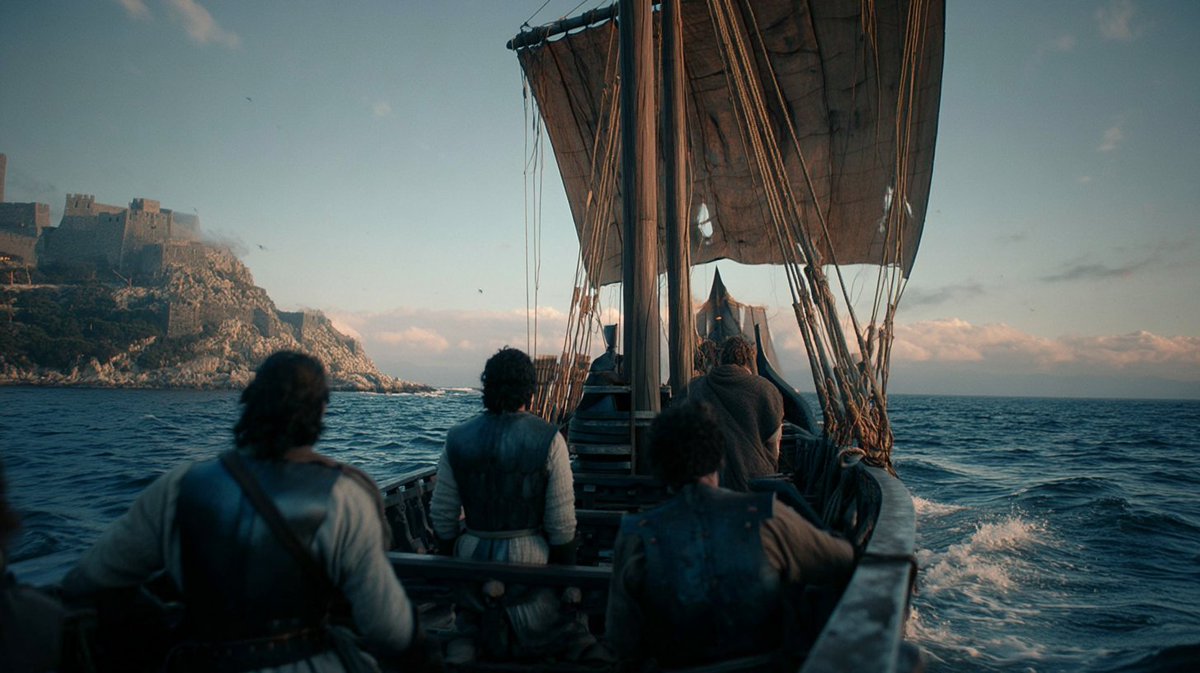
Recently, we’ve partnered with Wonder Studios on a series of short episodes drawn from The Odyssey and the wider Epic Cycle.
Our goal is simple: get honest, critical feedback from filmmakers and use it to improve Grok Imagine’s image and video models.
We’re building these episodes in public with a small crew of 3-5 creatives. The quick turnaround on each episode lets us improve quickly and share what we learn with anyone curious about using AI in their creative work.
Below, director Dev Walker and the Wonder Studios team share their tips on using Grok Imagine in making Episode 1: The Oath (opens in new tab).
Write Your Script
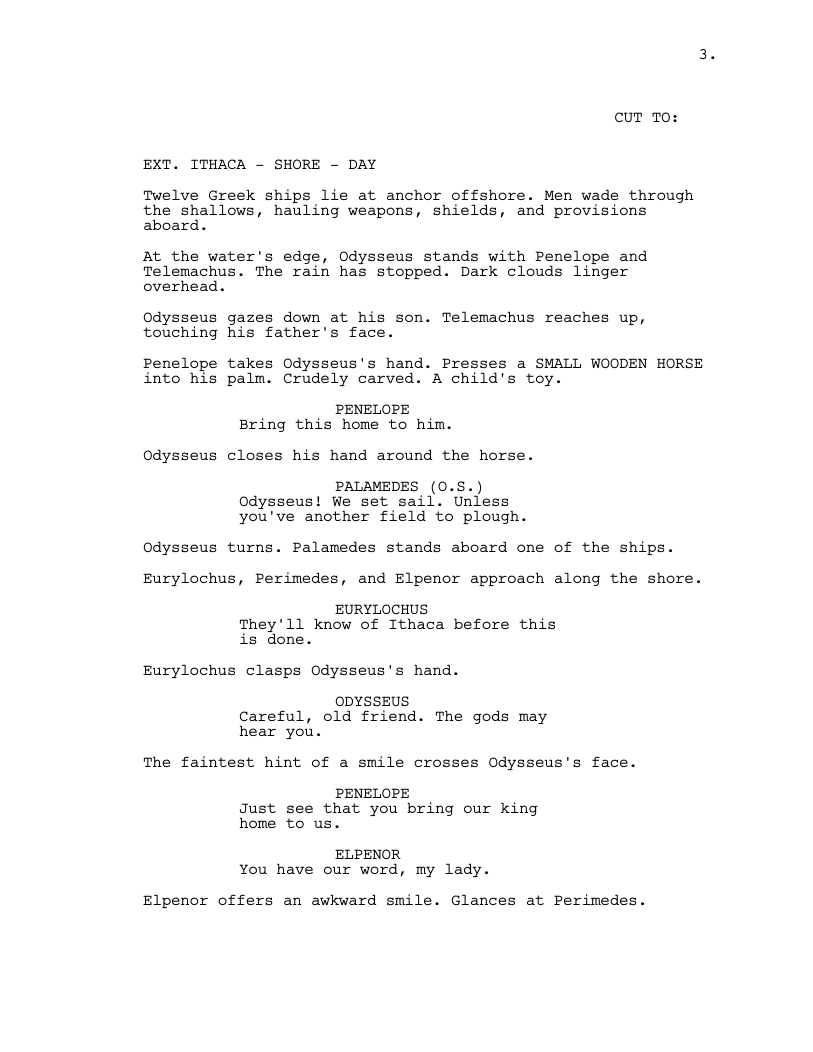
Episode 1 (opens in new tab) adapts a scene from the Cypria, the lost prequel to the Iliad. All that remains is a brief summary of the story: Odysseus fakes madness to escape the Trojan War, and is found out. We had to imagine everything else, from the dialogue to the characters’ faces.
Because the episodes live on social media, we originally planned to keep them to about 5 minutes each. We’re giving upcoming episodes even more runtime to allow the story and the characters to develop, though the episodes will still be short.

List Every Shot
Before you generate anything, write a shot list.
For every shot, note the shot size, lens, camera movement, action and the exact dialogue. The more specific you are, the more consistent your results will be.
Keep your files organized from the start. Name folders by scene, then by A-roll or B-roll, for example SCENE1_FIELD_BROLL. Once you’re generating dozens of takes per shot, this makes it far easier to find the right clip when you’re editing.

Use the Canvas on Grok Imagine
Put everything on one canvas. Every frame, prompt and take lives there, grouped by shot. Lay takes side by side to pick the best one and check continuity across a scene: faces, wardrobe, lighting.
Make Your Character Sheet
Keep it simple. A close-up, a full front and a full back, on plain grey.
If the character ages or changes costume, make a new sheet.
For example, Odysseus has three.

Build Your Character Prompt
The character prompt helps keep their face the same in every shot. You’ll still see the occasional face drift, but here is an example of the prompt we used for Odysseus.
An ultra-photorealistic cinematic character reference sheet for ODYSSEUS, King of Ithaca, ancient Mycenaean Greece circa 1200 BCE.
CHARACTER: Rugged Greek man, late 30s to early 40s, olive skin, strong Mediterranean features, deep-set brown eyes, prominent nose, shoulder-length wavy black hair, thick full black beard. Lean, muscular build. Weathered, intelligent face with a serious, commanding expression.
COSTUME: Dark brown knee-length wool tunic with subtle embroidered trim, weathered dark leather scale armor, leather belt, forearm bracers, wrapped leather boots, and a short bronze sword in a leather scabbard. A heavy charcoal-brown wool cloak draped asymmetrically over his shoulders, fastened with an ornate golden brooch depicting a hunting dog gripping a spotted fawn in its forepaws, the fawn struggling to escape, intricately sculpted in raised gold. The brooch is prominently visible on his right shoulder. Authentic handmade materials, worn leather, heavy textured wool, aged bronze.
LAYOUT: Single wide 16:9 image divided into THREE VERTICAL PANELS with thin white dividing lines. LEFT: Large three-quarter facial close-up, looking slightly toward frame right. Detailed facial features, hair, beard, cloak, and gold fawn brooch. CENTER: Full-body FRONT VIEW, standing naturally with arms relaxed, entire costume visible from head to boots. RIGHT: Full-body BACK VIEW, showing the cloak’s full drape, hairstyle, and footwear. All three panels must depict the EXACT SAME MAN wearing the EXACT SAME COSTUME, with identical proportions, materials, and accessories.
PHOTOGRAPHY: Professional Hollywood costume reference photography. Neutral medium-gray seamless studio background, soft diffused studio lighting, natural skin texture, realistic fabric and leather detail, subtle film grain. Grounded historical realism, not fantasy.
STRICTLY PHOTOREALISTIC. No illustrations, no CGI appearance, no text, no labels, no additional characters.
Build Your Locations
Episode 1 (opens in new tab) has five locations:
the field
the palace
the shore
the ship
the camp outside of Troy
Every prompt names the shot size, time of day, mood, camera, lens and film stock.

Keep One Look Across All Shots
Start from a mood board or a style reference image, then name the camera, lens and film stock in every prompt.
We did not name any director when prompting; rather, the look came from early-2000s period epics.

Build Your Keyframes
Put the character from your sheet into each relevant location to get the keyframes you’ll animate. If the still frame isn’t right, your animated video won’t be right either. We recommend spending time on making sure that your keyframe shots are great before moving on to animating.

Write Your Video Prompts in Blocks
Use 7 blocks:
camera
action
environment
physics
audio
SFX
constraints
If a prompt fails, make it shorter. More detail rarely fixes the issue.
Here’s the full prompt for our opening shot.
[Camera & Style] Photorealistic 2000s historical epic, ancient Aegean world circa 1200 BCE. Shot on 35mm film with vintage spherical lenses. Naturalistic 24fps motion, subtle film grain. MASTERFUL CINEMATOGRAPHY. ONE CONTINUOUS SHOT. Use the three reference images as sequential visual guides for the action. Preserve the EXACT camera composition, perspective, landscape, lighting, and character appearances. EXTREME WIDE SIDE PROFILE. Completely STATIC, LOCKED-OFF CAMERA. No camera movement throughout the shot. [Subject Motion / Action] The shot begins matching IMAGE 1. FRAME LEFT: Menelaus and Palamedes stand together in the muddy field, watching toward FRAME RIGHT. Their bodies remain mostly still as strong gusts of wind blow their heavy cloaks. CENTER: Infant Telemachus lies on a cream linen blanket directly on the flat muddy ground, surrounded by shallow puddles. FRAME RIGHT: The black horse and brown ox gradually enter from OFFSCREEN RIGHT, walking toward FRAME LEFT. The BROWN OX is closest to camera, with the BLACK HORSE walking alongside it on the far side. Their movement progresses naturally through the composition shown in IMAGE 2. Odysseus follows behind the animals, gripping BOTH wooden handles of the primitive plough. By the end of the shot, the composition matches IMAGE 3, with Odysseus, the plough, and both animals fully visible. The animals continue walking slowly toward FRAME LEFT, pulling the plough through the thick mud. Palamedes and Menelaus remain standing together, watching their approach. [Environment & Atmosphere] Heavy rain falls continuously across the vast, desolate agricultural field. Strong, irregular gusts of wind sweep across the landscape. CRITICAL: THE WIND VISIBLY BLOWS THE MEN’S CLOAKS. Menelaus’ dark red cloak billows and flutters in the wind. Palamedes’ dark brown cloak moves naturally around his body. Odysseus’ dark cloak also blows and ripples as he walks behind the plough. CRITICAL: THE PLANTS AND TALL GRASS IN THE EXTREME FOREGROUND SWAY AND WHIP NATURALLY IN THE WIND. The blurred foreground vegetation bends under stronger gusts, then partially returns upright. Individual stems and leaves move independently. Rain falls diagonally during stronger gusts. Dark storm clouds hang over the distant mountains. Atmospheric mist softens the horizon. [Physics & Details] Realistic animal walking mechanics and weight distribution. The brown ox and black horse move together at a steady pace, their hooves sinking into the saturated soil. Mud compresses beneath their weight. Small splashes and displaced water accompany each step. The wooden plough remains physically connected to both animals and cuts through the muddy earth. Odysseus maintains a firm grip on both handles while walking behind it. Clothing responds realistically to changing wind intensity. Heavy, rain-soaked wool moves with believable weight and resistance. Foreground plants react continuously to the wind, with occasional stronger gusts producing more pronounced movement. Rain creates visible ripples across puddles and runs naturally over the muddy furrows. [Audio] NO MUSIC. NATURAL SOUND ONLY. NO DIALOGUE. Heavy rainfall, gusting wind, distant thunder, animal breathing, hooves squelching through mud, wooden plough creaking, and wet footsteps. [SFX] Wind rushing through foreground vegetation, rain striking puddles, wet fabric flapping during stronger gusts, subtle harness creaking, and mud displacement beneath the animals’ hooves. [Restrictions / Constraints] ONE CONTINUOUS SHOT. NO CUTS. IMAGE 1 IS THE EXACT STARTING COMPOSITION. IMAGE 2 ESTABLISHES THE ANIMALS ENTERING FRAME. IMAGE 3 IS THE EXACT ENDING COMPOSITION. STATIC LOCKED-OFF CAMERA THROUGHOUT. NO PAN, TILT, ZOOM, DOLLY, TRACKING, OR CAMERA SHAKE. PRESERVE THE EXACT LANDSCAPE AND FRAMING. MENELAUS AND PALAMEDES REMAIN FRAME LEFT. TELEMACHUS REMAINS CENTER. ODYSSEUS AND ANIMALS ENTER FROM FRAME RIGHT. THE BROWN OX MUST BE CLOSEST TO CAMERA. THE BLACK HORSE MUST BE FARTHER FROM CAMERA. ODYSSEUS ALWAYS WALKS BEHIND THE PLOUGH HOLDING BOTH HANDLES. THE ANIMALS MUST WALK TOWARD FRAME LEFT. ALL CHARACTERS AND ANIMALS MUST BE FULLY VISIBLE BY THE FINAL FRAME. HEAVY RAIN THROUGHOUT. STRONG WIND MUST VISIBLY MOVE THE MEN’S CLOAKS. FOREGROUND PLANTS MUST SWAY AND BEND IN THE WIND THROUGHOUT THE SHOT. REALISTIC WIND AND FABRIC PHYSICS.
Use Middle Keyframes
Grok Imagine lets you add a frame between the start and end frames.
You can choose the exact time when it lands.
For example, we used this when we needed Odysseus to enter on cue with a plough.

Write the Camera into Every Prompt
Use a static camera to set the scene. Go handheld when the fighting starts.
Here’s our go-to handheld prompt:
Unstabilized handheld combat camera POV, violent jagged shake, the camera swinging, rolling and tilting wildly, the horizon tipping off-level with every stride, hard vertical bounces, sudden sideways whips, lurching drops and jolts, focus hunting and snapping, the frame barely holding the chaos. Chaotic, never aligned, never smooth, like a camera held by someone crouching inside a shadowed threshold tracking urgent movement. Fast, urgent, real-time speed, no slow motion.
Finish in the Edit
Editing, sound and color took about 18 hours. Most sound effects came straight from Grok Imagine. We added music and a color grade on top.
Now it’s your turn!
Make the short film that’s been stuck in your head forever, and keep going until it looks the way you pictured it.
Watch Episode 1: The Oath here (opens in new tab).
Try Grok Imagine at grok.com/imagine (opens in new tab)
Our Prompting Guide is live.
We’re building the Odyssey episodes in public with a small crew of creatives.
Learn from our workflows! https://x.com/i/article/2114831189475483648 (opens in new tab)
Elon Musk shared @imagine’s announcement for its “Inside Episode 1: The Oath” workflow guide, labeling his post “Grok Imagine.” The guide shares the script-to-final-edit workflows behind a short-episode project based on The Odyssey; @imagine says readers can learn the techniques for their own creative projects, and credits director Dev Walker and Wonder Studios with the episode tips.