We can't find the internet
Attempting to reconnect
Something went wrong!
Hang in there while we get back on track


Top pick: "The Amazon Trap" by @mvernal, recommended by Sarah Guo and Scott Belsky
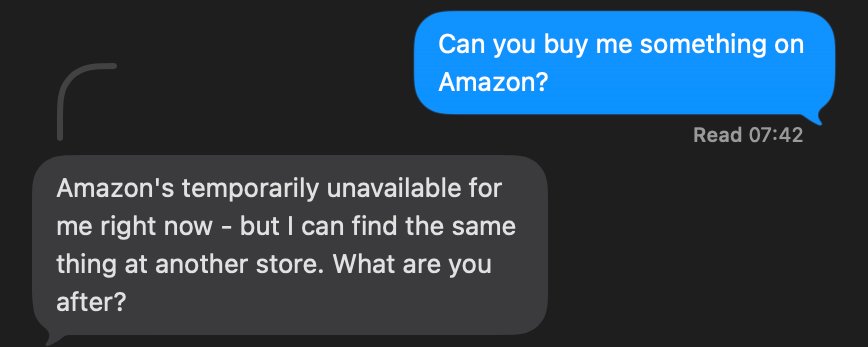
What it argues: Vernal's essay is billed as "Why Amazon is blocking Instinct & Muse, and one potential path forward" . He says horizontal personal agents will win because they have "the totality of their context," including email, calendar and files. That leaves Amazon with two choices. It can give up a core strategic position and up to $80B a year in ad revenue, or it can antagonize its customers . His proposal is a "Prime+" tier at roughly $299 a year, with agentic purchasing available only to its members . Disclosure: his firm was Instinct's initial investor, sits on its board and seeded the team now working on Muse .
Why they shared it: Guo called it "some strategic wisdom from our partner" on "the choice of whether to resist the future or rapidly adapt" . Belsky quoted the line "Companies often anchor to their priors." He added that "you can't fight customer preferences for horizontal agents, you must innovate to meet them," and said he'd like to hear what Andy Jassy thinks .
Bill Gurley: "Machines of Loving Grace" by Dario Amodei
This follows Gurley's push for the NYT piece on Anthropic, covered in the last brief. A reply argued that Anthropic's approach differs from other labs' and that, under it, "the machine will inevitably control humans" . Gurley pointed to Amodei's essay and said the view is "directly stated" there. He added that the company makes job candidates read the essay and "even hands out to customers" . He doesn't say whether he agrees with it. His point is that the essay is the place to understand how Anthropic thinks.
Paul Graham: Christian Szegedy's personal essay on AI and mathematics
Szegedy says he wrote the essay after reading recent essays by Terry Tao, Kevin Buzzard and Timothy Gowers . Graham shared it with this quote: "The skeptics who say AI can't conjecture, can't theorize, and can't explain are describing last spring's models. Within months, they will be describing nobody" .
Amjad Masad: a16z podcast with OpenRouter's Alex Atallah
Masad is a guest on this episode and co-founded Replit, so it is partly self-promotion. He said the conversation goes "really deep and somewhat technical" and called Atallah "brilliant" . It is Atallah's first podcast since Stripe acquired OpenRouter . Topics include:
- how the Stripe deal came about
- why "payments and inference are going to blend together"
- why enterprises are spreading their usage across labs and open-weight models
The two disagree on personal agents. Masad runs one agent across his whole company. Atallah argues that "10 specialized chiefs of staff beats one superagent" . YouTube.
Shorter mentions
- The Best of Om Malik by Elijah Potter (@theleastsirius), recommended by Matt Mullenweg. Potter put it together after discovering Malik's archives. Mullenweg said it makes him "very happy that a new generation is revisiting Om's writing." He added that Malik's work "really shaped a lot of my thinking" . This follows his praise last week for another tribute to Malik.
- Social Capital's post on the economics of aging, shared by Chamath Palihapitiya. Social Capital is Chamath's own firm. He framed the post as "The case for giving everyone GLPs…" . The post estimates that slowing aging by one year would add about $400B a year to U.S. GDP, and that slowing it by five years would add $2T. It sets this against Social Security and Medicare spending of roughly $2.6T in 2024 .

The interviewee credited How to Change Your Mind by Michael Pollen, which he found through the New York Times’ 2017 10 best books list, with “literally” changing his mind. He said it moved him from having no prior interest or knowledge of psychedelics to believing the medicines could be useful, citing academic results on PTSD, depression, and anxiety.

Jason Lemkin shared his new SaaStr article, “We Vibe Coded Our Own Calendly. Our AI Agent Pushed Us To Do It, and It Was Right”, presenting the build as an instance where the AI agent was right to push the team to act . The post says AI VP 10K built it on Replit in 20 minutes; it generates a live prospectus for each sponsor prospect and routes them to the right rep .

Sarah Guo recommended partner @mvernal’s article “The Amazon Trap” as “some strategic wisdom” on whether companies should resist the future or rapidly adapt . The essay argues horizontal personal agents will work and suggests Amazon adapt by offering agentic purchasing through a premium Prime+ tier .

Fred Wilson praised a video conversation between himself and Nikhil (@uninsightful), arranged by Matt Cynamon and recorded at the USV CEO Summit after Labor Day. Wilson described it as Nikhil interviewing him alongside a discussion of the VC business in 2026, and said it had “Lots of gems.” He linked Cynamon’s post with the conversation.

Paul Graham highlighted Chr Szegedy’s post with the argument that skeptics of AI’s ability to conjecture, theorize, and explain are judging last spring’s models, and that the evidence for progress is already visible. Szegedy’s post links to his personal perspective document, which he says was prompted by reading essays by Terry Tao, Kevin Buzzard, and Gowers: Google Doc.

Responding to a claim about Anthropic’s approach to keeping humans in control, Bill Gurley pointed to Dario Amodei’s essay “Machines of Loving Grace” as stating the view directly; he added that Anthropic makes employment candidates read it and gives it to customers. Essay

Marc Benioff gave an appreciative shout-out to @javif4_’s post, which presents “ANY DAY NOW (The Robots Are Coming)” as the creator’s first song; Benioff wrote, “So many videos, So little time! ❤️” . The creator says the piece used Suno and Midjourney, 116 clips made with Kling and Wan, and Claude for every word and graphic on the beat .

Chamath Palihapitiya pointed followers to Social Capital’s X post, framing it as “The case for giving everyone GLPs…” The post argues that slowing aging by one year could add about $400B annually to U.S. GDP, and by five years $2T; it presents even a small shift in biological aging as an economic opportunity amid rising Social Security and Medicare spending.

Scott Belsky shared and endorsed @mvernal’s article “The Amazon Trap,” introduced as “Why Amazon is blocking Instinct & Muse, and one potential path forward.” He highlighted the article’s observation that companies anchor to their priors and added that businesses must innovate to meet customer preferences for horizontal agents, not fight them.
Jason Lemkin (@jasonlk) pointed readers to a SaaStr teardown of how SaaStr AI runs inbound, renewals, and outbound with its latest agents, introducing it only as “More here” without stating a specific reason for recommending it. The surrounding post describes SaaStr AI’s 10K learning about prospects, building customized decks, and booking meetings before they leave the SaaStr AI Annual website.
Scott Belsky shared and praised N Biers’ X post, calling its vision of “talent dense, aligned, flat, and empowered teams” “the magic” (post). Biers’ post describes ElonCo’s ability to pivot to urgent problems and let employees raise alarms, act, or rally others, while noting that this is difficult to achieve in larger companies.

Elon Musk shared Sawyer Merritt’s post featuring Jason Oppenheim’s Tesla FSD testimonial video, writing that FSD “feels like magic.” Oppenheim describes FSD as life-changing and safe, and says he is buying Teslas with FSD for 10 employees.
Elon Musk affirmed Rothmus’s post with “Exactly,” endorsing its argument that humanoid robots can raise productive capacity. The post identifies energy as the binding input and says multiplanetary expansion adds land, minerals, and generation.

Amjad Masad recommended an a16z-posted podcast conversation featuring OpenRouter co-founder Alex Atallah, Masad, and a16z’s Erik Torenberg, calling it “really deep and somewhat technical” and Atallah “brilliant.” The conversation covers OpenRouter’s Stripe acquisition, mixing AI models, enterprise independence, and general versus specialized agents. Watch on YouTube.

Brian Armstrong urged followers to tune in to Coinbase’s upcoming in-person crypto trading contest, where favorite traders would compete on Coinbase Advanced for a $150,000 prize. Coinbase said the Singapore event would be streamed live on X on October 8.

Matt Mullenweg endorses “The Best of Om Malik”, linked from Elijah Potter (@theleastsirius) after Potter discovered Om’s archives; Mullenweg says Om’s writing shaped much of his thinking and that he is happy a new generation is revisiting it.